
Wind Turbine Components Market Outlook: Technology Trends and Growth Opportunities
The wind turbine components market is experiencing steady growth, driven by advancements in turbine technology and increasing investments in renewable energy projects worldwide.

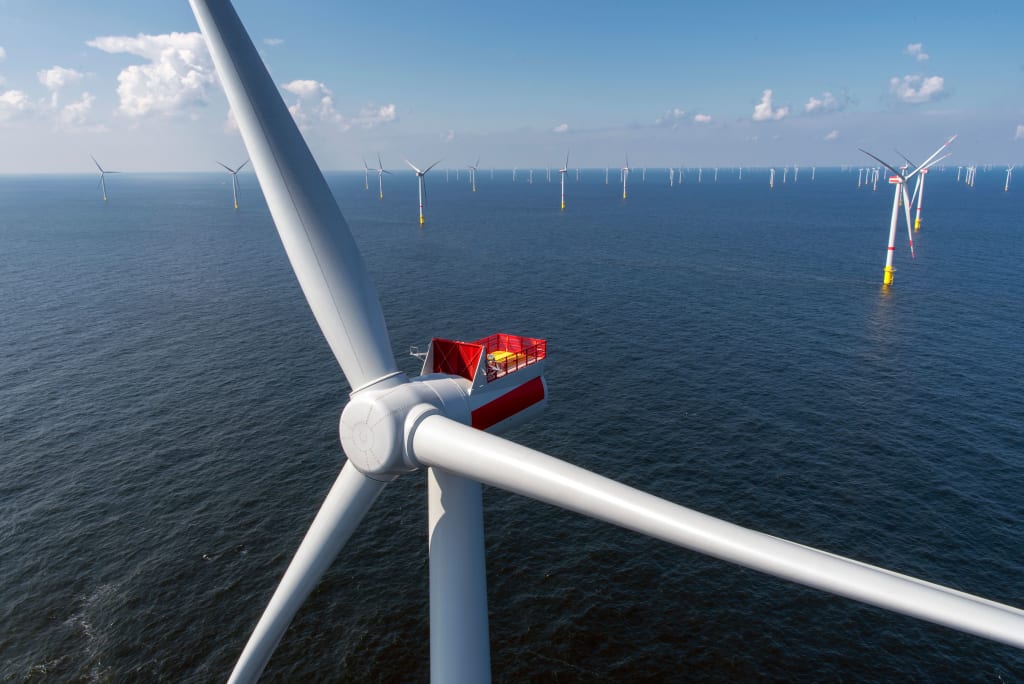
Rising investments in renewable energy, supportive government policies, and global decarbonization targets are driving growth in the wind turbine components market. According to IMARC Group's latest research publication, The global wind turbine components market size was valued at USD 135.34 Billion in 2024. Looking forward, IMARC Group estimates the market to reach USD 235.99 Billion by 2033, exhibiting a CAGR of 6.05% from 2025-2033.
How AI is Reshaping the Future of Wind Turbine Components Market
- Predictive Maintenance and Failure Prevention: AI analyzes sensor data from vibrations, temperature, and rotational speeds to predict component failures before they occur. Companies implementing these systems report downtime reductions of up to 35% and maintenance cost savings of 25%, with some achieving over 90% prediction accuracy.
- Digital Twin Optimization and Real-Time Monitoring: AI creates virtual replicas of turbines, enabling continuous performance monitoring and simulation. These digital twins analyze operational data in real-time, optimizing maintenance schedules and maximizing efficiency while extending turbine lifespan through proactive interventions and adaptive decision-making.
- Remaining Useful Life Estimation: Machine learning models predict how long critical components like gearboxes, blades, and generators will function optimally. Physics-informed reinforcement learning frameworks demonstrate economic performance improvements exceeding 100% compared to conventional maintenance strategies while achieving zero-failure operations.

Wind Turbine Components Industry Overview:
The wind turbine components sector is experiencing transformative growth driven by substantial government support and infrastructure investments. The U.S. Department of Energy allocated USD 137 million for wind technologies, while global energy investment exceeded USD 3 Trillion, with USD 2 Trillion directed toward clean energy. The Inflation Reduction Act provides extended tax credits for projects, and the DOE announced USD 5.1 million for advanced offshore blade modeling research, demonstrating strong institutional commitment to renewable energy advancement.
Wind Turbine Components Market Trends & Drivers
Government policies and financial incentives are accelerating wind energy adoption across multiple regions. India's National Green Hydrogen Mission received a rupees 19,744 crore allocation, targeting 500 GW of renewable capacity. The Production Linked Incentive Scheme under India's High-Efficiency Solar PV Modules program secured rupees 24,000 crore to boost domestic manufacturing. Germany aims for net greenhouse gas neutrality by 2045, with interim emission reductions of at least 65% by 2030. These comprehensive policy frameworks create favorable conditions for component manufacturers, with feed-in tariffs, renewable purchase obligations, and development incentives driving project pipelines globally.
Technological innovations are revolutionizing turbine efficiency and expanding deployment possibilities. The DOE's National Renewable Energy Laboratory research indicates technology innovations could unlock 80% more economically viable wind capacity within the contiguous United States. Modern turbines feature blades exceeding 80 meters, constructed with advanced composites like carbon fiber and fiberglass for improved strength-to-weight ratios. Modular blade designs address transportation challenges in difficult terrains and offshore installations. India recorded landmark growth with 3.4 GW of new wind capacity, marking a 21% increase. Companies are launching next-generation platforms, including 4.2 MW and 5 MW turbines specifically designed for low-wind and harsh environments, featuring 160-meter rotors and modular designs with 85% locally sourced components.
Infrastructure expansion and manufacturing localization are reshaping regional markets and supply chains. ACCIONA Energia announced a new 412 MWp photovoltaic project in Rajasthan scheduled for commissioning, demonstrating sector momentum. The sector benefits from grid modernization efforts, transmission upgrades, and cross-border collaboration enhancing distribution capabilities. Offshore wind developments along the U.S. East and West Coasts require specialized, durable components for marine environments. Supply chain resilience initiatives promote localized production, reducing import dependencies and costs. Brazil's National Renewable Energy plan targets a 7% reduction in energy consumption by 2034, while Africa received USD 110 billion in energy investments, with USD 70 billion directed toward clean energy technologies, creating new market opportunities for component suppliers.
Leading Companies Operating in the Global Wind Turbine Components Industry:
- CS Wind Corporation
- ENERCON Global GmbH
- GE Vernova
- Goldwind Science & Technology Co., Ltd.
- Mingyang Smart Energy Group Co., Ltd
- Nanjing High Speed Gear Manufacturing Co., Ltd.
- Siemens Gamesa
- Sinoma Science & Technology Co., Ltd
- Suzlon Energy Limited
- TPI Composites Inc.
- Vestas Wind System A/S
- ZF Friedrichshafen AG
Wind Turbine Components Market Report Segmentation:
By Component:
- Rotator Blade
- Gearbox
- Generator
- Nacelle
- Tower
- Others
Rotator blade represents the largest segment, accounting for 25.8% market share, as it serves as the core component for energy capture and conversion.
By Wind Turbine Type:
- Grid Connected
- Standalone
Standalone dominates with 69.9% market share owing to increasing demand for decentralized renewable energy systems in remote and rural areas.
By Wind Farm Type:
- Onshore
- Offshore
Onshore leads with 80.5% market share due to lower installation and maintenance costs compared to offshore alternatives, making it financially attractive for large-scale projects.
Regional Insights:
- North America (United States, Canada)
- Asia Pacific (China, Japan, India, South Korea, Australia, Indonesia, Others)
- Europe (Germany, France, United Kingdom, Italy, Spain, Russia, Others)
- Latin America (Brazil, Mexico, Others)
- Middle East and Africa
Asia Pacific exhibits clear dominance in the wind turbine components market, holding 51.5% market share, driven by strong government support, increasing renewable energy targets, and growing power demand.
Recent News and Developments in Wind Turbine Components Market
- September 2024: RE Technologies GmbH and Senvion India launched a 4.2M160 wind turbine generator, their first 4 MW WTG. Designed for low-wind and harsh environments, it featured a 160m rotor, modular design, and 85% locally sourced components.
- September 2024: Envision Energy launched a 5MW onshore wind turbine for the Indian market. Unveiled at WindEnergy Hamburg 2024, the EN 182/5MW platform promised 40% more annual energy and up to 10% lower LCOE.
- September 2024: Vestas was awarded a 270 MW order to equip an unspecified wind project in the US. The order comprises 60 V163-4.5 MW turbines, Vestas' newest high-capacity factor turbine and the project has been developed by Steelhead Americas, Vestas' North American development business.
- February 2025: ACCIONA Energia announced that it would build a new 412 MWp photovoltaic project in the state of Rajasthan. As per the press release by the company, the project will be commissioned by 2025.
Note: If you require specific details, data, or insights that are not currently included in the scope of this report, we are happy to accommodate your request. As part of our customization service, we will gather and provide the additional information you need, tailored to your specific requirements. Please let us know your exact needs, and we will ensure the report is updated accordingly to meet your expectations.
About the Creator
James Whitman
With years of experience in analyzing global industries, I specialize in delivering actionable market insights that help businesses stay ahead in an ever-changing landscape.
Keep reading
More stories from James Whitman and writers in Futurism and other communities.
Visualization and 3D Rendering Software Market Outlook: Trends, Technology, and Growth Opportunities
Rising demand for immersive visualization, digital design accuracy, and real-time rendering is driving growth in the visualization and 3D rendering software market. According to IMARC Group's latest research publication, The global visualization and 3D rendering software market size reached USD 3.7 Billion in 2024. Looking forward, IMARC Group expects the market to reach USD 14.5 Billion by 2033, exhibiting a growth rate (CAGR) of 16.3% during 2025-2033.
By James Whitmanabout 8 hours ago in Futurism
About Binding Prometheus
I want to start actively advocating on behalf of my own work, and the most valuable part of my canon is, without a doubt, Binding Prometheus, the play I have been working on since 2019 and only finished in 2023 as part of my MA. The play itself is an amalgamation of a million different inspirations. On one end, it evokes the Ancient Greek myth-play, deriving its own title from the earliest extant work of Western drama we have, Aeschylus’s Prometheus Bound. On the other end, it borrows significantly from the sci-fi bulwarks from over the years, namely Mary Shelley’s Frankenstein and Karel Capek’s Rossum’s Universal Robots. The play could be an episode of Black Mirror, I fear. I don’t know. I’ve only ever seen one episode of Black Mirror.
By Steven Christopher McKnightabout a month ago in Futurism



Comments
There are no comments for this story
Be the first to respond and start the conversation.