
Will smartphones be replaced? New technologies may soon appear, Bill Gates boldly predicted
Will smartphones be replaced? New technologies may soon appear, Bill Gates boldly predicted
In 1989, the world's first mobile phone Dyna TAC went on sale, the price of 3995 US dollars, weight of 2 kilograms, this charging 10 hours and 35 minutes of talk "brick", representing the beginning of a new era - the commercialization of wireless communication.
Eleven years later, in 1994, IBM released a mobile phone with a touch screen, which could make calls and send faxes and was equipped with the most original APP, indicating that mobile phones began to enter the era of smart phones.
In the past decade, the smart terminal industry with smart phones as the core has developed rapidly, set off the wave of mobile Internet, and changed people's production and life style.
In recent years, with the common development of 5G, artificial intelligence and other new generation of information technology, the emergence of virtual reality, wearable devices and other new application terminals, the emergence of new technologies let us can not help but imagine that mobile phones will be replaced?
In 2022, Bill Gates predicted that the technology that can replace smart phones will soon appear, and how far away are the new smart terminal devices from us?
The future of intelligent terminal devices
The Internet of Things refers to the collection of a variety of information through a variety of information sensors, through various possible network access, implementation, extensive connection between things and things, people and things, to achieve the effect of the "Internet of everything".
In the development of the Internet of Things, a variety of equipment is needed, including data acquisition, but also including terminal control.
In the Internet of Things, intelligent control terminal is an essential project, in the current intelligent terminal, the most used varieties are almost non-wearable devices, such as mobile phones, tablets and so on.
Non-wearable devices have strong limitations, the simplest is easy to lose, interactive experience and convenient life is not compatible (such as mobile phones are relatively small, but only fingers and eyes can operate on a small screen, to experience good such as computers, flat screen TVS, etc., but large).
Is there a good, convenient alternative to the phone?
In the current vision, wearable devices are the next development object of our development, such as glasses and wearable devices into the brain.
In the science fiction film "Iron Man 3", the protagonist Tonis Tucker is using "glasses" wearable devices.
Most wearable devices use AR (augmented reality) technology, such as such products do not need a display screen, but the information is directly projected to the wearer's eyes, so that the wearer can see through the eyes to produce the following effect.
In the early years, this feature was used in the pilot's helmet display to enhance the pilot's battlefield awareness.
In everyday life, glass-like AR devices have been designed and sold, that is - Google Glass.
In 2014, Google launched its own wearable smart terminal device, which is designed to use polarized light reflectors to shine the screen displayed through the display into the eyes of the wearer, and the advertised effect is this
Released a decade ago for $1,500, the sci-fi glasses caused quite a stir, winning Time magazine's Best Invention of 2012.
The glasses can be loaded with different apps, and can be controlled with both motion and voice:
For example, it can be started by looking up 30°, can shoot, navigate, etc., and can also search results through voice commands, and sound enters the human body through bone conduction mode, avoiding surrounding interference.
In the end, this very science-fiction sense of glasses also failed, not really promoted.
Until now, several key issues hindering the development of wearable AR devices have not been solved
Power consumption and heat problems, the current miniaturized battery reserves and the consumption of its equipment needs is not proportional, and there is a lack of cooling equipment, such as Google Glasses use an hour to consume 80% of the electricity, and accompanied by serious heat.
Hardware miniaturization problem, glasses can be loaded with very little hardware, now most of the hardware can not take into account the miniaturization and multi-function, such as Google Glass memory is very small only 682MB, most of the time can only be used as a mobile phone auxiliary projector, and the weight is not low, on this almost can not use more functions.
Display problems, Google Glass needs to raise the eyes slightly to see the screen, which affects attention and clarity at the same time is very low, and now the technology of projecting the picture directly to the retina is very immature.
If you want to project the picture very clearly on the retina, you need to draw the refraction map of the human eye with micron accuracy (each person's lens and vitreous structure are different, and the eye's refraction ability is different under different circumstances), which is not possible with existing technology.
Of course, in many technical scenarios, the ultimate application of wearable devices is to directly connect to the nervous system, that is, "brain computer interface".
By tapping directly into the internal environment of the brain, the brain establishes a channel with external devices, which is often seen in science fiction films
In the animated film "Sword God Domain: Sequence Contention", wearable AR devices can provide great convenience for people's lives.
One problem with AR devices like Google Glass is that the information they send is converted by a receiver in the body (such as the eye) and then converted into electrical signals that enter the brain for recognition.
This receiver is like a "middleman", and the original information received by each person will be secretly "taken" by this middleman, before being sent to the brain, and different middlemen in different locations, such as visual signals and olfactory signals at the same time.
Since it has to be accepted by the brain, can we directly skip the "middlemen" of the eyes and nose and send signals to the brain?
The brain-computer interface is to convert visual, olfactory and other signals directly into electrical signals by letting data communicate directly with the brain, and input them harmlessly into the brain. It can also accept muscle and nerve signals of the body, avoiding the disadvantage of ordinary wearable devices that require a large number of detectors to capture signals from different areas of the body.
Brain-computer interfaces and ordinary wearable devices belong to a completely different development path, but so far, brain-computer interfaces are still in their infancy.
In recent years, countries around the world have gradually attached importance to brain science research, and have started their own brain science and technology plans, but the degree of human brain research so far is similar to the infant period when they just learned to walk.
It is now impossible to send complex signals to the human brain, directly forming images, sounds, etc., because we can't even understand what the image and sound coding in the brain looks like.
This code is like the "words" we use, which can only be transmitted if we understand the laws of what kind of "words" are used in the brain, but until now, we have not even understood the means.
peroration
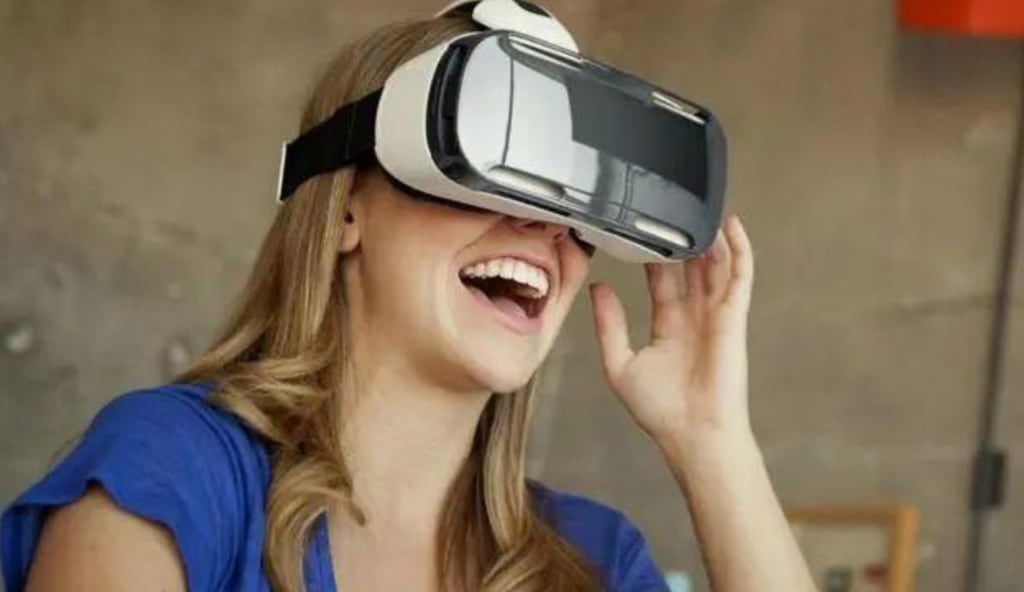
As a mobile intelligent terminal, wearable devices such as watches and VR (virtual reality technology) have major defects, such as watches can not interact with a large amount of information between people, and can only be used as an assistant to other devices.
VR (virtual reality) technology is characterized by "immersion", which is used to strengthen the experience of a specific scene at the beginning of the design, and the effect is not good when interacting with the outside world, and it is easy to "dominate".
In the future technology, wearable AR devices will certainly appear to replace mobile phones, which will also cause great ethical and safety issues. For example, brain-computer interfaces need to be connected to the brain, which means that we can avoid the first line of defense of our body "sensory organs" to forcibly obtain information in our minds, or forcibly insert certain information we don't like in the brain. Or even destroy something directly.
The final development path of the Internet of Things terminal device that replaces the mobile phone must be "access to the brain", if the technology really appears, we dare to use it?
About the Creator
Keep reading
More stories from writers in Futurism and other communities.
Best Free Face Swap of 2026 + AI Image Upscaler
Looking for a fun way to create hilarious memes or unique profile pictures? Face swapping lets you place a face from one photo onto another, and the results in 2026 are more realistic than ever. The problem is that many online tools are either hidden behind a paywall, produce blurry results, or are complicated to use.
By Muhammad Owaisa day ago in Futurism
Data Center Liquid Cooling Market: Rising Power Density, Advanced Cooling & Growth Outlook
Rising data center densities, growth of AI and high-performance computing, and limits of air cooling are driving expansion of the data center liquid cooling market. Increasing energy efficiency requirements and sustainability goals encourage adoption. According to IMARC Group's latest research publication, The global data center liquid cooling market size reached USD 3.5 Billion in 2024. Looking forward, IMARC Group expects the market to reach USD 16.5 Billion by 2033, exhibiting a growth rate (CAGR) of 18.56% during 2025-2033
By James Whitman5 days ago in Futurism
Time to change your life.
Is it even possible for you to change your life? A lot of people, more than there should be, are unhappy with their lives. But what are they doing about it? Usually nothing. People talk about how shitty their lives are and want change, but are they not taking the actions to change?
By Jen Phillipsa day ago in Humans
Not Just For Clean Up: A History Of The MCU's Department of Damage Control
Initially an organisation that seemed to exist to help the heroes of the Marvel Cinematic Universe, from Phase Four onwards, the Department of Damage Control has shifted into a more antagonistic role. Most recently seen in the Wonder Man series, the current incarnation of Damage Control seems to target superpowered individuals, regardless of whether that person poses an active or intentional threat.
By Kristy Andersonabout 14 hours ago in Geeks


Comments
There are no comments for this story
Be the first to respond and start the conversation.