
Will AI Take Your Job in 2026? Exploring the Future of Work and Automation
How Artificial Intelligence is Shaping Careers and What You Can Do to Stay Ahead

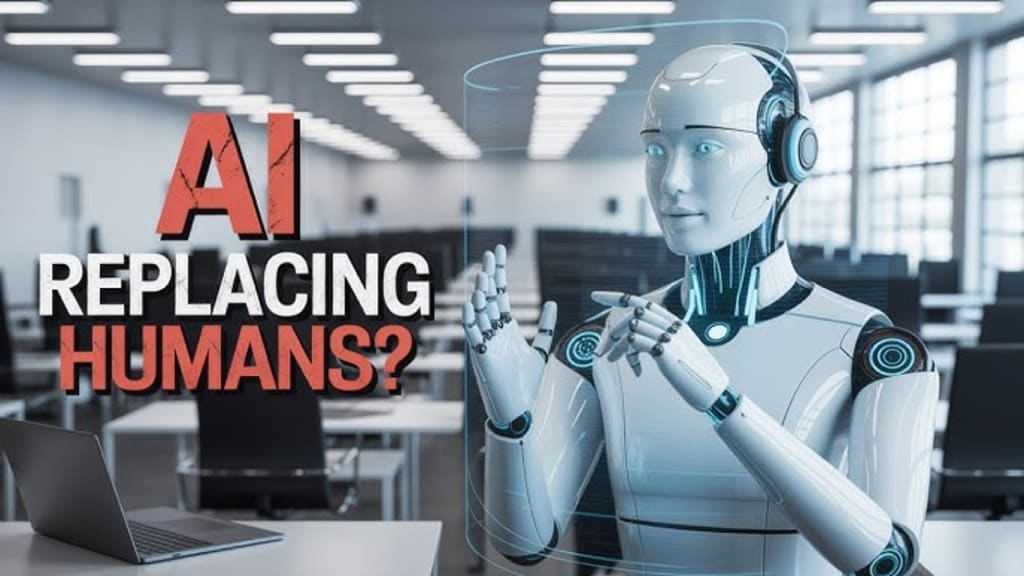
As the world continues to evolve, so does the technology around us. One of the most discussed advancements is Artificial Intelligence (AI). From chatbots to self-driving cars, AI has permeated many aspects of our daily lives. But with its rapid growth, a common question is being asked more frequently: Will AI take your job in 2026? The looming question has sparked fear, curiosity, and debate. In this article, we will explore the impact of AI on the workforce, what it means for different industries, and how you can adapt to thrive in an AI-powered future.
AI in the Workforce: A Glimpse into the Future
AI is expected to dramatically reshape industries by 2026, automating tasks that were once the domain of humans. While some jobs are at risk of being replaced, others will emerge, and the way we work will be forever altered.
1. Job Automation and Its Impact on Traditional Jobs
The most immediate concern is the automation of manual and repetitive tasks. In sectors like manufacturing, retail, and customer service, AI is already making waves. For example, robots in factories are assembling cars faster than human workers, and AI-powered chatbots are handling customer service inquiries. According to recent reports, around 30% of jobs in the U.S. could be automated by 2030, with 2026 being a pivotal year.
2. The Rise of AI in Creative Industries
Interestingly, AI's influence isn't limited to mundane tasks. Even in creative industries like writing, design, and music production, AI tools are starting to play a role. AI can generate music, write articles, and even create artwork. For example, AI-powered platforms like OpenAI's GPT series are capable of producing high-quality written content, raising concerns for writers and journalists. However, this doesn't mean creativity will be entirely taken over. Human touch, intuition, and emotional depth remain irreplaceable, but AI will certainly be a tool that amplifies human creativity.
3. AI and the Gig Economy: New Opportunities
While automation might replace certain jobs, it will also create new ones. The gig economy is already booming, and AI will continue to fuel this growth. Freelancers and remote workers in fields like software development, data analysis, and digital marketing will be in high demand as businesses look for human expertise to work alongside AI. The key here is adaptability. If you're able to learn how to work with AI, rather than against it, you will remain competitive in the job market.
4. Industries Most Affected by AI
Certain sectors are more vulnerable to AI disruption than others. Jobs in logistics, customer support, and data entry are at high risk. However, sectors that require emotional intelligence, such as healthcare and education, are less likely to see full automation. AI tools may assist in these fields, but human intervention will still be essential.
How to Stay Relevant in the Age of AI
As the fear of job loss due to AI spreads, it’s important to realize that the future is not as grim as it seems. There are several ways you can ensure your career remains relevant and adaptable to technological advancements.
1. Learn to Collaborate with AI
Rather than fearing AI, learn to leverage it to your advantage. Whether it's using AI tools for writing, design, or data analysis, understanding how to work with AI will be a valuable skill in the job market. Many industries will require human employees who are proficient in working alongside AI systems.
2. Upskill and Reskill Regularly
Staying ahead in the workforce means committing to continuous learning. The jobs of tomorrow may not even exist today, so it’s crucial to invest in skills that will be in demand in the future. Learning about AI, machine learning, and other emerging technologies can give you a significant edge in the job market.
3. Develop Soft Skills
While AI can automate many tasks, it cannot replicate human emotions, empathy, or social intelligence. Focusing on soft skills like communication, problem-solving, and emotional intelligence will make you indispensable, especially in industries like healthcare, teaching, and leadership roles.
4. Adapt to Remote Work Trends
The pandemic accelerated the shift towards remote work, and this trend is expected to continue. Being adaptable to remote work, mastering digital collaboration tools, and learning to manage virtual teams will set you apart in a changing workforce.
The Moral: Embrace the Future with Optimism and Preparedness
The rise of AI doesn’t mean the end of human work. In fact, it could mark the beginning of a new era filled with opportunities for those who are willing to adapt and grow. The key to thriving in an AI-powered future is not about avoiding technology, but learning how to use it to your advantage. As we approach 2026, the best way to ensure job security is to stay informed, upskill regularly, and embrace the future with optimism.
Conclusion:
AI may change the landscape of employment, but it’s not about "taking" jobs, rather "transforming" them. By staying proactive, learning new skills, and adapting to new technologies, we can ensure that the future remains bright, even in a world dominated by AI. Will AI take your job in 2026? The answer isn’t as simple as yes or no. But one thing is certain: those who choose to evolve with AI will not just survive—they’ll thrive.
About the Creator
Sajjad Ali
🌟 Sparking motivation through meaningful stories.
I write to uplift, inspire, and remind you of your inner strength. Whether it’s about growth, resilience, or chasing dreams—each story is a step forward. Let’s grow together.
Keep reading
More stories from Sajjad Ali and writers in Futurism and other communities.
How to Stay Relevant in the Age of AI: A Wake-Up Call for 2025
The year is 2025. Machines talk. Machines write. Machines even paint, compose music, and hold conversations. The world is changing faster than most of us expected—and let’s be honest, a lot of people are scared.
By Sajjad Ali5 months ago in Futurism
About Binding Prometheus
I want to start actively advocating on behalf of my own work, and the most valuable part of my canon is, without a doubt, Binding Prometheus, the play I have been working on since 2019 and only finished in 2023 as part of my MA. The play itself is an amalgamation of a million different inspirations. On one end, it evokes the Ancient Greek myth-play, deriving its own title from the earliest extant work of Western drama we have, Aeschylus’s Prometheus Bound. On the other end, it borrows significantly from the sci-fi bulwarks from over the years, namely Mary Shelley’s Frankenstein and Karel Capek’s Rossum’s Universal Robots. The play could be an episode of Black Mirror, I fear. I don’t know. I’ve only ever seen one episode of Black Mirror.
By Steven Christopher McKnight17 days ago in Futurism
Egypt ICT Market: Cloud Adoption, 5G Rollout & Technology Investment Trends
According to IMARC Group's latest research publication, The Egypt ICT market size reached USD 27,685.0 Million in 2024. Looking forward, IMARC Group expects the market to reach USD 39,712.3 Million by 2033, exhibiting a growth rate (CAGR) of 4.09% during 2025-2033.
By Abhay Rajput2 days ago in Futurism



Comments
There are no comments for this story
Be the first to respond and start the conversation.