
Why Web3 Security Matters: A Guide to Safe Blockchain Transactions
Protect Your Digital Assets with Web3 Security
The concept of blockchain and decentralization has made the discussion of Web3 security trendier. When there is so much happening around digital interactions due to cryptocurrencies, NFTs, and smart contracts, protecting your assets matters even more than before. What exactly is the definition of Web3 security and why should one be concerned about it?
If you're investing in cryptocurrency, trading NFTs, or using dApps, then this guide is for you. We will be breaking down the basics of it, common threats, and, more importantly, how to keep your digital assets secure.
What is Web3 Security?
Web3 is the next internet, built on blockchain technology. It is not like Web2, which depends on centralized servers run by large corporations. In this case, users have control over their data, identities, and assets.
However, with such decentralization comes new security-related challenges. Because Web3 eliminates the middleman, users are fully responsible for their assets' security. There is no customer support to recover stolen crypto or reverse a hacked transaction. That is why Web3 security is important.
The Greatest Risks
The decentralized nature of Web3 is quite attractive but opens doors to cybercriminals. Let's examine some of the most common security risks within the Web3 ecosystem.
1. Phishing Attacks
Phishing isn't a new concept, but in Web3, it's fatal. Scammers create fake websites, dApps, or wallet interfaces and trick users into entering their private keys or seed phrases. After gaining access, they drain wallets in seconds.
How to Stay Safe:
- Always check URLs before entering credentials.
- Never share your private key or seed phrase with anyone.
2. Smart Contract Vulnerabilities
Smart contracts automate transactions without intermediaries. However, poorly written or unverified contracts can have security flaws that hackers use to their advantage.
How to stay safe:
- Interact only with audited smart contracts.
- Verify contracts using blockchain explorers like Etherscan.
- Use services that are smart contract-based and ensure security compliance.
3. Wallet Hacks and Private Key Exposure
Your Web3 wallet is your bank account. Once a hacker has access, he can drain your entire account. Common causes of wallet breaches include malware, weak passwords, and compromised seed phrases.
How to stay safe:
- Use multi-signature wallets for improved security.
- Keep your private keys in cold storage or a hardware wallet.
- Make possible two-factor authentication (2FA).
4. Rug Pulls and Scam Projects
This DeFi and NFT trend has also proven to be the playground of a scammer. Some developers announce projects, fundraise, and then disappear, leaving one with worthless tokens.
How to stay safe:
- Research on any project before an investment
- Do not invest in something that promises exaggerated returns.
5. Malicious dApps and Browser Extensions
Not all dApps and browser extensions are safe. Some are designed to steal wallet information or inject malicious code.
How to stay safe:
- Install browser extensions only from trusted sources.
- Review permissions before connecting your wallet.
- Disconnect wallets from dApps when not in use.
How to Enhance Web3 Security
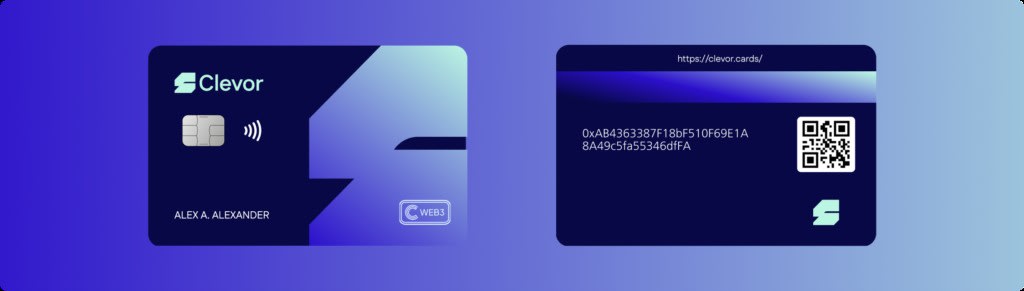
If you are active in the Web3 space, you require tools that prioritize security. Clevor Cards is a leader in blockchain-based digital assets that integrates some of the best measures of security to protect users.
What makes Clevor Cards secure?
- All contracts have thorough security checking against vulnerabilities.
- Transparency in transactions with advanced encryption against tampering.
- Ease in handling protection: The tool facilitates the user in navigating Web3 without falling into common traps.
- You minimize risks and enjoy a safer Web3 experience by choosing platforms like Clevor Cards.
Best Practices
Now that you know the risks, here are some essential best practices to keep your Web3 journey safe.
1. Use a Hardware Wallet
A hardware wallet stores your private keys offline, making it nearly impossible for hackers to access them.
2. Enable Multi-Factor Authentication (MFA)
Use MFA whenever possible - this will further enhance security within your accounts
3. Confirm Before You Click
Verify web URLs, contact addresses, and sender details before executing a transaction
4. Keep Software Up to Date
Wallets, browser extensions, and other security software have regular updates with the new threat vectors that occur on the network.
5. Learn and be aware
Threats change over time for Web3; follow blockchain security blogs, forums, and online platforms for constant updates.
Final Thoughts
Web3 security is not something you can take for granted but it's a requirement. As the blockchain space keeps growing, threats are on the rise, and with knowledge of the right measures, you keep your assets protected.
Platforms such as Clevor Cards make a benchmark of secure Web3 transactions with their smart cards to assist users in traversing the decentralized world safely. So, no matter whether you are an investor, trader, or just starting to explore the Web3 space, security will be your utmost priority.
About the Creator
Clevor Cards
Clevor Cards specializes in secure and user-friendly solutions for digital asset management while setting a new benchmark in reliable user identification.
Keep reading
More stories from Clevor Cards and writers in Futurism and other communities.
Safeguarding Digital Assets: Key Strategies for Web3 Security
The more the digital landscape evolves, the more the risks evolve as well. The decentralized internet in the form of Web3 with blockchain technology opens up new possibilities for digital ownership and security. However, it comes with its own set of challenges. Be it managing cryptocurrency, using dApps, or verifying transactions, security stands as a necessity.
By Clevor Cards12 months ago in Futurism
About Binding Prometheus
I want to start actively advocating on behalf of my own work, and the most valuable part of my canon is, without a doubt, Binding Prometheus, the play I have been working on since 2019 and only finished in 2023 as part of my MA. The play itself is an amalgamation of a million different inspirations. On one end, it evokes the Ancient Greek myth-play, deriving its own title from the earliest extant work of Western drama we have, Aeschylus’s Prometheus Bound. On the other end, it borrows significantly from the sci-fi bulwarks from over the years, namely Mary Shelley’s Frankenstein and Karel Capek’s Rossum’s Universal Robots. The play could be an episode of Black Mirror, I fear. I don’t know. I’ve only ever seen one episode of Black Mirror.
By Steven Christopher McKnight19 days ago in Futurism
UAE Health Insurance Market: Population Growth, Employer Coverage & Industry Trends
According to IMARC Group's latest research publication, UAE Health Insurance Market size was valued at USD 8.72 Billion in 2024. Looking forward, IMARC Group estimates the market to reach USD 14.9 Billion by 2033, exhibiting a CAGR of 6.1% during 2025-2033.
By Abhay Rajput7 days ago in Futurism



Comments
There are no comments for this story
Be the first to respond and start the conversation.