
Why Is Scientific Misinformation So Common Today?
How fake facts, weak education, and social media are reshaping what we believe about science.

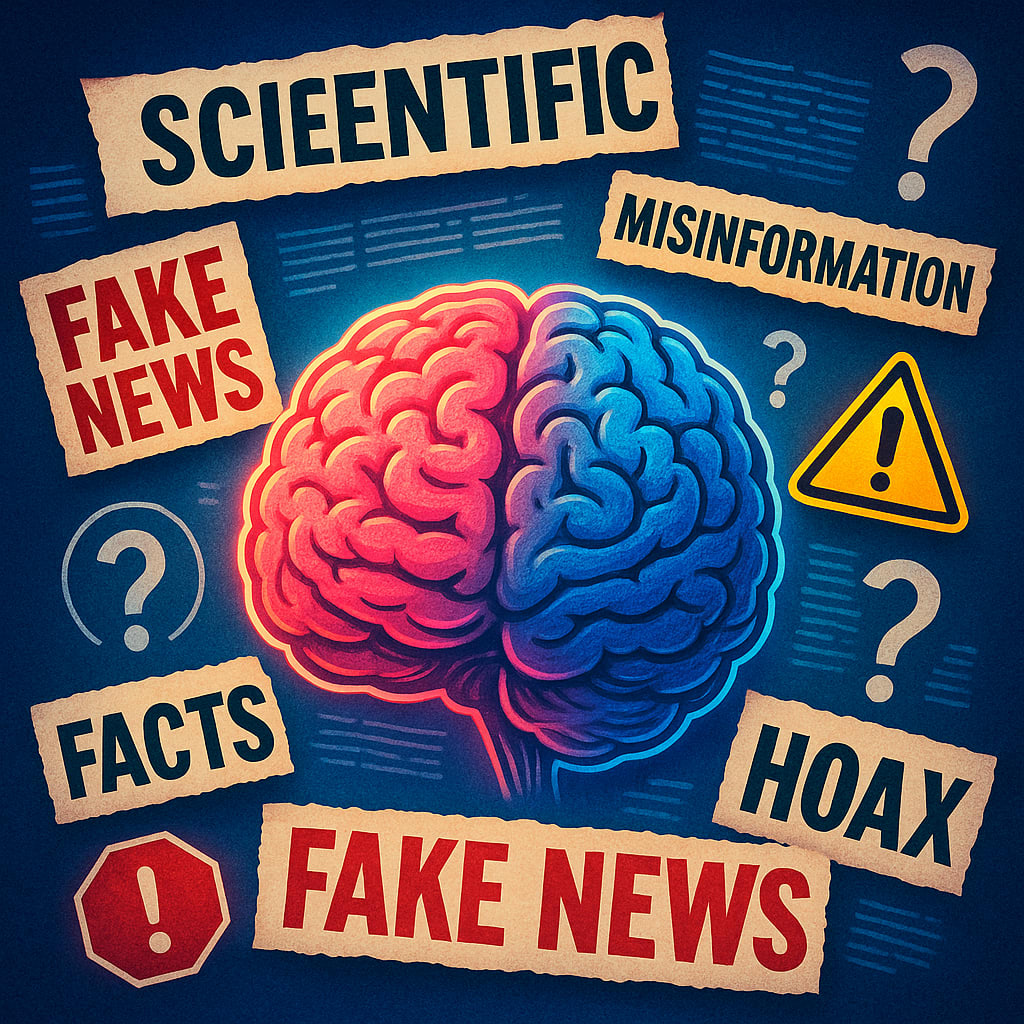
In an age where information is just one tap away, you'd think the world would be more scientifically accurate than ever before. But instead, we're facing a strange and dangerous trend—scientific misinformation is spreading faster than the truth. From fake health cures to conspiracy theories about space, many people now believe things that are simply not true.
But why is this happening?
Let’s break it down.
---
📱 1. Information Overload in the Digital Age
Every day, we are bombarded with headlines, videos, and social media posts. According to research, the average person sees thousands of messages per day—most of which they don’t fully read.
When there’s too much information, people don’t always know what to trust. Social media platforms like Facebook, YouTube, and TikTok often prioritize viral content, not accurate content. A flashy lie spreads faster than a slow, complicated truth.
---
🧠 2. People Believe What They Want to Believe
There’s a psychological term for this: confirmation bias. It means people tend to believe information that matches their opinions—and ignore facts that challenge them.
For example, someone who doesn’t trust vaccines might easily believe a video that falsely claims vaccines are harmful, even if all science says otherwise. Why? Because that content feels comfortable and matches their existing beliefs.
This is why misinformation is not just a science problem—it’s a human nature problem.
---
3. Weak Science Education
In many parts of the world, science education is outdated or too theoretical. Students learn formulas, but they don’t learn how to think scientifically or how to verify claims.
As a result, many adults don’t understand how science works:
That science changes with new evidence.
That scientific consensus is based on repeated studies—not personal opinion.
That experts in science rely on peer review, data, and evidence.
When people don’t understand how science works, they’re more likely to believe in fake science, pseudoscience, or even dangerous health myths.
---
📺 4. Media’s Role in Confusing the Public
Mainstream media often adds fuel to the fire. Many news channels focus more on entertainment than education. Sometimes, they invite non-experts to "debate" real scientists, making it seem like there are two equal sides to a topic like climate change or evolution—when in fact, one side is based on evidence and the other is not.
Also, headlines are often written to get clicks, not to tell the full story. For example:
Real headline: “New study shows potential link between food and cancer, more research needed.”
Viral headline: “Your Favorite Food Causes Cancer!”
See the difference? One is cautious. The other is emotional—and more likely to be shared.
---
🌐 5. Algorithms That Spread Lies Faster Than Truth
Social media platforms use algorithms that learn what you like and then show you more of it. So, if you click on one video about a “flat Earth,” the platform may show you dozens more—even if all of them are wrong.
The result? People live in filter bubbles where they only see content that reinforces their existing ideas—even if those ideas are false.
---
6. Lack of Trust in Institutions
Another reason for the rise in scientific misinformation is a decline in trust. Many people no longer trust governments, scientists, or journalists. Sometimes this distrust is understandable—corruption and past scandals have hurt public confidence.
But when trust disappears, conspiracy theories grow. People start believing that “the truth is being hidden” and that only YouTubers or influencers are telling the real story.
---
✅ How Can We Fight Scientific Misinformation?
The good news? There are ways to push back:
1. Promote critical thinking
Teach people how to ask questions, look for sources, and verify facts.
2. Support science education
Encourage schools to teach the scientific method, not just memorization.
3. Fact-check responsibly
Websites like Snopes, FactCheck.org, and Science Feedback help verify viral claims.
4. Encourage platforms to act
Social media companies should be held responsible for the misinformation they spread.
5. Trust, but verify
Even if something comes from a friend or influencer, double-check before you share it.
---
🌍 Conclusion: A Battle We Can Win
Scientific misinformation is one of the biggest challenges of our time—but it's not unbeatable. With the right tools, education, and awareness, we can help people separate fact from fiction. The future of our world—climate, health, technology, even democracy—depends on truth and trust in science.
So the next time you see a viral claim, ask yourself:
Is it true? Or is it just popular?
Because in the age of misinformation, being curious—and careful—is the most powerful thing you can be.
About the Creator
Asad Khan
I'm a passionate researcher exploring topics like technology, AI, healthcare, lifestyle, and travel. My goal is to share valuable insights that simplify complex ideas and help people make informed decisions in everyday life.
United States Transfection Technologies Market: Powering the Next Era of Genetic Innovation
A research associate prepares cultured cells. A reagent vial is thawed. Genetic material is introduced into living cells with microscopic precision. What happens next may influence cancer therapies, gene editing breakthroughs, or the next generation of biologics.
By Ashutosh Srivastava7 days ago in Futurism
Flower Bloom 369
FLOWER Bloom 2/25/26 Wednesday By Mariann Carroll Karen had been with Tony for 7 years. Tony started acting strangely after her surgery. He would mow the lawn in the rain and be on his cellphone. He started pushing Karen away. Tony came clean about seeing someone. Karen moved out two months later. Karen moved in with a friend. She felt betrayed.
By Mariann Carroll4 days ago in Fiction



Comments
There are no comments for this story
Be the first to respond and start the conversation.