
Track 1000: China’s Groundbreaking Leap in Green Transportation
A Revolutionary Liquid Hydrogen Fuel Cell System Enables Trucks to Travel Over 1,000 Kilometers Emission-Free
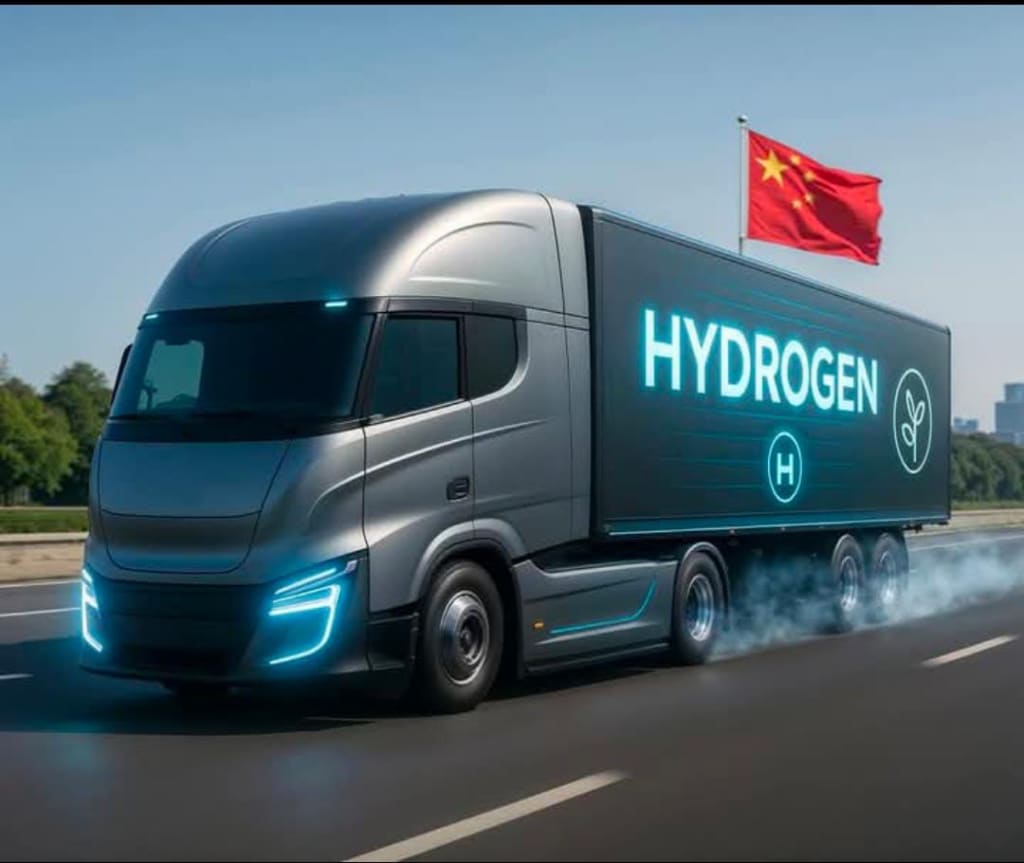
China Surprises the World Once Again — This Time Not in Space, But on Earth!
China, known for its groundbreaking advancements in science and technology, has once again astonished the world — but this time, the innovation is not related to space exploration; it's firmly grounded on Earth. The China Aerospace Science and Technology Corporation (CASC), a leading state-owned enterprise in the field of space technology, has successfully tested a revolutionary new system named "Track 1000."
This cutting-edge innovation is a liquid hydrogen fuel cell system specifically designed for heavy-duty trucks, enabling them to travel over 1,000 kilometers on a single tank, without requiring any stops for refueling. This system utilizes a 100-kilogram tank of liquid hydrogen combined with high-efficiency fuel cells. The only byproduct emitted from the vehicle is water vapor, making the entire process nearly zero-emission and environmentally friendly.
A Game-Changer for Long-Haul Transportation
The "Track 1000" system holds the potential to revolutionize long-distance freight transport, especially in the heavy vehicle sector. At present, electric trucks are increasingly being explored as alternatives to traditional diesel-powered vehicles. However, they face several limitations, such as:
Long charging times
Limited driving range
Heaviness and bulk of battery packs
In contrast, liquid hydrogen presents itself as a lightweight, energy-dense, and quick-refueling fuel source. These attributes address some of the most pressing issues in electric trucking. Because of its high energy content and lighter weight compared to traditional batteries, liquid hydrogen allows trucks to travel longer distances while minimizing downtime and maximizing efficiency.
Environmental Impact: A Breath of Fresh Air
Perhaps the most impressive aspect of the Track 1000 system is its environmental performance. Unlike conventional diesel trucks that emit harmful pollutants such as nitrogen oxides (NOx), carbon dioxide (CO₂), and particulate matter, this hydrogen-based system emits only water vapor, contributing virtually nothing to air pollution.
In a time when climate change, carbon neutrality, and environmental protection have become global priorities, such green technology offers a sustainable solution. If adopted widely, it could significantly reduce the carbon footprint of the transportation industry, which is one of the leading contributors to global greenhouse gas emissions.
Strategic Significance for China
This development is also a reflection of China's broader strategy to lead in clean energy technologies. Over the past decade, China has made substantial investments in renewable energy, electric vehicles, solar panels, and green hydrogen. With the successful launch of "Track 1000", China is signaling that it is not only aiming for leadership in space exploration but also in eco-friendly, Earth-based transportation technologies.
The move aligns with China's national goals of achieving carbon neutrality by 2060, and such innovations could also provide China with a strong export advantage as countries around the world seek sustainable alternatives for freight transport.
What Sets Track 1000 Apart?
Several key features make Track 1000 a standout in its category:
1. Extended Range: Over 1,000 kilometers on one tank — a major leap from current battery-electric trucks.
2. Fast Refueling: Liquid hydrogen refueling takes only a few minutes compared to hours of battery charging.
3. High Efficiency: The fuel cells used in this system are highly efficient and reliable.
4. Lightweight Structure: Unlike heavy battery packs, liquid hydrogen systems are significantly lighter.
5. Zero Emissions: The only byproduct is water vapor — a win for the environment.
The Road Ahead
Although this technology is still in the testing and early adoption phases, its successful demonstration by CASC is a giant leap forward in the evolution of green transport. It opens the door to further research, development, and eventual commercial deployment of hydrogen fuel cell trucks not only in China but around the globe.
Several questions remain, such as:
How will the hydrogen be produced and distributed sustainably?
What will be the cost of adoption for logistics companies?
How soon can this technology be scaled?
Despite these challenges, the Track 1000 project offers a glimpse into a cleaner, more efficient future for road transport.
In conclusion, China has once again shown its capability to lead the world with bold innovation, and this time, it’s doing it not by reaching for the stars but by redefining how we move goods across the Earth — cleanly, efficiently, and sustainably.
About the Creator
Keep reading
More stories from Ikram Ullah and writers in Futurism and other communities.
From Fighter Jet to Ice Melter: The MiG-15’s Unlikely Role in Saving Czechoslovakia’s Railways
Not a Plane, But a Heater!" During the harsh winter of 1970, Czechoslovakia faced an intense snowfall that severely disrupted daily life and transportation, especially the railway system. Faced with the challenge of clearing thick ice and snow from railway tracks to keep trains running smoothly, the railway workers came up with a truly unique and ingenious solution: they repurposed the engine of a military jet fighter — the MiG-15 — to melt the ice on the tracks.
By Ikram Ullah10 months ago in Futurism
Australia E-Pharmacy Market: Telehealth Integration, AI-Driven Prescription Management & Digital Healthcare Access
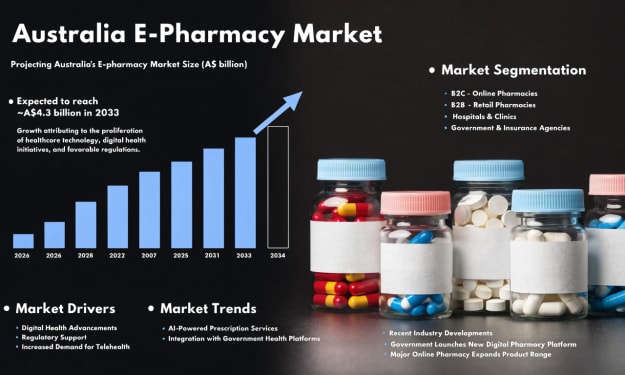
According to IMARC Group, the Australia e-pharmacy market reached a value of USD 3.4 Billion in 2025 and is projected to reach USD 10.5 Billion by 2034, growing at a compound annual growth rate (CAGR) of 12.93% during 2026–2034. The market is expanding rapidly as digital technologies transform how healthcare services are accessed and delivered across the country. E-pharmacy platforms allow consumers to purchase prescription medicines, over-the-counter drugs and health products through online channels while benefiting from doorstep delivery services. Rising internet penetration and widespread smartphone adoption are enabling consumers to access digital healthcare services more conveniently. Additionally, the expansion of telehealth consultations is creating integrated healthcare ecosystems where patients can receive digital prescriptions and order medicines online seamlessly. Increasing awareness of chronic disease management and regulatory emphasis on prescription authentication are also supporting the growth of the e-pharmacy sector across Australia.
By Shrestha Roy2 days ago in Futurism
Saudi Arabia E-commerce Market: Digital Payments, Logistics Expansion & Growth Outlook
According to IMARC Group's latest research publication, Saudi Arabia e-commerce market size reached USD 222.9 Billion in 2024. The market is projected to reach USD 708.7 Billion by 2033, exhibiting a growth rate (CAGR) of 12.8% during 2025-2033.
By Shubham Sharma 2 days ago in Futurism



Comments (1)
This "Track 1000" system sounds really promising. It could solve a lot of problems in long-haul transport. I wonder how much it'll cost to implement. And will there be enough liquid hydrogen fueling stations? We need to figure these out for it to really take off. It's great to see such innovation on Earth, not just in space.