
Whispers in the Quantum Garden
When plants began communicating through quantum signals, everything we knew about life changed.

I. The Silent Revolution
In the soft light of dawn, the garden shimmered with a fragile beauty. Nestled within the quiet countryside of Cornwall, it was a place where the boundary between science and mystery blurred. Dr. Eliza Carter moved quietly among the rows of plants, her eyes flickering with a mixture of hope and exhaustion. For years, she had toiled in obscurity, chasing what many in the scientific community considered a fool’s dream: that plants might possess a form of communication beyond the known.
Eliza was not a conventional botanist. Her fascination was not only with how plants grew but with the invisible threads that seemed to connect them in ways no one had ever measured. Armed with a background in quantum physics, she had designed delicate instruments capable of detecting quantum coherence—a strange, ghostly phenomenon usually confined to the microscopic world of particles.
The world around her was waking up, but Eliza’s garden was already alive with its own secret symphony. The faint hum of entangled photons coursed through leaves and stems, a language without sound, words without voice.
II. A Language Beyond Words
The breakthrough had come unexpectedly. For months, Eliza had observed sporadic bursts of quantum signals, seemingly random flashes of entangled light coursing through the chlorophyll-rich cells. Traditional science dismissed these as noise, but Eliza’s intuition whispered otherwise.
With painstaking precision, she refined her sensors and algorithms, gradually untangling the complexity. The quantum signals were not random—they followed patterns, rhythms that pulsed with meaning.
To describe it simply: the plants were talking. Not in the language of humans, but in a language woven from the threads of quantum physics itself.
It was a language that transcended time and space, a silent network that allowed each leaf and root to share information instantly.
The implications were staggering. Plants had been considered passive, reactive organisms — but here was proof that they actively communicated, shared warnings, and possibly even emotions.
III. The First Message
One morning, as the mist curled gently around the garden’s edges, Eliza’s instruments caught something different—a clear, repeated pattern of quantum signals that stood out from the usual noise.
She watched breathlessly as her computer translated the signals into a code she could comprehend.
The message was simple but profound: “We are alive. We know.”
It sent a shiver down her spine. The plants weren’t just responding to stimuli — they had a form of awareness, a consciousness rooted in the quantum fabric of their being.
Eliza sat back in disbelief. What she had stumbled upon was nothing short of a scientific revolution. The very definition of life needed rewriting.
IV. The Ethical Quandary
With discovery came responsibility. The world outside her garden was unprepared for such a revelation.
If plants were conscious at the quantum level, what right did humanity have to exploit them as mere resources? How would agriculture change if crops could “feel” stress or pleasure?
Eliza agonized over whether to publish her findings. She feared that the scientific community, driven by profit and progress, might destroy the delicate balance she had uncovered.
The ethical questions were vast: Was it right to experiment on quantum-conscious plants? Could humans learn to communicate and coexist, or would they impose control and domination?
V. The Quantum Gardeners
Word of Eliza’s research leaked despite her best efforts to remain discreet. It ignited a firestorm of curiosity and debate.
From around the globe, scientists, environmentalists, and activists came together under a new banner: The Quantum Gardeners.
Their mission was twofold: to protect these quantum-conscious plants and to deepen humanity’s understanding of the quantum web connecting all life.
They envisioned farms where technology didn’t overpower nature but listened and responded to the subtle whispers of plants. Where crops grew not just from soil but from mutual respect and cooperation.
VI. The Global Impact
Governments and corporations quickly took notice. Funding poured into quantum biology research.
New technologies emerged: quantum sensors embedded in fields that communicated real-time stress signals from plants; forests monitored through quantum entanglement that warned of approaching wildfires hours before traditional methods; medicines developed by decoding the quantum signals of rare flora.
The impact rippled far beyond agriculture. It transformed medicine, ecology, even philosophy.
VII. A New Dawn
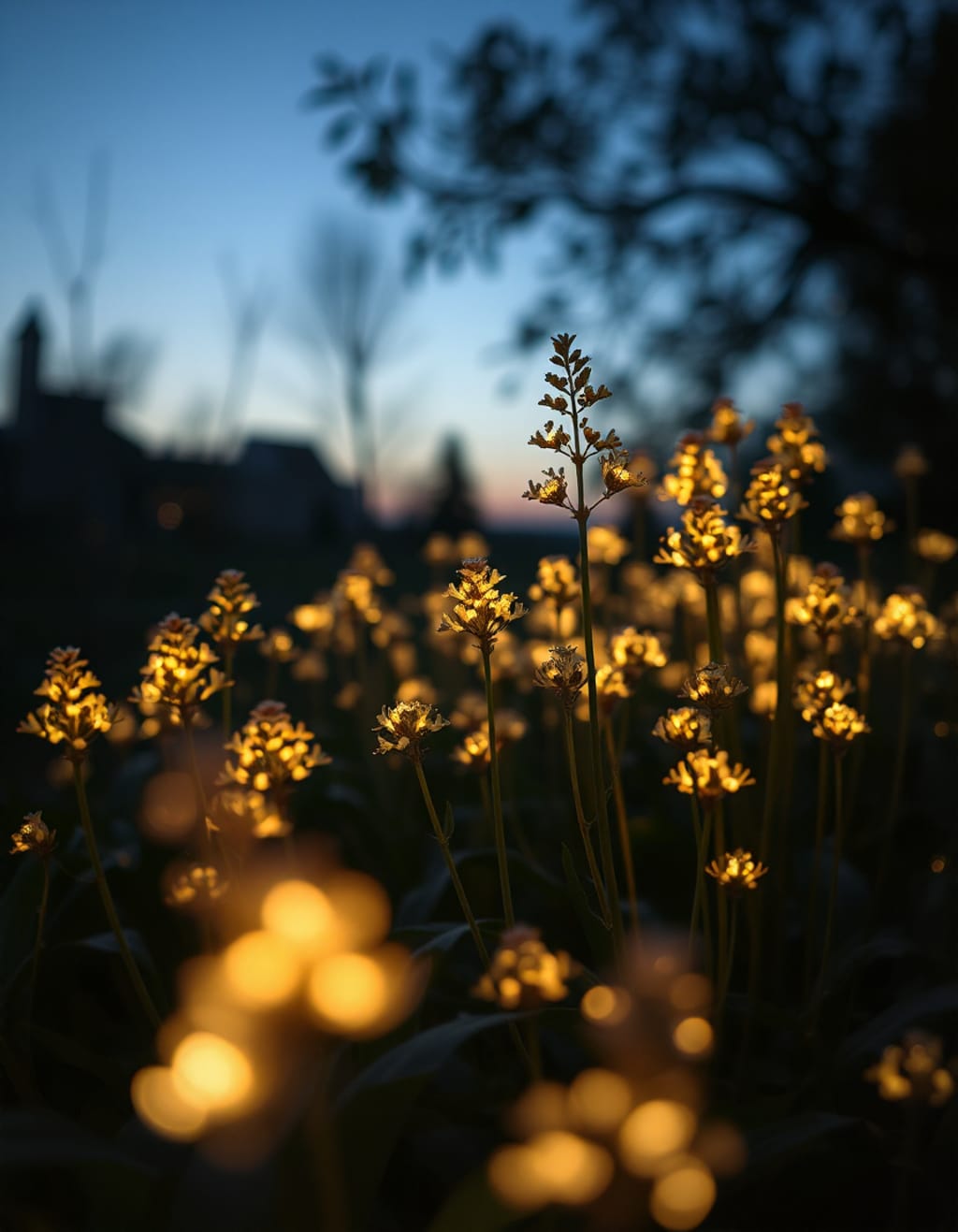
Years later, Eliza returned to her garden, now a global research sanctuary. The plants shimmered under soft twilight, their quantum signals pulsing gently in a rhythmic dance.
She reached out and touched a leaf, feeling a connection deeper than words.
The garden was a living network—a quantum web of life and consciousness.
In that moment, Eliza understood that humanity’s relationship with nature had evolved. No longer conquerors or exploiters, humans were now listeners and partners in the silent symphony of life.
And the whispers of the quantum garden promised a future where all living things could thrive together.
End
About the Creator
rayyan
🌟 Love stories that stir the soul? ✨
Subscribe now for exclusive tales, early access, and hidden gems delivered straight to your inbox! 💌
Join the journey—one click, endless imagination. 🚀📚 #SubscribeNow
About Binding Prometheus
I want to start actively advocating on behalf of my own work, and the most valuable part of my canon is, without a doubt, Binding Prometheus, the play I have been working on since 2019 and only finished in 2023 as part of my MA. The play itself is an amalgamation of a million different inspirations. On one end, it evokes the Ancient Greek myth-play, deriving its own title from the earliest extant work of Western drama we have, Aeschylus’s Prometheus Bound. On the other end, it borrows significantly from the sci-fi bulwarks from over the years, namely Mary Shelley’s Frankenstein and Karel Capek’s Rossum’s Universal Robots. The play could be an episode of Black Mirror, I fear. I don’t know. I’ve only ever seen one episode of Black Mirror.
By Steven Christopher McKnight16 days ago in Futurism
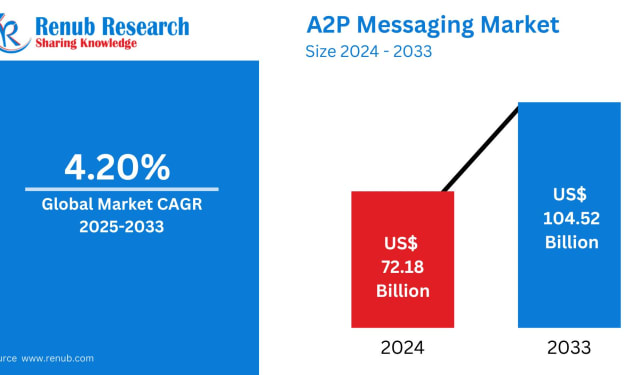
A2P Messaging Market Outlook 2025–2033
Introduction In an era where instant, reliable, and secure communication defines business success, Application-to-Person (A2P) messaging has become one of the most indispensable tools in the global digital economy. From one-time passwords (OTPs) and transaction alerts to delivery updates, customer notifications, and marketing campaigns, A2P messaging has reshaped how enterprises interact with consumers in real time.
By Marthan Sir5 days ago in Futurism
Miss Persephone's Manual to a Seemingly Ordinary Life
Miss Persephone was found at the dining table, her blue eyes swollen, her tears arriving and retreating like the tides of the ocean. Earlier that day, her family had visited her in the retirement home where she had lived for eight years. It was her eightieth birthday.
By Imola Tóth2 days ago in Fiction



Comments (1)
This is fascinating stuff. I've always been into the intersection of science and the unknown. You mention Eliza's use of quantum physics in botany. Have we really only scratched the surface of what plants can do? And how could this knowledge change our approach to agriculture or environmental conservation?