
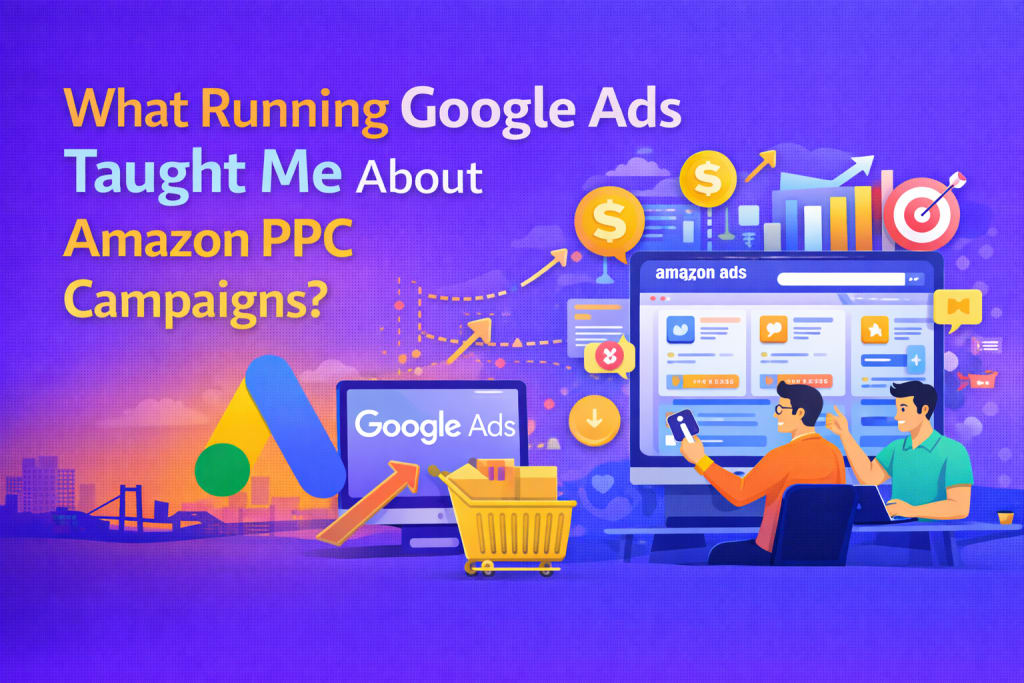
What Running Google Ads Taught Me About Amazon PPC Campaigns?
Lessons I didn’t expect when two ad platforms exposed the same blind spots

The first sign something was off wasn’t dramatic.
No alerts. No angry emails. No sudden spike in spend.
It was a quiet unease that crept in late one evening as I sat alone, toggling between dashboards, feeling that familiar discomfort you get when results don’t quite obey experience.
Nothing was broken.
But something wasn’t translating.
That was the night I realized I’d been carrying assumptions I hadn’t earned.
Why I trusted experience more than evidence
I’d spent years managing search campaigns where intent revealed itself gradually. People searched, compared, hesitated, and returned later. Patterns repeated often enough to feel reliable.
That experience built confidence. Not the loud kind—but the steady kind that comes from knowing how things usually behave.
So when responsibility expanded, I didn’t slow down. I extended what I already knew. The mechanics looked familiar. The dashboards felt readable. The decisions felt transferable.
In hindsight, that confidence didn’t come from arrogance. It came from comfort.
And comfort can be deceptive.
When familiar signals stopped behaving
At first, performance looked normal.
Impressions came in. Clicks followed. Spend stayed controlled. I applied the same discipline I always had—letting data settle, resisting the urge to react too quickly.
But instead of stabilizing, outcomes swung.
Minor changes triggered sharp reactions. Adjustments that normally took time to show impact landed immediately—or didn’t land at all. Recovery wasn’t gradual. It was abrupt.
That’s when I stopped asking what I was doing wrong and started questioning what I was misunderstanding.
The moment intent stopped being abstract
The shift came when I stopped analyzing campaigns and started thinking about where the buyer was mentally.
In traditional search environments, people are often mid-thought. They’re exploring, researching, circling a decision. The click is a step, not a commitment.
That’s where my experience with Google ads services had shaped my instincts—patience mattered, persuasion unfolded over time, and outcomes tolerated uncertainty.
But that mental model didn’t hold everywhere.
In other environments, the click is the decision.
Once I saw that distinction clearly, the volatility stopped feeling random. It felt contextual.
Why restraint became a liability
One of my strengths had always been restraint.
I didn’t chase noise. I trusted averages. I avoided emotional optimization.
That discipline worked well where buyers moved cautiously.
In decision-heavy environments, that same restraint sometimes cost momentum. Visibility gaps mattered immediately. Ranking loss wasn’t gentle. Recovery demanded more effort than prevention ever did.
It was uncomfortable to admit, but necessary: patience isn’t universally virtuous.
Sometimes it’s just delayed urgency.
The weight of proximity to purchase
Another difference surfaced as budgets scaled.
When ads live near discovery, underperformance feels shared. You can talk about messaging, landing pages, timing. Responsibility spreads.
When ads live inches from a buy button, accountability concentrates.
Pricing, reviews, availability, fulfillment—everything bleeds into performance. There’s nowhere to redirect blame. Results feel personal.
That proximity changed how I thought about risk.
I wasn’t just managing traffic anymore.
I was sitting inside someone’s decision.
Patterns that only emerged with time
As months passed, patterns became impossible to ignore.
Across products and accounts, I noticed that:
- Gradual optimization worked best where intent was exploratory
- Decisive action mattered more where intent was compressed
- Consistency protected performance more than cleverness
- Visibility loss hurt faster than visibility gain helped
- Context outweighed precision more often than expected
When I later compared notes with peers handling similar responsibilities, the stories aligned closely enough to feel dependable.
Different industries. Same friction.
Where labels stopped being useful
At some point, I noticed how casually people grouped responsibilities under broad labels, as if proximity in tooling implied similarity in behavior.
That’s where the idea of an amazon PPC agency often gets oversimplified—not out of ignorance, but out of habit. The work looks adjacent to search. The accountability isn’t.
That realization didn’t come from theory. It came from watching outcomes refuse to behave the way my experience said they should.
And from finally respecting that difference instead of smoothing it over.
Where I landed
Running campaigns across environments didn’t make me more confident.
It made me more precise about where my confidence applied.
One environment taught me patience.
Another taught me urgency.
Both exposed blind spots I didn’t know I had.
The real lesson wasn’t about platforms.
It was about context.
Expertise doesn’t automatically travel intact from one decision environment to another. When it does work, it’s because it was adapted—not assumed.
That understanding didn’t come from training or frameworks.
It came from sitting with discomfort long enough to realize the problem wasn’t the tools.
It was the assumptions I carried into them.
About the Creator
Jane Smith
Jane Smith is a content writer and strategist with 10+ years of experience in tech, lifestyle, and business. She specializes in digital marketing, SEO, HubSpot, Salesforce, web development, and marketing automation.
Keep reading
More stories from Jane Smith and writers in Futurism and other communities.
What Working With an SEO Marketing Company in Chicago Reveals?
I didn’t hire an SEO agency because I loved search engines. I hired one because paid acquisition was getting expensive, referrals were slowing down, and leadership wanted something that felt sustainable. SEO sounded like the responsible move — long-term, compounding, quietly effective.
By Jane Smith5 days ago in Futurism
UAE Online Grocery Market Analysis: Industry Overview, Key Players & Future Outlook
According to IMARC Group's latest research publication, the UAE online grocery market size reached USD 3,426.4 Million in 2024. The market is expected to reach USD 18,353.4 Million by 2033, exhibiting a growth rate of 20.50% during 2025-2033.
By Abhay Rajput3 days ago in Futurism
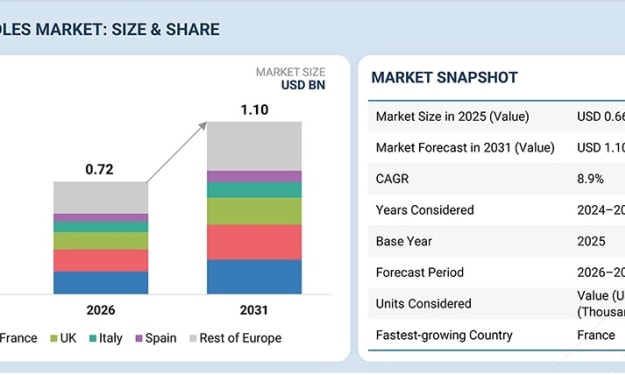
Europe Pen Needles Market Poised for Steady Expansion, Reaching US$1.10 Billion by 2031 Amid Diabetes Growth and Home-Care Shift
Europe’s pen needles market is entering a period of sustained, value-driven growth as chronic disease burden, demographic shifts, and home-based care adoption reshape injectable therapy delivery across the region. Valued at US$0.66 billion in 2025, the market increased to US$0.72 billion in 2026 and is projected to expand at a resilient CAGR of 8.9% from 2026 to 2031, reaching a forecasted US$1.10 billion by 2031.
By Juan Martinez6 days ago in Futurism
A Love Forboding
The chipped stone slope caused unbearable footing. I slid, skirting on my heels. I cast my shield, relinquishing my guard to stay upright. Left with my double-edge and a prayer to the maker, I skated toward my objective. The earthly stubble gave way to solid ground. I found myself restored, a trail of dust in my wake.
By James U. Rizzi3 days ago in Fiction


Comments
There are no comments for this story
Be the first to respond and start the conversation.