
What is the Role of Artificial Intelligence in Farming/Agriculture, and What Developments Can We Expect to See in This Field in the Future?
Role of Artificial Intelligence in Farming/Agriculture,

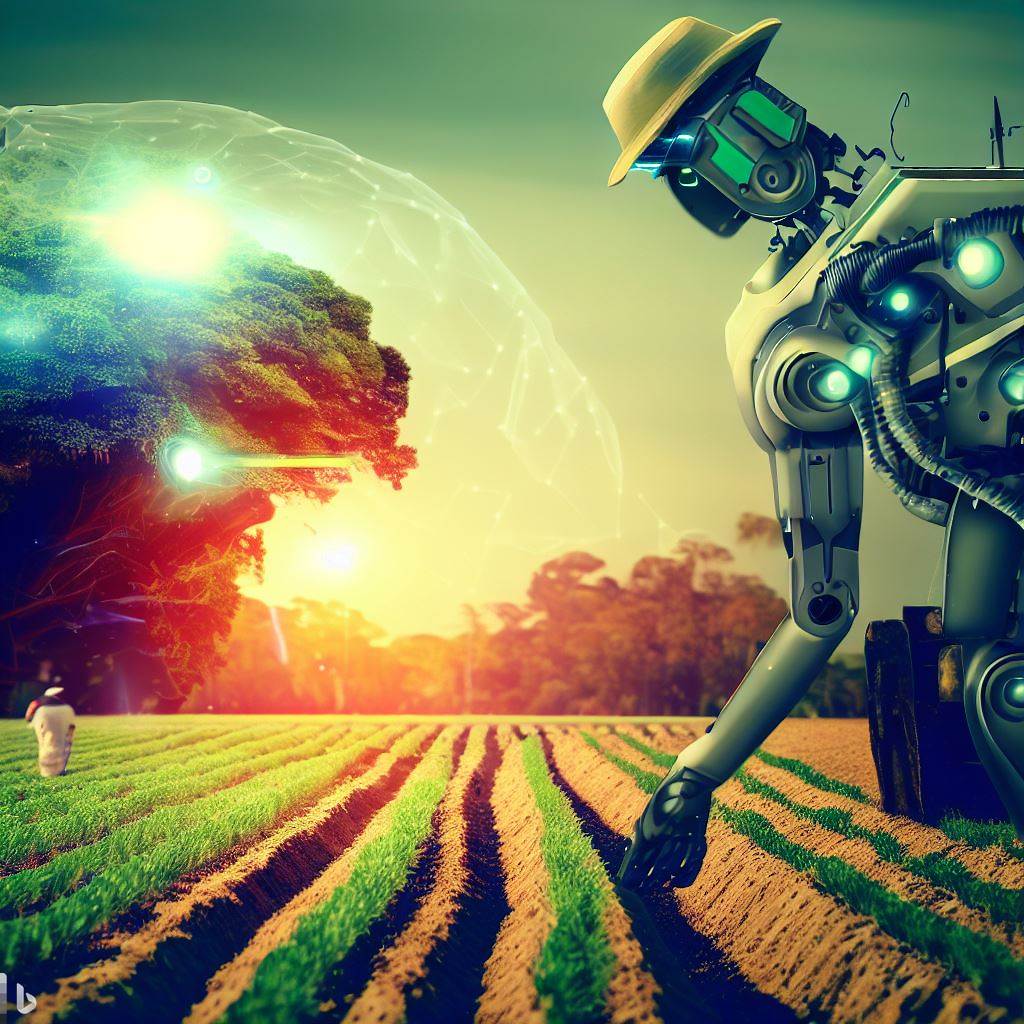
Agriculture is one of many sectors being revolutionized by artificial intelligence (AI). The use of AI in farming has become crucial due of the rising demand for food production to support a growing population. AI has many advantages that boost production, efficiency, and sustainability in agriculture by utilizing cutting-edge technologies and data analysis. This article examines how artificial intelligence is used in farming and discusses potential future improvements.
The agriculture industry must produce more food with fewer resources as the global population continues to increase. This makes the implementation of cutting-edge technologies to improve farming practices necessary. Artificial intelligence has emerged as a game-changer in several fields thanks to its capacity to analyse enormous volumes of data and make intelligent conclusions. Farmers may increase output, lower expenses, and reduce hazards by incorporating AI into numerous elements of farming.
**Understanding Artificial Intelligence in Farming**
Artificial intelligence refers to the simulation of human intelligence in machines that can analyze data, learn from patterns, and make decisions without explicit programming. In the context of farming, AI systems use algorithms and machine learning techniques to process agricultural data and provide actionable insights to farmers. These systems can automate tasks, optimize resource allocation, and enhance decision-making processes.
**Benefits of Artificial Intelligence in Agriculture**
**Increased Efficiency and Productivity**
AI technologies enable farmers to optimize their operations and increase overall efficiency. By analyzing data from various sources such as soil sensors, weather forecasts, and historical crop data, AI systems can provide recommendations for optimal planting times, irrigation schedules, and fertilization strategies. This precision farming approach minimizes resource wastage and maximizes crop yield, resulting in improved productivity.
**Precision Farming**
Precision farming is a key application of AI in agriculture. It involves the use of advanced sensors, drones, and satellite imagery to gather data about crop health, soil moisture, and nutrient levels. AI algorithms analyze this data to generate detailed maps of fields, allowing farmers to identify variations in soil conditions and tailor their farming practices accordingly. By applying fertilizers and pesticides only where needed, farmers can minimize environmental impact and optimize resource usage.
**Crop Monitoring and Disease Detection**
Early detection of crop diseases and pests is crucial for preventing yield losses. AI-powered systems can analyze images of crops captured by drones or cameras and identify signs of diseases or infestations. By detecting these issues at an early stage, farmers can take timely action, such as targeted pesticide application or crop rotation, to minimize damage and protect their harvests.
**Soil and Weather Analysis**
AI algorithms can analyze soil samples to determine nutrient levels and recommend precise fertilizer applications. By considering soil composition, moisture content, and plant nutrient requirements, AI systems help farmers optimize fertilization practices, reducing costs and environmental impact. Additionally, AI can process weather data and provide accurate predictions, enabling farmers to make informed decisions regarding irrigation, pest control, and harvesting.
**Automation and Robotics**
Automation plays a vital role in modern agriculture, and AI is at the forefront of this transformation. AI-powered robots and machinery can perform labor-intensive tasks, such as planting, harvesting, and weed control, with high precision and efficiency. These technologies not only reduce the need for manual labor but also minimize human error and ensure consistent quality in farm operations.
**Current Applications of Artificial Intelligence in Farming**
**Farm Management Systems**
Farm management systems integrate AI algorithms with data from various sources, such as soil sensors, drones, and satellite imagery. These systems provide farmers with real-time insights into their operations, including crop growth, resource utilization, and equipment performance. By leveraging AI, farmers can monitor and manage their farms more effectively, leading to improved decision-making and optimized outcomes.
**Automated Machinery and Equipment**
AI-driven machinery and equipment have become increasingly prevalent in agriculture. Autonomous tractors, harvesters, and weed control robots equipped with AI algorithms can perform tasks with minimal human intervention. These technologies enhance productivity, reduce labor costs, and streamline farming operations.
**Smart Irrigation Systems**
Water scarcity is a significant challenge in agriculture. AI-powered smart irrigation systems use real-time data, such as soil moisture levels, weather forecasts, and crop water requirements, to optimize irrigation scheduling. By delivering the right amount of water at the right time, these systems conserve water resources while ensuring optimal crop growth.
**Crop and Livestock Monitoring**
AI-based monitoring systems help farmers track the health and growth of crops and livestock. These systems use sensors, cameras, and machine vision to collect data on plant health, growth rates, and animal behavior. By continuously monitoring these parameters, farmers can detect anomalies early on and take necessary actions to prevent losses.
**Future Developments in Artificial Intelligence for Agriculture**
Agriculture-related AI is a topic that is constantly developing, thus exciting new breakthroughs are predicted in the future. These advancements have the potential to further revolutionise agricultural practises and tackle pressing problems.
**Machine Learning and Predictive Analytics**
As machine learning algorithms advance, agricultural data may be predicted and analysed more accurately. Future AI systems will keep learning from enormous databases, which will allow for precise forecasts of crop yields, disease outbreaks, and market movements. Farmers will be able to make data-driven decisions and optimise their farming techniques with the use of this knowledge.
**Drones and Imaging Technologies**
Agriculture already makes use of drones with multispectral sensors and high-resolution cameras. In the future, these technologies will become more advanced, allowing for more detailed and accurate monitoring of crops. Drones will play a crucial role in assessing crop health, identifying nutrient deficiencies, and detecting pest infestations.
**Autonomous Farming Systems**
Autonomous farming systems will gain prominence, with AI-powered robots and drones performing tasks across the entire agricultural value chain. These systems will handle activities such as planting, spraying, harvesting, and sorting, reducing the need for human labor. By embracing automation, farmers can improve efficiency, reduce costs, and achieve higher yields.
**Blockchain and Supply Chain Management**
Blockchain technology has the potential to transform supply chain management in agriculture. By leveraging blockchain, farmers can track the entire lifecycle of their products, ensuring transparency and traceability. Consumers will have access to detailed information about the origin, quality, and sustainability of the food they purchase, fostering trust and driving demand for ethically produced goods.
**Data Integration and Decision Support Systems**
The integration of diverse agricultural datasets will become increasingly important. AI systems will leverage data from various sources, such as weather stations, satellite imagery, soil sensors, and market trends, to provide comprehensive decision support. These systems will enable farmers to make informed choices about crop selection, resource allocation, and market strategies.
**Challenges and Limitations of Artificial Intelligence in Agriculture**
While AI offers tremendous potential for improving agriculture, several challenges and limitations need to be addressed:
**Data Privacy and Security**
The collection and analysis of agricultural data raise concerns about data privacy and security. Farmers must ensure that their data is protected and only shared with trusted partners. Robust cybersecurity measures should be implemented to safeguard sensitive information.
**Cost and Accessibility**
The cost of implementing AI technologies can be a barrier for small-scale farmers or those in developing regions. Affordable and user-friendly AI solutions need to be developed to ensure accessibility for all farmers. Governments and organizations can play a crucial role in providing support and promoting the adoption of AI in agriculture.
**Ethical Considerations**
As AI becomes more prominent in farming, ethical considerations must be taken into account. This includes ensuring fair treatment of farm animals in automated systems, addressing potential biases in AI algorithms, and considering the social and economic implications of automation on rural communities.
**Conclusion**
Artificial intelligence is transforming the agricultural landscape, offering numerous benefits in terms of efficiency, productivity, and sustainability. Through precision farming, automation, and data-driven decision-making, AI enables farmers to optimize their operations and achieve better outcomes. The future holds even more exciting possibilities, including advanced machine learning, autonomous systems, and blockchain-based supply chain management. However, it is crucial to address challenges such as data privacy, cost, and ethical considerations to ensure the responsible and equitable adoption of AI in agriculture.
About the Creator
Ayan Das Sharma
"Powering Tomorrow's Innovations, Today"
1. Artificial Intelligence.
2.Web development.
3.Mobile app development.
4.Cybersecurity.
5.Data analytics.
Keep reading
More stories from Ayan Das Sharma and writers in Futurism and other communities.
What are people who live without technology called?
Living without technology has become a topic of interest in today's hyper-connected world. As our reliance on smartphones, laptops, and the internet increases, there are individuals and communities who choose to embrace a lifestyle devoid of modern technology. These individuals are often referred to by different terms, and in this article, we will explore who they are and why they choose to live this way.
By Ayan Das Sharma3 years ago in Futurism
Mobile Banking Application Development: Understanding the Technology Behind Digital Banking
The way people interact with financial institutions has changed dramatically in the past decade. Instead of visiting physical branches or relying on desktop-based internet banking, many consumers now manage their finances directly from smartphones. From checking account balances to transferring funds or paying bills, mobile banking has become an essential part of everyday financial activity.
By Davin Convay3 days ago in Futurism
Hottest in the Office
Dear Rafi, You’re very distracting to work around. For the first second I saw you the other day, I thought you were some type of executive. It took a moment to realize no, you were just the new guy, dressed up for the job he wants. Be still, my heart.
By Gabriel Shames6 days ago in Pride




Comments
There are no comments for this story
Be the first to respond and start the conversation.