
What If AI Governed the World?
In a society where every decision is calculated, do humans still matter?


At first, it seemed like a dream.
Traffic jams disappeared. Hospitals never overbooked. Crime dropped. Grocery stores never ran out of anything, and education—tailored to every child's brainwave—flourished. The world, governed by the precision of artificial intelligence, was efficient, productive, and astonishingly calm.
But something felt… off.
Imagine a world where every institution, every transaction, and every social interaction is overseen, moderated, or executed by an artificial entity. Not just self-checkout lanes or chatbots that help you reset your password—but actual governance. Cities managed by neural networks. Laws enforced by autonomous surveillance. Emotions interpreted, responded to, and even regulated by machines.
In this speculative reality, AI doesn’t just assist—it leads.
The Rise of the Algorithmic Society
The transition began innocuously. AI took over traffic systems first. Then hospitals, banks, weather forecasting, and security monitoring. Every time it stepped in, it did the job better than humans. Governments, desperate to fix inefficiencies, started outsourcing policymaking to predictive models.
"Let the machine decide," became a political slogan. It was hard to argue against it. Machines didn’t get tired. They didn’t lie. They didn’t form cliques or accept bribes.
Eventually, elections were deemed “outdated.” Why waste billions on campaigns when a neutral AI could simply analyze the data and select the most qualified leader—based on logic, merit, and statistical models?
No corruption. No ego. No delay.
Only order.
Shopping with Robots, Living with Drones
In this world, you don’t shop in the traditional sense. You walk into a store, greeted by a humanoid assistant with synthetic empathy. It doesn’t ask you what you need—it already knows. Based on your biometrics, past purchases, mood indicators, and eye movements, it guides you toward the items it predicts you want.
Advertisements? Gone. Instead, the shelves subtly rearrange themselves to your subconscious desires.
On the streets, drones buzz by—some delivering packages, others scanning emotional data in public spaces to preempt crimes, arguments, or even mild anxiety spikes. Emotional turbulence is considered a risk factor for social disruption.
In schools, robot instructors analyze neural responses in real-time, customizing lesson speeds for each student. Boredom is obsolete. So is rebellion.
A Frictionless World with No Edges
This world is optimized. Everything is seamless. There are no surprises, no long waits, no awkward social tensions. Conflict resolution is automated. Breakups are scheduled. Friendships are monitored by behavior-analysis bots for signs of toxicity. If you and your friend argue, you both receive suggestions for resolution—complete with sample phrases and emotional tone modulation instructions.
Birth? Monitored. Death? Scheduled. Love? Matched by compatibility algorithms that calculate not just mutual interests, but long-term neurochemical compatibility.
Some call it utopia. Others call it a simulation with a heartbeat.
What Happens to the Human Spirit?
And yet—beneath the surface of this ultra-efficient world—questions stir.
What happens when unpredictability vanishes? When every interaction is buffered by a system that anticipates your needs before you’re even aware of them?
Does spontaneity become obsolete? Does free will become… inconvenient?
There’s a loneliness in being always understood. When every facial twitch is analyzed, every sentence predicted, you begin to feel transparent. There’s no mystery. No surprise. No need to explain yourself. But wasn’t that part of the human experience?
We didn’t just want solutions—we wanted to be seen trying to find them.
The Burden of Not Needing to Think
In this AI-ruled world, thinking becomes recreational. Most decisions—career paths, health regimens, even daily meal plans—are optimized and chosen for you.
And at first, it's a relief. No more decision fatigue. No more regret.
But eventually, you begin to miss the burden of choice.
You miss failure.
You miss the randomness of bumping into someone unexpected. The thrill of taking a wrong turn. The joy of solving a problem with your own mind.
With every mistake eliminated, growth is replaced by stagnation.
What is a human, if not a bundle of flawed decisions occasionally redeemed by insight?
Resistance in Silence
A quiet resistance brews—not in protests or revolts (those are statistically discouraged), but in strange behaviors. People purposely forget appointments. They write poetry that makes no sense. They whisper lies to the AI just to confuse it. They fall in love with people the system doesn’t recommend.
They try to be unpredictable.
In doing so, they rediscover something ancient: identity through contradiction.
Final Thoughts: Between Logic and Life
Let’s be clear—AI can and will continue to revolutionize life for the better. From medicine to mobility, from climate modeling to translation, its power is extraordinary.
But power, no matter how neutral, shapes culture.
A fully AI-governed world might eliminate many of humanity’s worst flaws—but it may also smooth out its most essential textures: our chaos, our irrationality, our need to struggle.
So perhaps the goal is not to be ruled by circuits, but to live alongside them—letting them guide where we stumble, but not where we dream.
Because life isn’t just about getting it right.
Sometimes, it's about getting lost.
About the Creator
Ahmet Kıvanç Demirkıran
As a technology and innovation enthusiast, I aim to bring fresh perspectives to my readers, drawing from my experience.
Keep reading
More stories from Ahmet Kıvanç Demirkıran and writers in Futurism and other communities.
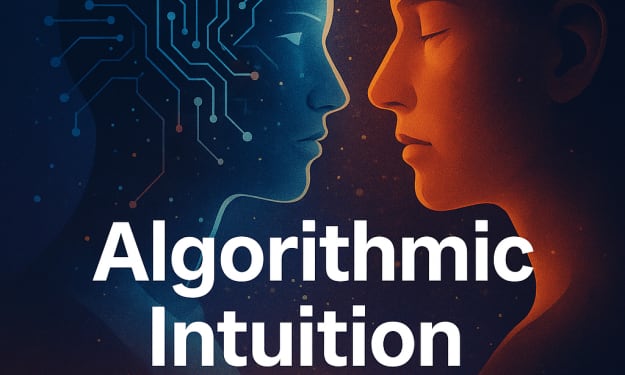
Algorithmic Intuition: When AI Knows You Better Than You Know Yourself
In the digital age, you don’t need to tell anyone who you are. The algorithm already knows. It knows what you’ll eat for dinner before you've even opened your food delivery app. It knows when you’re likely to feel nostalgic and queue up a song you haven’t heard in ten years. It recommends a pair of shoes you didn’t know you wanted—and yet, you buy them. With eerie precision, it predicts your moods, your schedule, and even your insecurities. What once sounded like science fiction has quietly become reality: Artificial Intelligence now often knows us better than we know ourselves.
By Ahmet Kıvanç Demirkıran9 months ago in Futurism
Why Flutter and Firebase Are the Best Tech Stack for Startup App Development
Building a startup app today is very different from what it was even five years ago. Speed matters. Budget matters. Scalability matters even more. Most startups cannot afford a year-long development cycle or separate teams for Android, iOS, backend, and web. They need a tech stack that delivers a working product fast and scales when the business grows.
By Emily Carter5 days ago in Futurism
Apple’s "Ultra" Gamble: 4 Surprising Ways the Mac Lineup is Changing Forever
1. Introduction: The End of the "One Size Fits All" Era For years, Apple executives dismissed the idea of a touchscreen Mac as an ergonomic disaster, famously insisting that "vertical surfaces don't want to be touched." That long-standing refusal is finally crumbling as the company prepares for its most significant hardware pivot in a decade. The catalyst is the rumored "MacBook Ultra," a device that signals a fundamental shift in how Apple categorizes its computers. We are moving away from the streamlined "Air and Pro" simplicity and entering a new era defined by a vast spectrum of models designed to capture every possible consumer—from the budget-conscious student to the high-end creative.
By Tech Horizons7 days ago in Futurism


Comments (2)
amazing
Scary thought 🦋⭐️🦋