
What are inside 6 generation fighters jet
When Will 6th Gen Fighters Fly?

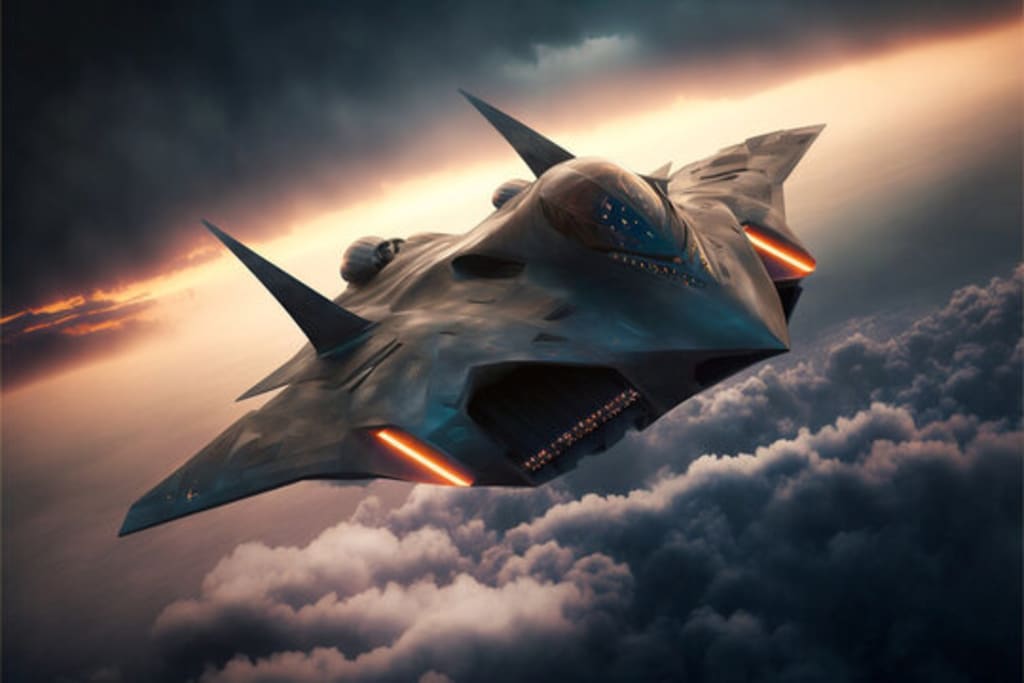
6th Generation Fighter Jets: The Future of Aerial Warfare
As the world steps deeper into the 21st century, the realm of military aviation is undergoing a profound transformation. The development of 6th generation fighter jets represents a new frontier in aerial combat, surpassing the capabilities of current fifth-generation fighters like the F-35 Lightning II, F-22 Raptor, Su-57, and J-20. With advanced stealth, AI integration, hypersonic capabilities, and drone teamwork, these futuristic jets promise to dominate the skies for decades to come.
What is a 6th Generation Fighter Jet?
A 6th generation fighter jet refers to the next evolution of combat aircraft that will succeed fifth-generation platforms. While no 6th-gen fighter is operational yet, several countries are developing prototypes and concepts. These aircraft are being designed to address future battlefield challenges, incorporating next-level stealth, automation, network-centric warfare, and multi-role flexibility.
Unlike previous generations that focused primarily on speed and agility, 6th-gen fighters emphasize information dominance, survivability, and unmanned integration.
---
Key Features of 6th Generation Jets
1. Enhanced Stealth
Stealth will move beyond radar invisibility to include multi-spectral stealth, hiding jets from infrared, acoustic, and electromagnetic detection. The airframes will be shaped with active camouflage, radar-absorbent materials, and heat-suppression systems.
2. Artificial Intelligence (AI)
AI will play a central role in decision-making. Pilots will rely on AI copilots, capable of assisting in navigation, threat analysis, and combat. In some missions, the entire aircraft might fly autonomously.
3. Manned-Unmanned Teaming (MUM-T)
6th generation fighters will command and coordinate with loyal wingman drones—unmanned combat aerial vehicles (UCAVs) that support the jet with surveillance, electronic warfare, or even strike capabilities.
4. Hypersonic Weapons
Equipped with hypersonic missiles (speed over Mach 5), these jets will strike targets faster than traditional defenses can react, drastically reducing enemy response time.
5. Directed Energy Weapons
High-energy laser systems or microwave weapons could be integrated for both defensive and offensive roles—intercepting missiles mid-air or disabling enemy sensors and electronics.
6. Advanced Sensor Fusion
The aircraft will integrate data from satellites, ground units, drones, and other jets in real time, giving pilots a 360-degree battlespace view. This networked warfare ensures superior situational awareness and command-and-control.
7. Adaptability and Modularity
6th-gen jets will be designed to quickly adapt to different mission roles using modular payloads, allowing a single aircraft to switch from stealth strike to air superiority or electronic warfare missions within hours.
---
Leading 6th Generation Programs Around the World
United States: NGAD (Next Generation Air Dominance)
The U.S. Air Force and Navy are working on the NGAD program, which is expected to include both manned and unmanned platforms. A prototype reportedly flew in 2020. NGAD will eventually replace the F-22 Raptor with a more survivable, lethal, and connected fighter.
United Kingdom and Partners: Tempest
The Tempest fighter is being developed by the UK in collaboration with Italy, Sweden, and Japan (as part of the GCAP — Global Combat Air Programme). Scheduled to enter service by 2035, Tempest will feature AI, drone control capabilities, and advanced stealth.
France, Germany, and Spain: FCAS (Future Combat Air System)
This European initiative will produce a 6th-gen fighter accompanied by drone swarms and powered by cloud-connected data sharing. The FCAS program aims to replace the Eurofighter and Rafale jets by 2040.
Japan: F-X or Mitsubishi F-3
Japan’s F-X program (now integrated into GCAP with the UK and Italy) envisions a stealthy, AI-powered aircraft with advanced sensors and directed-energy weapons to defend against growing regional threats.
China and Russia
While less is officially confirmed, China and Russia are also believed to be pursuing 6th-gen fighter development. China has reportedly begun concept work, while Russia has suggested future designs under the Su-75 and MiG platforms.
---
Challenges to Development
Creating a 6th-gen fighter is technologically and financially demanding. Challenges include:
Miniaturizing and powering directed-energy weapons.
Creating secure, hack-proof communications for AI and drones.
Ensuring real-time sensor fusion from diverse sources.
Managing cost overruns and keeping project timelines intact.
Moreover, nations must also consider pilot training, legal frameworks for AI combat, and ethical concerns over autonomous weapons.
---
When Will 6th Gen Fighters Fly?
While development has begun, full operational capability is expected between 2035 and 2040. Some prototype test flights have already occurred, and many countries aim for early deployment within the next decade.
---
Conclusion
6th generation fighter jets represent a quantum leap in aerospace innovation. These aircraft are not just faster or stealthier—they are smarter, more connected, and designed for an era of digital, drone-assisted, and AI-enhanced warfare. As global powers race to dominate this next frontier, the skies of the future will be ruled not just by machines of metal, but by machines of intelligence.
---
If you’d like, I can also turn this article into a YouTube script, a poster, or provide images or concept art of 6th generation jets.
About the Creator
About Binding Prometheus
I want to start actively advocating on behalf of my own work, and the most valuable part of my canon is, without a doubt, Binding Prometheus, the play I have been working on since 2019 and only finished in 2023 as part of my MA. The play itself is an amalgamation of a million different inspirations. On one end, it evokes the Ancient Greek myth-play, deriving its own title from the earliest extant work of Western drama we have, Aeschylus’s Prometheus Bound. On the other end, it borrows significantly from the sci-fi bulwarks from over the years, namely Mary Shelley’s Frankenstein and Karel Capek’s Rossum’s Universal Robots. The play could be an episode of Black Mirror, I fear. I don’t know. I’ve only ever seen one episode of Black Mirror.
By Steven Christopher McKnight15 days ago in Futurism
UAE Mental Health Market: Rising Awareness, Service Expansion & Growth Outlook
According to IMARC Group's latest research publication, UAE Mental Health Market size reached USD 13.10 Billion in 2024. Looking forward, IMARC Group expects the market to reach USD 28.26 Billion by 2033, exhibiting a growth rate (CAGR) of 8.92% during 2025-2033.
By Abhay Rajput4 days ago in Futurism


Comments
There are no comments for this story
Be the first to respond and start the conversation.