
Web3: The Future of the Internet
Hey there, Have you heard of Web3? If you haven't, don't worry, you're not alone.


What is Web3?

Hey there, Have you heard of Web3? If you haven't, don't worry, you're not alone. Web3 is the latest iteration of the World Wide Web, and it's creating a lot of buzz in the tech industry.
So, what exactly is Web3? Simply put, it's the decentralized web. To understand what that means, let's take a quick look at the history of the web.
The first iteration of the web, Web1, was static and mainly consisted of static HTML pages. Then came Web2, which was more dynamic and allowed users to interact with websites through social media, e-commerce, and other interactive features.
Web3, on the other hand, is all about decentralization. It's a network of peer-to-peer connections that don't rely on central servers or intermediaries. Instead, Web3 is powered by blockchain technology and smart contracts.
So, why is Web3 important? Well, for starters, it eliminates the need for middlemen and allows for greater privacy, security, and ownership. With Web3, you can securely store and manage your data, assets, and identity without relying on centralized institutions.
Furthermore, Web3 has the potential to disrupt various industries, from finance and banking to social media and gaming. Decentralized finance (DeFi) and non-fungible tokens (NFTs) are just some of the examples of the many exciting use cases of Web3.
Web3 is the decentralized web that is powered by blockchain technology and smart contracts. It offers greater privacy, security, and ownership, and has the potential to disrupt various industries. As college students, it's important to keep up with the latest trends and innovations in technology, and Web3 is something to keep an eye on.
Understanding Web3

Web1 and Web2
To understand what Web3 is, we first need to look at its predecessors, Web1 and Web2. Web1 was the first version of the web, which consisted mainly of static websites and basic HTML pages. There was no interactivity or personalization, and it was mainly used for informational purposes.
Web2, on the other hand, was a significant improvement over Web1. It introduced dynamic web pages, social media, e-commerce, and other interactive features that we've become accustomed to. With Web2, users could interact with websites and each other, and the internet became a more engaging and social place.
Characteristics of Web3
So, what makes Web3 different from its predecessors? Well, there are a few key characteristics that set it apart:
Decentralization: Web3 is decentralized, meaning it's not controlled by any central authority or entity. It's based on blockchain technology, which allows for secure, decentralized transactions and data storage.
Interoperability: Unlike Web2, where data is siloed within specific platforms, Web3 aims to be interoperable, meaning data can be shared across different platforms and applications. This opens up new possibilities for collaboration and innovation.
Trustless Transactions: Web3 enables trustless transactions, meaning transactions can be verified without the need for intermediaries like banks or payment processors. This reduces costs and increases efficiency.
Immutability: Data on the Web3 is immutable, meaning it can't be changed once it's been added to the blockchain. This ensures data integrity and makes it easier to audit transactions.
Benefits of Web3
So, what are the benefits of Web3? Well, there are quite a few:
Increased Security: Web3 is more secure than Web2, thanks to its decentralized nature and cryptography-based security protocols.
Greater Transparency: With Web3, transactions are transparent, meaning anyone can see the details of a transaction. This increases trust and reduces the risk of fraud.
Improved Privacy: Web3 offers better privacy than Web2, thanks to its encryption protocols and decentralized data storage.
Enhanced Control and Ownership: Web3 gives users greater control and ownership over their data and digital assets. This means users can monetize their data and maintain ownership over their digital identity.
Web3 is a significant improvement over its predecessors, offering increased security, transparency, privacy, and control. Its decentralized nature and interoperability also open up new possibilities for collaboration and innovation. Stay tuned for the next chapter, where we'll dive into how Web3 works!
How Web3 Works
Blockchain Technology
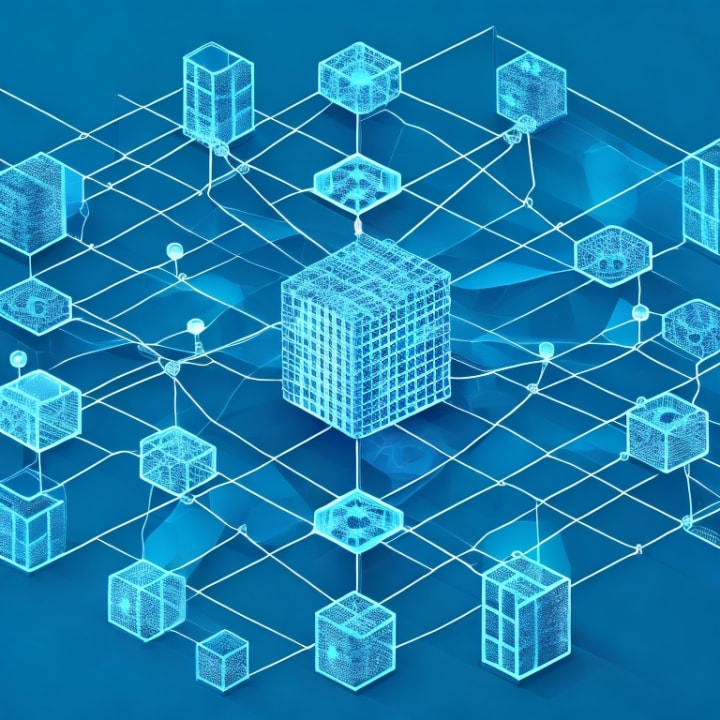
At the heart of Web3 lies blockchain technology. You may have heard of blockchain as the underlying technology behind Bitcoin, the world's first cryptocurrency. But blockchain technology is much more than that. It's a decentralized, distributed ledger that records transactions on a network of computers.
So, what does that mean? In simple terms, it means that there's no central authority controlling the network. Instead, every node (i.e., computer) on the network has a copy of the ledger. When a new transaction is made, it's verified and added to the ledger by multiple nodes on the network, ensuring its accuracy and transparency.
But what makes blockchain technology so powerful is its security. The ledger is tamper-proof, and once a transaction is recorded, it can't be altered or deleted. This makes it an ideal platform for applications that require high security and transparency, such as finance and supply chain management.
Decentralized Applications (dApps)
Now that we've covered blockchain technology let's talk about decentralized applications or dApps. As the name suggests, dApps are applications that run on a decentralized network, such as a blockchain. Unlike traditional applications that run on a single server, dApps run on a network of nodes, making them more resilient to attacks and downtime.
But the real magic of dApps lies in their ability to run smart contracts. Smart contracts are self-executing contracts with the terms of the agreement between buyer and seller being directly written into lines of code. They allow for transactions to occur automatically and without the need for intermediaries, such as banks or lawyers.
One example of a dApp is Uniswap, a decentralized exchange that allows users to trade cryptocurrencies without the need for a central authority. Instead, the exchange is powered by smart contracts, ensuring that every trade is transparent and secure.
Cryptocurrencies
Finally, let's talk about cryptocurrencies. Cryptocurrencies are digital assets that use cryptography to secure transactions and to control the creation of new units. Unlike traditional currencies, cryptocurrencies are not issued by a central authority but instead are created through a process called mining, where powerful computers solve complex mathematical equations.
One of the most popular cryptocurrencies is Ethereum, the second-largest cryptocurrency by market capitalization after Bitcoin. Ethereum is unique because it's not only a cryptocurrency but also a platform for building decentralized applications. It's powered by smart contracts, allowing developers to create dApps that can run on the Ethereum network.
Web3 Use Cases
Web3 has the potential to revolutionize several industries, ranging from finance to gaming. In this chapter, we will take a closer look at some of the most exciting use cases of Web3 technology.
A. Finance and Banking
Decentralized Finance (DeFi) is one of the most promising use cases of Web3 technology. DeFi is a new financial system built on top of blockchain technology, which allows anyone to access financial services without the need for intermediaries like banks or other financial institutions.
DeFi applications include decentralized exchanges (DEXs), lending platforms, and stablecoins. DEXs like Uniswap and Sushiswap allow users to trade cryptocurrencies without the need for centralized exchanges, reducing the risk of hacks and thefts. Lending platforms like Compound and Aave allow users to lend and borrow cryptocurrencies at competitive interest rates. Stablecoins like Dai and USDC are cryptocurrencies designed to maintain a stable value and are backed by fiat currencies.
B. Supply Chain Management
Supply chain management is another industry that could benefit greatly from Web3 technology. The use of blockchain technology can provide greater transparency and traceability in supply chains, reducing the risk of fraud and counterfeiting.
By creating a decentralized and secure database, Web3 technology can provide a tamper-proof record of every step in the supply chain. This can help to reduce costs and increase efficiency by eliminating the need for intermediaries and reducing the time and effort required to verify the authenticity of products.
C. Social Media
Web3 technology can also be used to create decentralized social media platforms that offer greater privacy and control to users. Current social media platforms like Facebook and Twitter are centralized and owned by a single entity, which means that users have little control over their data and privacy.
Decentralized social media platforms like Minds and Mastodon allow users to own and control their data, providing greater privacy and security. Users can also earn rewards for their contributions, such as content creation or curation, through the use of cryptocurrency incentives.
D. Gaming
Web3 technology can also transform the gaming industry by enabling true digital ownership and play-to-earn games. In traditional gaming, players do not own the assets they acquire in the game, and they cannot transfer them outside of the game.
With Web3 technology, players can truly own the assets they acquire in the game, and they can transfer them to other players or outside the game. Play-to-earn games like Axie Infinity allow players to earn cryptocurrency by playing the game, creating a new form of income for players.
Web3 technology has the potential to revolutionize several industries by providing greater transparency, security, and control to users. From finance to gaming, Web3 applications are creating new opportunities and changing the way we interact with digital systems.
Web3 Challenges

Web3 is a new and exciting space that offers numerous benefits to its users. However, like any other emerging technology, it has its own set of challenges.
Security
Web3 is designed to be more secure than Web2, but it's not invulnerable. Smart contracts are the most significant security risk in the Web3 space. Smart contracts are self-executing programs that execute the terms of a contract automatically. If a smart contract is hacked, funds or data can be lost irreversibly. Here are some ways to mitigate the security risks in Web3:
1. Smart Contract Audits: Smart contracts should be audited by reputable third-party auditing firms to identify potential security vulnerabilities.
2. Wallet Security: Web3 wallets hold your cryptocurrency and are a key target for hackers. It's essential to choose a wallet that has robust security features and to protect your private keys.
Scalability
Scalability is another significant challenge that Web3 faces. As more users join the network, transaction fees can become prohibitively high, and transaction times can become slow. The current state of the Web3 infrastructure is not designed to handle the volume of transactions that the network is likely to experience. Here are some ways to improve the scalability of Web3:
1. Layer-2 Scaling Solutions: Layer-2 scaling solutions like Plasma and Rollups can help increase the scalability of the network by offloading transactions from the main chain.
2. Sharding: Sharding is a technique that can help increase the number of transactions that the network can handle by partitioning the network into smaller shards.
Adoption
Adoption is the final challenge that Web3 faces. The technology is still in its early stages, and many people are unaware of its potential. The complexity of using Web3 platforms can also be a significant barrier to adoption. Here are some ways to promote adoption of Web3:
1. Education: Web3 education is critical to promoting adoption. College students can learn about Web3 through online courses, workshops, and other educational resources.
2. User-Friendly Interfaces: Web3 platforms need to be user-friendly to attract new users. User interfaces should be intuitive and easy to use.
Web3 is an exciting technology that offers numerous benefits to its users. However, there are significant challenges that need to be addressed to ensure the success of Web3. By addressing these challenges, we can promote the adoption of Web3 and unlock its full potential.
Web3 Future

The future of Web3 is exciting and full of potential developments. In this chapter, we'll explore some of the potential advancements that could be seen in Web3 technology, as well as the job and investment opportunities that may arise.
A. Potential Developments
As Web3 technology continues to evolve, we can expect to see many new use cases and applications emerge. One such development is the integration of Web3 into everyday life. This could mean using Web3 technology to pay for goods and services, track shipments, or even vote in elections.
Another potential development is the growth of the decentralized web. This would allow for the creation of decentralized websites, social media platforms, and other applications that are not controlled by a central authority. This would give users more control over their data and allow for greater privacy and security.
Finally, we may see advancements in the area of artificial intelligence and machine learning. By combining Web3 technology with AI and ML, we could see the creation of powerful new applications that are capable of analyzing and interpreting vast amounts of data in real-time.
B. Job Opportunities
As the use of Web3 technology continues to grow, so too will the demand for skilled professionals in the field. This means that there will be many job opportunities for those with expertise in blockchain development, smart contract development, and other Web3-related skills.
In particular, there will be a growing need for blockchain developers who can design and build decentralized applications. This will require a deep understanding of blockchain technology, programming languages such as Solidity, and other related skills.
C. Investment Opportunities
For those looking to invest in Web3 technology, there are many opportunities to explore. One such opportunity is cryptocurrency trading. As the use of cryptocurrencies continues to grow, there will be many opportunities to invest in promising projects and new digital assets.
Another investment opportunity is venture capital funding. Many Web3 startups are in need of funding to get their projects off the ground, and venture capital firms are always on the lookout for promising new opportunities.
The future of Web3 is bright and full of potential. From new use cases and applications to job and investment opportunities, there is a lot to be excited about in the world of Web3. As college students, now is the time to start learning about this technology and exploring the many opportunities that it presents.
Conclusion
Web3 is an exciting new technology that offers a wide range of benefits to users. In this article, we've explored what Web3 is, how it works, its use cases, challenges, and future potential. In this final chapter, we'll summarize the key takeaways and provide some advice on how to get started with Web3.
Recap of Web3 benefits
Web3 is a revolutionary technology that offers many benefits to users. Some of the key benefits of Web3 include:
- Increased security: Because Web3 is built on blockchain technology, it is inherently more secure than traditional web applications.
- Greater transparency: Web3 applications are decentralized, meaning that everyone can see what's happening on the network. This increased transparency promotes trust and accountability.
- Improved privacy: With Web3, users have greater control over their data and can choose to keep their personal information private.
- Enhanced control and ownership: Web3 applications allow users to own and control their digital assets, giving them greater autonomy and flexibility.
Call to Action
If you're interested in Web3, there are many ways to get involved and start exploring the technology. Here are some steps you can take:
- Learn more about Web3: There are many resources available online that can help you learn more about Web3. Start by reading articles, watching videos, and listening to podcasts about the technology.
- Join Web3 communities: There are many Web3 communities online, such as forums, chat groups, and social media groups. Joining these communities can help you stay up-to-date on the latest developments and connect with other Web3 enthusiasts.
- Experiment with Web3 applications: There are many Web3 applications available that you can experiment with. Start by exploring decentralized exchanges, digital wallets, and social media platforms that use Web3 technology.
Encouragement to embrace Web3
Web3 is a revolutionary technology that has the potential to transform the way we interact with the web. As college students, you have the opportunity to be at the forefront of this transformation. Embrace Web3 and explore its potential. Who knows, you might just be the next Web3 entrepreneur or developer.
About the Creator
About Binding Prometheus
I want to start actively advocating on behalf of my own work, and the most valuable part of my canon is, without a doubt, Binding Prometheus, the play I have been working on since 2019 and only finished in 2023 as part of my MA. The play itself is an amalgamation of a million different inspirations. On one end, it evokes the Ancient Greek myth-play, deriving its own title from the earliest extant work of Western drama we have, Aeschylus’s Prometheus Bound. On the other end, it borrows significantly from the sci-fi bulwarks from over the years, namely Mary Shelley’s Frankenstein and Karel Capek’s Rossum’s Universal Robots. The play could be an episode of Black Mirror, I fear. I don’t know. I’ve only ever seen one episode of Black Mirror.
By Steven Christopher McKnight19 days ago in Futurism
Saudi Arabia Event Management Market: Mega Events, Tourism Push & Demand Growth
According to IMARC Group's latest research publication, the Saudi Arabia event management market size reached USD 9,450.2 Million in 2024. The market is projected to reach USD 19,561.3 Million by 2033, exhibiting a growth rate (CAGR) of 8.42% during 2025-2033.
By Suhaira Yusuf8 days ago in Futurism


Comments
There are no comments for this story
Be the first to respond and start the conversation.