
We Inherit The Sins of Our Fathers and Mothers
The Cost of Plastic


Jake was preparing to deliver his sales pitch to the UN. It was not what he thought he would ever do, but he did not have a choice. He had been driven to think the unthinkable, imagine the unimaginable, and deal with the unscrupulous, untenable movement of society, that had been based on false economy for over 100 years. He focused on his 3-minute presentation for Global Improvement Future Technologies, GIFT. They were being endorsed by the Forums on Sustainable Development, Climate Change and Human health.
Circumstances release a rare genius. Intelligent and trained individuals risk developing an idea, then accept unexpected consequences. Most experts agree that there is no stopping innovative thought. American scientists, originating in Europe, involved in the Manhattan project, argued that if they had the knowledge to develop the nuclear bomb, so did Germany, Japan and the Soviets. These same scientists worked to have nuclear bombs banned. The use of nuclear bombs resolved a problem in the short term but left a long-lasting mark.
Humans do not always foresee rational consequences. When birth control was developed, the benefits of planned parenthood and sexual freedom usurped centuries of religious and social traditions. The effects of urine, containing chemicals from birth control, causing estrogenic changes that lead to gender changes within fish, and affect human long-term fertility and reproductive cancers, was not imagined. Risk assessment was driven by the masses, who favoured the advantages of birth control, and did not consider the possibility of harmful low levels chemicals accumulating over time.
The sons and daughters of the future have always needed to pay for the sins of their fathers and mothers, who failed to consider unforeseen consequences, unexpected costs and sacrifices to future generations.
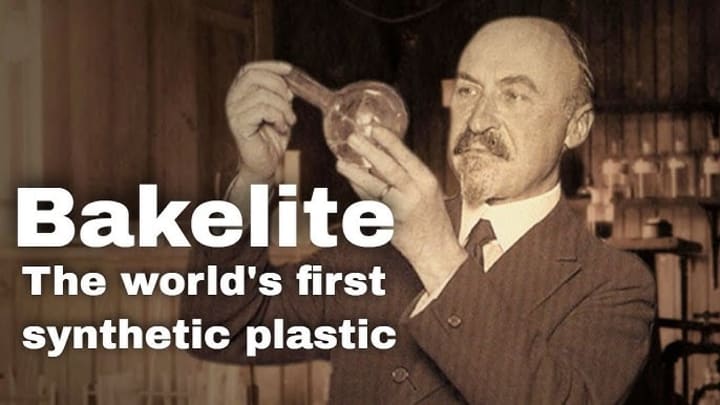
Using plastic to acquire short term profits at the expense of the future has jeopardized the stability of the exploding global population. In 1907, Leo Baekeland invented Bakelite, the first fully synthetic plastic, that contained no molecules found in nature. It was used as an electrical insulator and met the needs of the rapidly electrifying world.
During the World Wars, plastic Plexiglas was used for airplanes and nylon for parachutes, ropes and armour. Since the World Wars, marketing has created a new form of inequality based on the concept that faster, cheaper and more defines progress and wealth. This has spawned ironic challenges that mirror today’s dilemmas.
Plastics are an adaptable, cheap and affordable alternative to wood, steel, paper and glass. In the 1960’s, the movie, The Graduate, Mr. McGuire tells the hero Benjamin, “ There's a great future in plastics. Think about it. Will you think about it?”
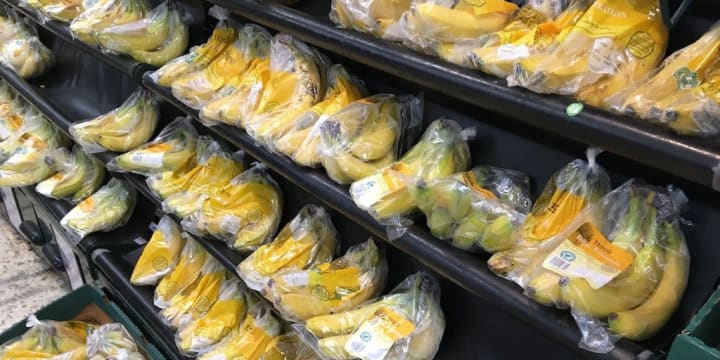
Many truth-seeking youth consider that plastic is synonymous with false, bogus, synthetic, lifeless, and artificial. There have often been moral power struggles between youth who oppose the older generation, generalized as corrupt, greedy, warmongering materialists. However, legislating the use and manufacturing of plastics, which now wrap many things, even vegetables and fruits, including bananas, the perfectly wrapped fruit, has become imperative.
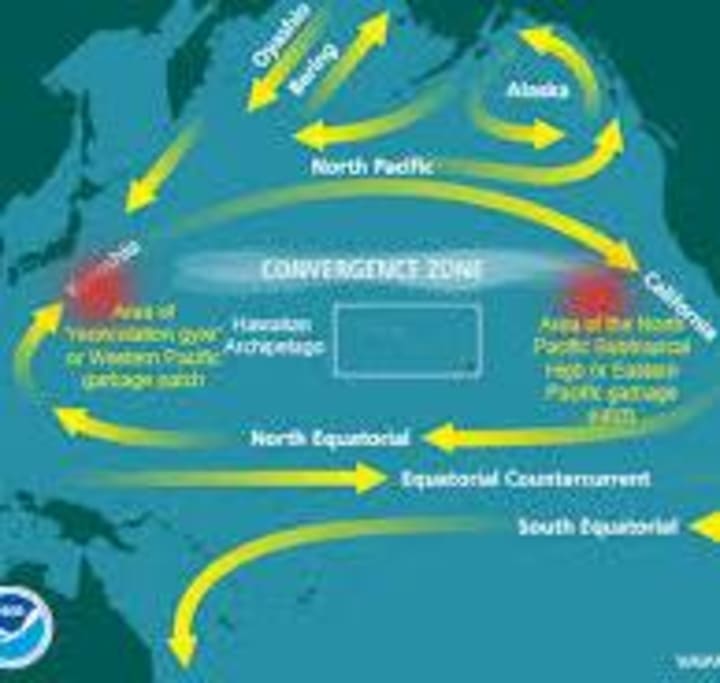
Plastic production has increased exponentially, from 2.3 million tons in 1950 to 448 million tons in 2015. During this time more than 7,800 million tons of plastics were produced, resulting in approximately 6,300 million tons of waste, mostly from single use plastics. The Pacific Trash Vortex, known as the Great Pacific Garbage Patch, has two vortices of debris collecting in the western and easter marine limits in the North Pacific Ocean.
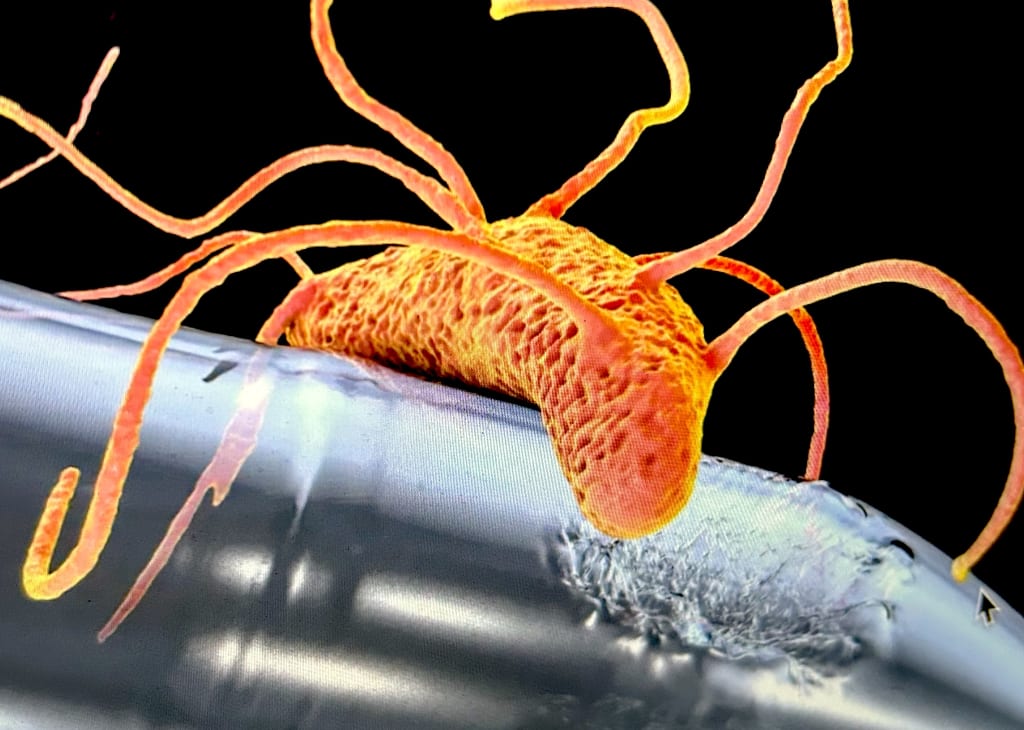
Plastics degrade by ultraviolet radiation, microwaves, acidity and salinity into microplastics. Microplastics have physicochemical characteristic that allow them to become resistant to environmental degradation. They accumulate in large quantities in the terrestrial ecosystem, then eventually pollute oceans, rivers and lakes. As the toxins become ingested, they accumulate through the food chain endangering marine life and ecosystems and persist even after death.
People consume about 50,000 particles of microplastics every year. Low (picomolar to nanomolar) doses of microplastics have been detected in nearly every part of the human body, including blood, brain, lungs, testicles the placenta and breast milk.
Microplastics are associated with lung inflammation, lung cancer, childhood obesity, and reduced learning and memory. Plastics mimic and alter the hormones estrogen and testosterone in fetal and juvenile mammals, leading to reproductive issues and low sperm count. Yet plastics are still used.
GIFT is involved in the development of the Global Plastic Treaty, that will establish ways to reduce the increasing costs of plastic to the environment and health.
We are taking a multi-prong attack on plastics, first by encouraging social change through incentives to use groundbreaking technology that can let individuals, corporations and organizations find cost effective ways to deal with plastics.
GIFT is involved in lobbying for new global laws that will make companies responsible to provide replacement parts for appliances. Dishwasher hoses are backordered for over a year, encouraging dishwasher replacement. We are mandating companies guarantee replacement parts for 15 years. We are past the point of permitting built in obsolescence.
Furthermore, GIFT has developed a laser cutting and printing apparatus that can use recycled plastics to make custom designed commodities. Unlike gold, silver, nickel and paper, recycling plastic is more expensive than making new plastic. However, companies will no longer be allowed to use back orders as an excuse not to replace parts.
GIFT is also coordinating research into biodegradable alternatives to petroleum-based plastic, that include using seaweed, methane, mushrooms, milk. cornstarch and sugar and agricultural byproducts.
However, GIFT is working to stopping a disposable lifestyle by incentives to reduce purchases, rethink needs, and reuse what is not needed by redesigning products with reclaimed materials. GIFT remembers that every small change can have a big impact.
Finally, GIFT is addressing the long-term problems caused by existing plastic. Certified recycling centers will be monitored at the planning, execution, data reporting and Meta-Analyses stages. Analysis will be done on microbial enzymatic biodegradation of 34 different bacterial genera and 63 species that can decompose microplastic in various sediments, including wastewater, landfill deposits, sanitary landfills, sewage residues, and soil.
The potential for bioremediation through the biodegradation definitely holds unknown challenges that we must be willing to accept. We cannot anticipate the effects of plastic eating bacteria entering into the drinking water.
Microorganisms make up about 1 to 3 percent of the body's mass and play a vital role in human health. We may become hosts for the plastic consuming bacteria. The bacteria's inherent ability to break down long-chain fatty acids, could destroy resident microplastics in the body and have unknown effects.
GIFT will take all possible precautions to redeem the problems that plastics have cost to our world. We recognize there are risks, but also know that doing nothing guarantees dire consequences for the future.
About the Creator
Katherine D. Graham
My stories usually present facts, supported by science as we know it, that are often spoken of in myths. Both can help survival in an ever-changing world.
Reader insights
Outstanding
Excellent work. Looking forward to reading more!
Top insights
Eye opening
Niche topic & fresh perspectives
Expert insights and opinions
Arguments were carefully researched and presented
Keep reading
More stories from Katherine D. Graham and writers in Futurism and other communities.
About Binding Prometheus
I want to start actively advocating on behalf of my own work, and the most valuable part of my canon is, without a doubt, Binding Prometheus, the play I have been working on since 2019 and only finished in 2023 as part of my MA. The play itself is an amalgamation of a million different inspirations. On one end, it evokes the Ancient Greek myth-play, deriving its own title from the earliest extant work of Western drama we have, Aeschylus’s Prometheus Bound. On the other end, it borrows significantly from the sci-fi bulwarks from over the years, namely Mary Shelley’s Frankenstein and Karel Capek’s Rossum’s Universal Robots. The play could be an episode of Black Mirror, I fear. I don’t know. I’ve only ever seen one episode of Black Mirror.
By Steven Christopher McKnight18 days ago in Futurism
RegTech Market: Regulatory Complexity, Automation & Market Opportunities
According to IMARC Group's latest research publication, global RegTech market size reached USD 18.6 Billion in 2025. Looking forward, IMARC Group expects the market to reach USD 77.0 Billion by 2034, exhibiting a growth rate (CAGR) of 17.10% during 2026-2034.
By Andrew Sullivan6 days ago in Futurism


Comments (14)
Wow so much great information here. I knew about microplastics being in the body but didn't know it was that extensive. I like to think I do my part by always recycling paper, plastic, aluminum, ect. But at the rate plastic is being produced, it feels like a losing battle. Thank you so much for sharing this important story and happy belated Congrats on TS!
Educational! Great work 👍 and congratulations 👏
The chemicals are biggest bane of current times. Cancer, infertility, gender change, rampant inflammation..
Well thought out and documented.
helpful article
Very good work 👏
The way you see your love feel it is nice.I subscriber you to support 🥰
Nice your story👍
That Pacific garbage sure is scaryyyy. Congratulations on your Top Story! 🎉💖🎊🎉💖🎊 "People. consume about 50,000 particles of microplastics every year. " There's an extra full stop after people
The way how you see love and feel it is brilliant. I subscribed you to give my support and I welcome you to read my ones too 🥰!
🎉 Congrats on getting Top Story! 🌟 So well deserved — I’m super proud of you! 🙌💖 I seriously can’t wait to read the next one… I know it’s gonna be just as amazing! ✍️🔥 Keep shining! 💫
As long as it's for a better Earth❤️❤️
Jake’s situation captures the weight of innovation and its unintended consequences brilliantly. A powerful reminder that progress always comes with a price. Well done and congratulations on your top story!
Are you sure