
Utopia in (⟨ɹ⟩)everse
The façade exposed.

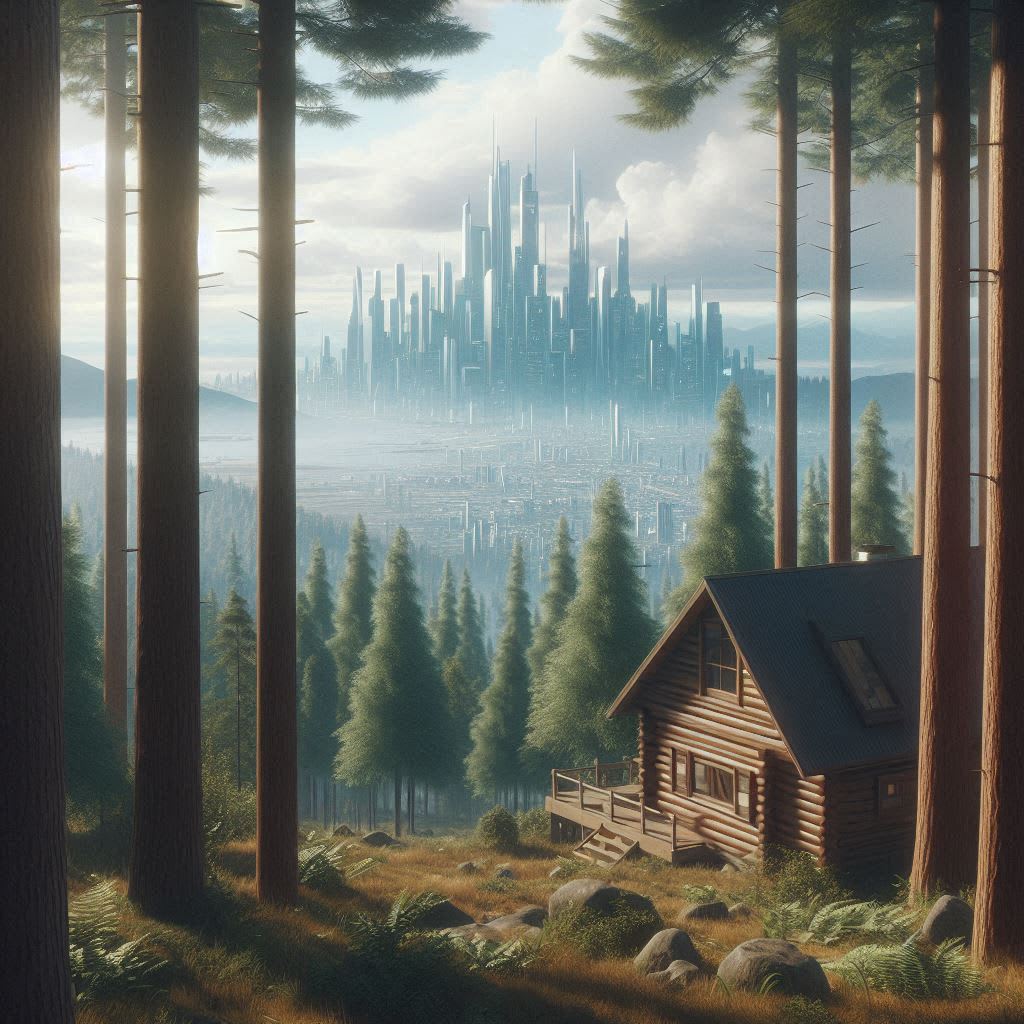
Samuel Burbank was tired. There were days when he wished he could leave the world of constant distal hum behind. He was completely disillusioned with the life he and his family were living.
Sam grew up in a society that promised liberation through technology but instead delivered restriction. As a child, he watched his father**a craftsman who specialized in woodworking**lose his livelihood when automated manufacturing overtook the market. Samuel's home, once filled with the smell of freshly carved wood and the hum of creativity, was replaced by sterile silence. His father, defeated, spent the rest of his days working mundane tasks assigned by the city's AI employment system, his passion extinguished.
The son vowed to never let himself be controlled the same way. He developed a fascination with the natural world, secretly reading banned books about wilderness survival and ancient farming techniques. When he married Anna, he shared his vision of a life beyond the city, though it felt like a distant dream at the time.
"I have always loved nature, the natural kind though, not the artificial landscapes which we are forced to forge in confined spaces". Anna too, would always yearn for more.
Anna
Anna was once a staunch believer in the promises of Utopia. Raised in a family of technologists, she grew up surrounded by innovation and saw firsthand how advancements improved daily life. But as she matured, she began to notice the cracks**how her mother, a brilliant programmer, was subtly pressured into compliance with the government’s ever-tightening control. Her mother’s creative genius was stifled, and Anna witnessed her gradual decline into unhappiness.
Anna and Samuel
Anna met Samuel during a community debate about technological ethics. His raw, impassioned perspective struck a chord with her. Over time, she found herself drawn to his passionate belief in a simpler, freer life. While Anna initially resisted the idea of leaving the city, the birth of their children---and the realization that she was raising them in an artificial bubble...changed her outlook.
The children
Maari and Darron, the Burbank children, grew up under the shadow of their parents’ unease. Maari, the youngest, was a wild and independent child, she hated screens and schedules. She would doodle pictures of wild animals she’d only seen in databases and dream of forests where she could run freely.
Darron, older and more skeptical, never dreamed of leaving Utopia. He enjoyed certain comforts**efficient education systems, immersive entertainment and his childhood friends. As he grew older, he started questioning the cost of these conveniences. The increasing sense of surveillance and loss of autonomy began to trouble him. His privacy seemed non-existent, though his friends seemed unbothered by it all, but the lifestyle grated on his nerves.
++
The Burbanks represent different facets of rebellion against a system that values uniformity over individuality. Samuel proposed a weekly trip on weekends out to the countryside to the family. Maari and her mother were quick to agree. Darron, not wanting to miss his exploits with friends was averse to the idea, but after hearing his sisters enthusiasm after a few nature trips, he decided to join the family trips.
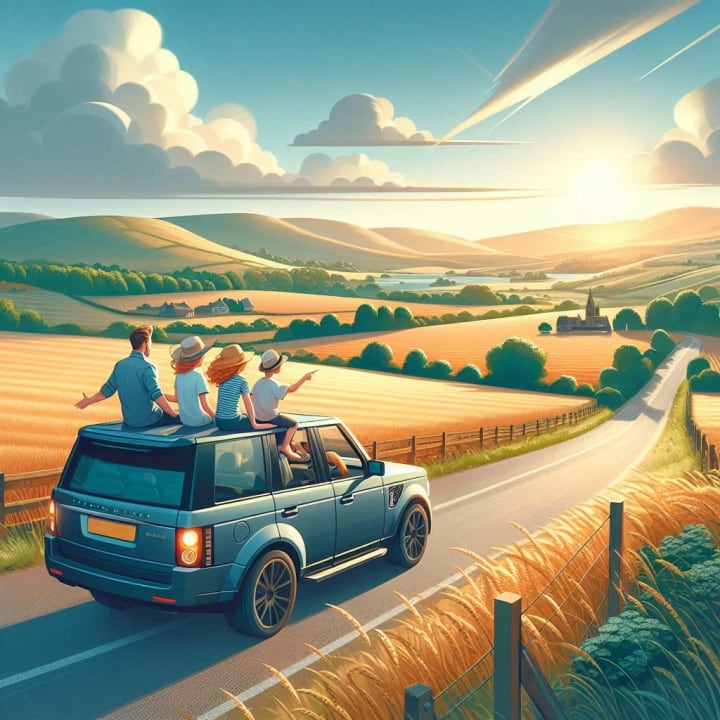
Slowly, the idea of relocating to a quieter more natural life took root is their collective minds.
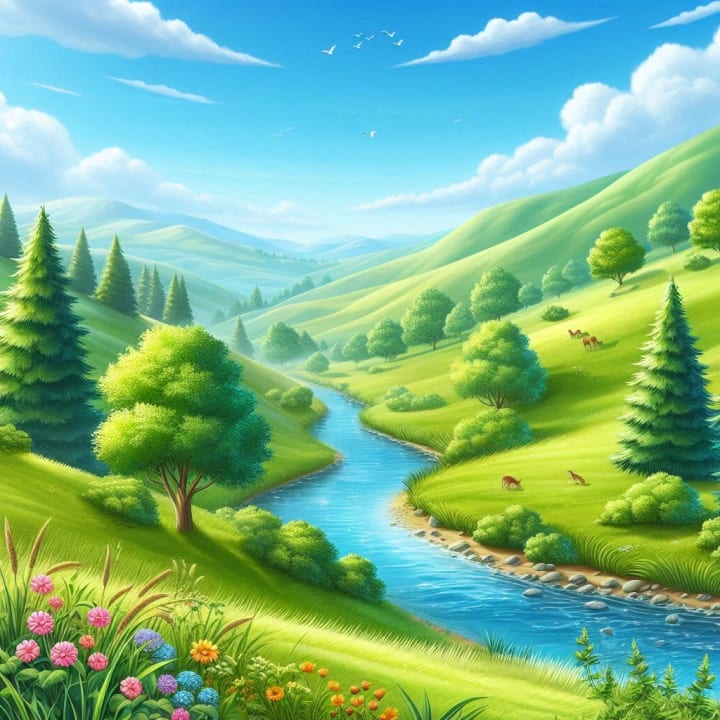
The family quietly meditated on nature as they drove through the beautiful countryside. Rolling green hills were dotted with brilliant colors, a crystal-clear river silently meandering through the valley, and a sky filled with fluffy white clouds. The air smells of fresh grass and wildflowers, and the distant sound of sheep bells adds to the idyllic scene. The landscape is vibrant, with a sense of peace and tranquility that invites exploration and contemplation.
Relocation
Their decision to relocate wasn’t just a leap of faith but a slow immersion into the awakening of the senses. A culmination of years spent longing for authenticity.
+++
The Burbank family’s decision was sealed on a crisp autumn morning, as golden leaves scattered like confetti across the concrete streets of the gleaming Utopian city. It wasn’t a sudden revelation, but rather the inevitable culmination of years spent suffocating under the weight of progress. Every corner of their world sparkled with artificial perfection**glass towers that pierced the clouds, climate-controlled parks where flowers bloomed year-round, and holographic billboards promising eternal happiness. But behind the façade lay a quiet tyranny, the kind that crept in slowly, unbidden, until individuality was reduced to an algorithm.
++
This disillusioned father, the family’s anchor, had spent sleepless nights watching the glow of the city lights bleed into the horizon, mingling with the hum of machines that never rested. He’d always been skeptical, resisting the allure of predictive technology that governed every aspect of life**from meals prepared by automated kitchens to daily schedules dictated by omnipresent AI assistants. To him, it wasn’t living. It was being lived.
Anna too, had fought to see the beauty in their surroundings for years, clinging to the hope that the seamless integration of technology might bring true harmony. Yet, when their youngest child, Maari, began to dream of forests she'd never seen and rivers she'd never felt, Anna knew it was time. Maari’s longing for a world untouched by algorithms pierced through her resolve, awakening a maternal instinct that yearned for freedom and rawness.
++
Land:
On their last weekend trip they had driven far beyond the normal bounds of the city. There they had found a landscape which took their breaths away.
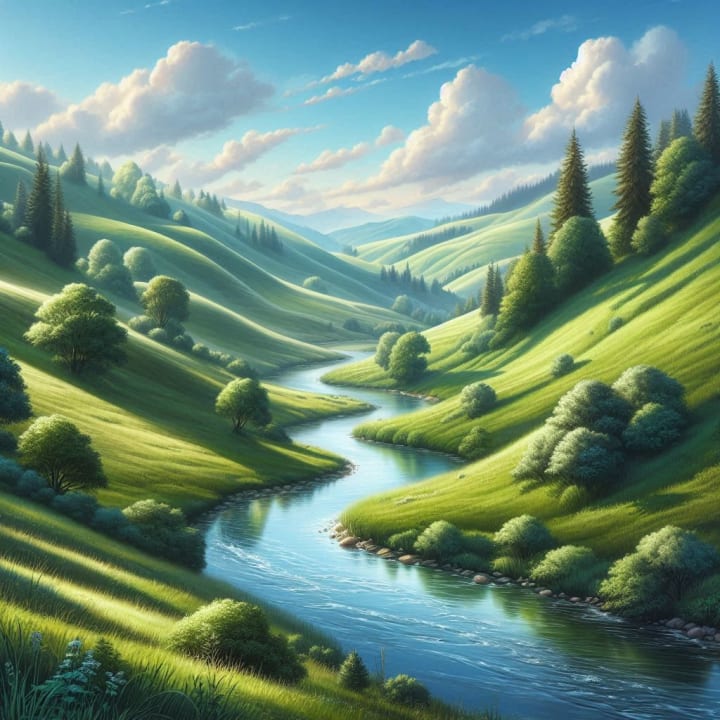
Before them stretching for what seemed like forever was the perfect setting for a home. The land gently slopes upwards, creating a visual rhythm that is pleasing to the eye. The hills are covered in lush green grass, dotted with the occasional tree or shrub.
River:
A clear, flowing river winds its way through the valley, reflecting the sky above and adding a sense of movement to the scene. The riverbanks are lined with wildflowers and reeds, creating a natural border between the land and the water.
Sheep:
Sheep graze peacefully on the opposite hillsides far in the distance, their soft wool a welcome contrast to the green grass. They add a touch of rustic charm to the landscape and create a sense of scale.
Sky:
The sky is a brilliant blue, punctuated by fluffy white clouds that drift lazily across the horizon. The clouds add depth and dimension to the scene, making it feel vast and expansive.
Paradise!!!!!!!!!!!
++
But it was Maari’s drawing that finally pushed them to decide**a crude sketch of a cabin nestled deep in the woods, far from the city’s gleaming towers. The cabin had no smart appliances, no digital screens, just a family living as they were meant to: in tune with the earth. Samuel stared at the drawing for a long time, and in Maari’s strokes of charcoal trees and grey smoke curling from the cabin’s chimney, he saw a future worth fighting for.
Samuel used up all of the family resources to procure access to the land. Luckily it cost way less than they had imagined, country owned land was a fraction of city costs.
++++
The day of their departure felt surreal. Anna drove the slightly used camper they had purchased, and Samuel and Darron loaded their possessions onto a battered truck**an artifact of a bygone era**. They didn’t look back. The city’s glimmering skyline receded in the rearview mirror like a fading dream, replaced by endless roads winding into the wilderness. They drove in silence, each lost in their thoughts, the weight of their decision pressing against their chests.
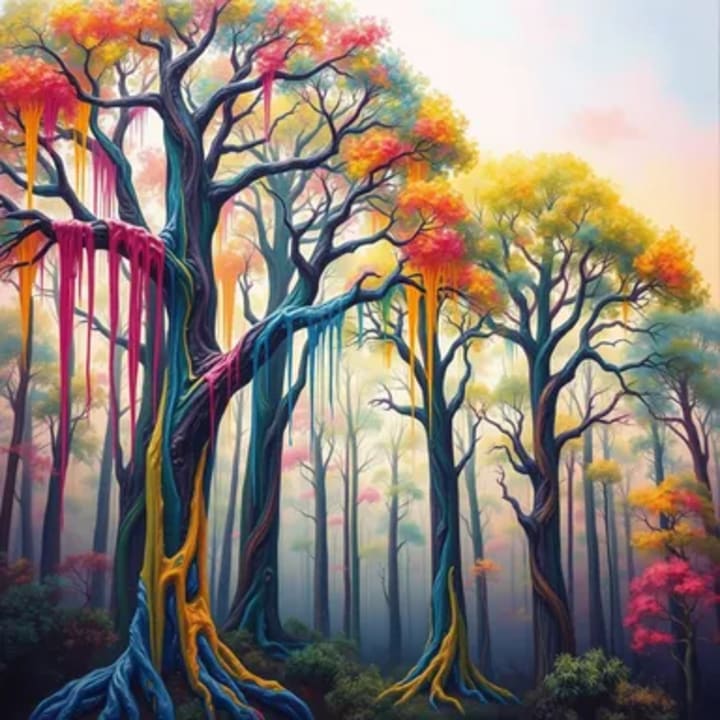
When they reached the forest, it welcomed them with an air of quiet majesty. Towering trees stretched their limbs toward the sky, their bark rough and imperfect, their roots tangled like veins. The Burbanks stepped out of the trucks and breathed deeply, the crisp air filling their lungs with something unfamiliar**something real.
Samuel turned to Anna, his hand finding hers. “This is where we start,” he said, his voice steady. Maari ran ahead, her laughter echoing among the trees, and in that moment, the forest seemed to embrace them, promising shelter, newness, and truth.
+++
Challenges.
The forest greeted the Burbanks like an uncharted world, its canopy stretching high above them, both majestic and foreboding. Samuel’s hands gripped the axe as he surveyed the land where their cabin would take shape. The clearing was modest, surrounded by ancient pines that towered in the wind. It was a stark contrast to the Utopia’s pristine geometry**a landscape of chaos and beauty.
The first night, they gathered around a small campfire. The flames flickered and danced, casting shadows on faces marked by exhaustion and hope. Anna rested against a fallen log, her fingers tracing the edges of Maari’s latest drawing**a bear lumbering through the woods, fierce and untamed. Darron sat apart from them, his eyes fixed on the forest’s darkened edges, where the unknown awaited. He secretly wondered if he would find an untamed maiden swinging through the trees...He was sixteen, and soon he would need friends who shared his outlook. Maari was happy, she had the animals and the forest.
++
By morning, the forest’s challenges began to test them. Samuel swung his axe, muscles straining as he felled a few trees, but his work yielded little. The lumber was heavy, unwieldy, and the tools he brought weren’t designed for the rigors of life outside the city. Frustration crept into his movements, each swing more forceful than the last, until Anna placed a hand on his shoulder.
“We’ll figure it out,” she said quietly, her voice steady. She’d seen this fire in him before**the drive to prove he could build something real. It was what had brought them here, after all.
"Maybe a chainsaw is a better idea, an axe is kind of outdated". They both laughed.
Darron watched silently, his expression a storm of doubt. In the city, he’d never had to work for much**everything was delivered to him, calculated to meet his needs before he even voiced them. Here, he felt out of place, useless. His mind drifted to the small device tucked away in his pack, a relic of Utopia he hadn’t had the courage to leave behind. It pulsed faintly, calling to him like an old friend.
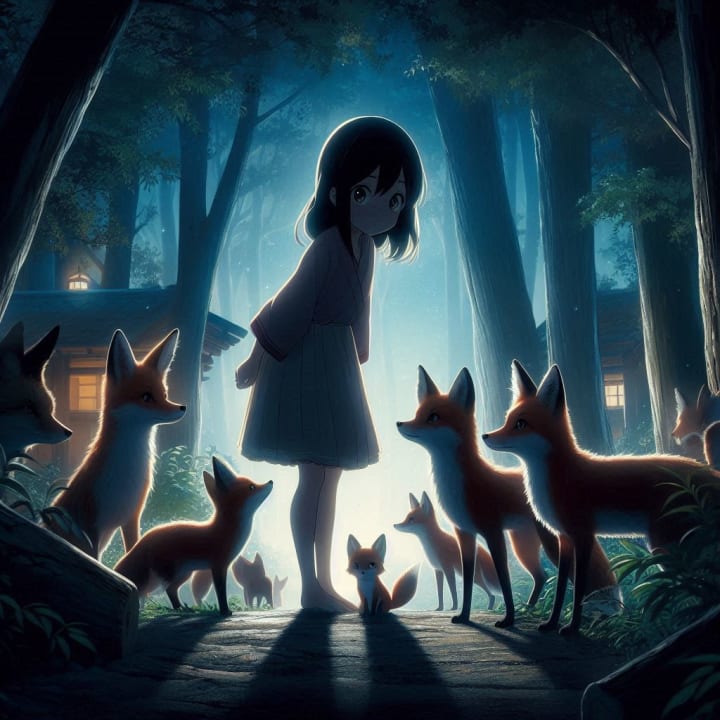
Days turned into weeks, and the family faced the forest’s unforgiving rhythms. Maari, wide-eyed with wonder, found joy in exploring their surroundings. She marveled at the tiny stream winding through their land, its water clear and cold. Her curiosity was boundless, but it brought danger**once, she stumbled too close to a den of foxes, their sharp cries sending Anna rushing to pull her back.
++
For Samuel, the greatest challenge was nature’s unpredictability. A sudden storm swept through one evening, tearing down his carefully erected beams and leaving the family huddled in the camper for shelter. He stared at the wreckage afterward, his resolve shaken. But as Anna reassured him and Maari handed him another drawing**a cabin, whole and strong**he found the strength to start again.
++
Anna’s challenges were quieter but no less profound. Loneliness pressed on her in the stillness of the forest, the absence of her old routines gnawing at her spirit. She missed the city’s comforting hum, the connections she once had. She buried these feelings deep, focusing instead on Homeschooling and teaching Maari and Darron the skills they’d need to survive. She tried to make the wilderness feel like home, singing lullabies under the stars and weaving small tokens from leaves and branches.
++
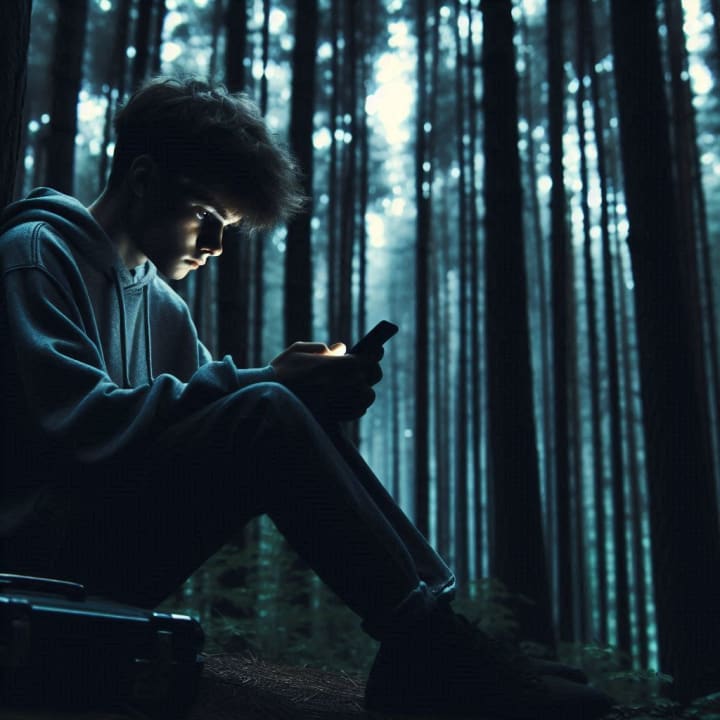
Darron struggled most of all. One night, unable to sleep, he pulled the device from his pack, its glow illuminating his troubled face. He felt its familiar comfort but also its weight**the reminder of what they’d left behind. A bird’s call echoed through the dark, breaking his reverie, and he tucked the device away again, torn between two worlds. He took solace in the new friends they had made.
++
The family’s hardships forged bonds stronger than any algorithm. Each challenge taught them compromise and strength, how to find food among the forest’s bounty, how to weather nature’s wrath, how to appreciate the rhythm of life untouched by machines. The Burbanks weren’t just surviving; they were becoming.
++
But even in their isolation, they couldn’t escape the Utopia’s shadow. One day, Samuel spotted a glint of metal high above the trees**a drone, silent and watchful. Its presence was a reminder that the world they left hadn’t forgotten them. They were fugitives, their independence a quiet rebellion against a system that demanded conformity. Samuel tightened his grip on the chainsaw and led his family deeper into the woods, where the drone’s gaze couldn’t follow.
The wilderness was their crucible, shaping them into a family that could endure**not because they overcame every challenge, but because they faced each one together.
They had a few encounters with foxes and deer, but there were no real dangerous wild animals around, unless you counted farmer Enfield's great big bulldog. He lived way over in the other valley, the gentleman and his wife, Martha, had been quite welcoming and they had two teenage daughters and three young sons, one close to Maari's age and another to Darron's. Their help had been invaluable when building the cabin. The kids had been elated to meet children their own age.
Their cabin, finally complete, stood not as a fixture to defeat but to the indomitability of their resolve**a place where their lives were their own.
Their own natural Utopia.
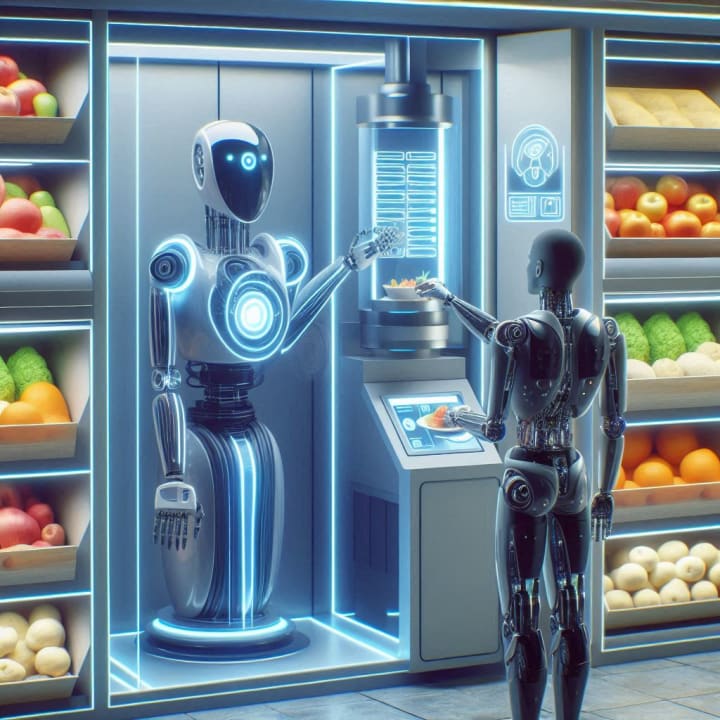
The other world was only a car drive away, should they have a need for a taste of utopian cuisine, or a city visit every now and then. For now, they were content.
About the Creator
Antoni De'Leon
Everything has its wonders, even darkness and silence, and I learn, whatever state I may be in, therein to be content. (Helen Keller).
Tiffany, Dhar, JBaz, Rommie, Grz, Paul, Mike, Sid, NA, Michelle L, Caitlin, Sarah P. List unfinished.
Keep reading
More stories from Antoni De'Leon and writers in Futurism and other communities.
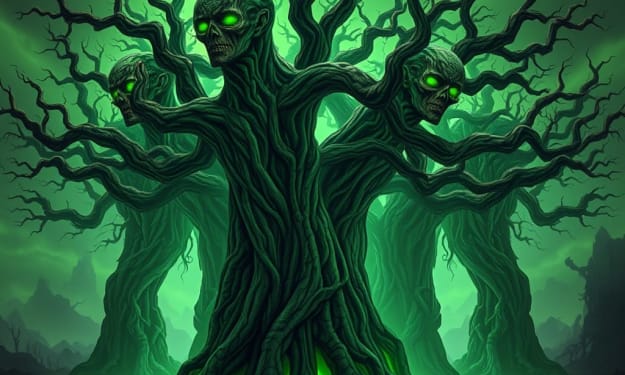
The trees have eyes 🌱
"Mama, I saw eyes in the trees today, they looked at me and glowed". Little Tatum held tight to her mother's hand. "Oh come child, none of your stories today, I don't want to be late for work". Estella was a good mother, but today she had an important meeting with the Board.
By Antoni De'Leon11 months ago in Futurism
Australia Luxury Cosmetics Market: Premium Demand, Retail Expansion & Brand Innovation
According to IMARC Group, the Australia luxury cosmetics market reached USD 1.6 Billion in 2025 and is projected to grow to USD 2.3 Billion by 2034, exhibiting a compound annual growth rate (CAGR) of 3.92% during 2026–2034. The steady expansion of the market reflects rising disposable incomes, evolving beauty standards, and a growing preference for premium personal care products across Australia. Consumers are increasingly investing in high-end skincare, makeup, and fragrance products that promise quality, performance, and exclusivity. With digital influence reshaping purchasing decisions and sustainability becoming central to brand identity, the Australia luxury cosmetics market share continues to expand within the broader beauty and personal care industry.
By Shrestha Roy6 days ago in Futurism
The BAFTA Awards
By now, in a stunning departure from recent years, most of the world is aware of what happened at the BAFTA film awards. Social Media Headlines will tell you the bare bones: that John Davidson, a Tourette's Syndrome advocate, shouted a racial slur at two Actors of Colour, Michael B Jordan and Delroy Lindo.
By Natasja Rose4 days ago in Psyche



Comments (2)
Blissful simplicity with all its attendant challenges. Just one note. At one point you refer to Elise's drawings, rather than Maari's. Was this intentional? Did I miss something? Or is it a piece of errata missed in the editing?
Beautiful