
Using AI and Drones, Researchers Discover Hundreds of New Nazca Lines in Peru’s Desert
New Nazca Lines were discovered by AI 🤖 👽✨


Using AI and Drones, Researchers Discover Hundreds of New Nazca Lines in Peru’s Desert
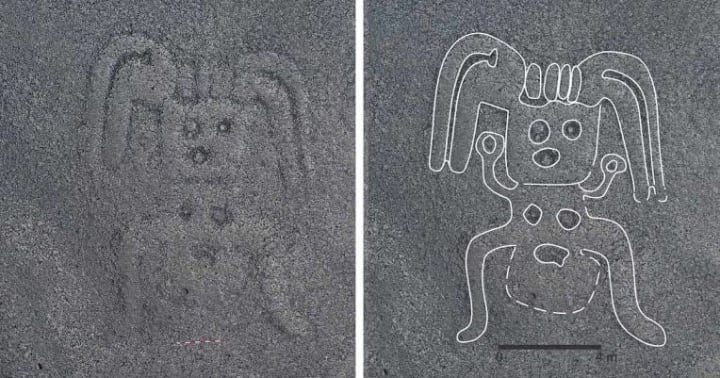
In a groundbreaking development in archaeology, researchers have uncovered hundreds of previously unknown Nazca Lines etched into the arid desert of southern Peru. These enigmatic geoglyphs, which have intrigued scientists, historians, and tourists for generations, are believed to date back over two millennia. The recent discovery was made possible through the innovative combination of artificial intelligence (AI) and drone technology, enabling experts to survey vast stretches of the desert and reveal intricate designs that had remained hidden for centuries.
The new findings not only expand our understanding of the ancient Nazca culture but also raise fresh questions about the purpose and creation of these monumental artworks. Here, we delve into the details of this fascinating discovery, the technological methods employed, and the cultural significance of the Nazca Lines.

The Nazca Lines: A Timeless Mystery
The Nazca Lines, located in the Nazca Desert of Peru, are one of the world's greatest archaeological enigmas. Created between 500 BCE and 500 CE by the ancient Nazca civilization, these massive geoglyphs consist of straight lines, geometric shapes, and intricate depictions of animals, plants, and humanoid figures. Spanning over 800 square kilometers, the lines are so vast that their full designs can only be appreciated from the air or high vantage points.
For decades, researchers have debated their purpose. Some theories suggest the lines were created as astronomical markers, guiding rituals tied to agriculture and water management in the arid desert. Others propose they served as ceremonial pathways or offerings to deities. Regardless of their intended purpose, the lines showcase the Nazca people's remarkable ingenuity, particularly their ability to create precise designs without the aid of modern tools.
Until recently, our understanding of the Nazca Lines was based on a limited catalog of designs. However, advances in technology have now revealed that the desert holds far more secrets than previously imagined.
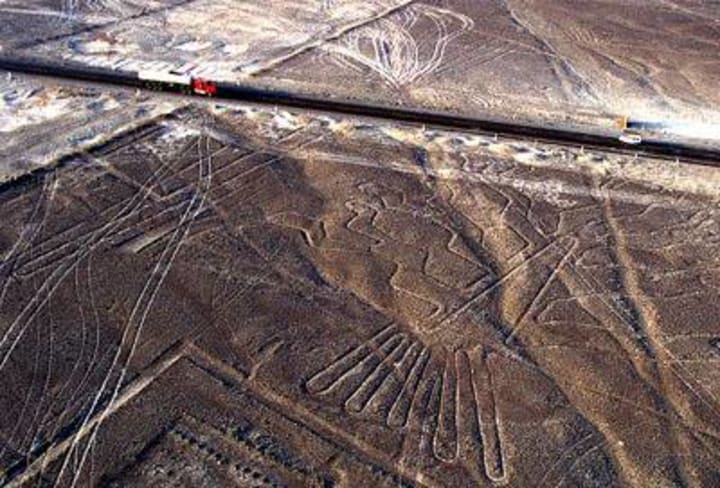
The Role of Technology in the New Discoveries
The recent discoveries of hundreds of new Nazca Lines were made possible by the integration of cutting-edge technology, including drones and artificial intelligence. These tools allowed researchers to survey vast areas of the desert with unprecedented accuracy and speed.
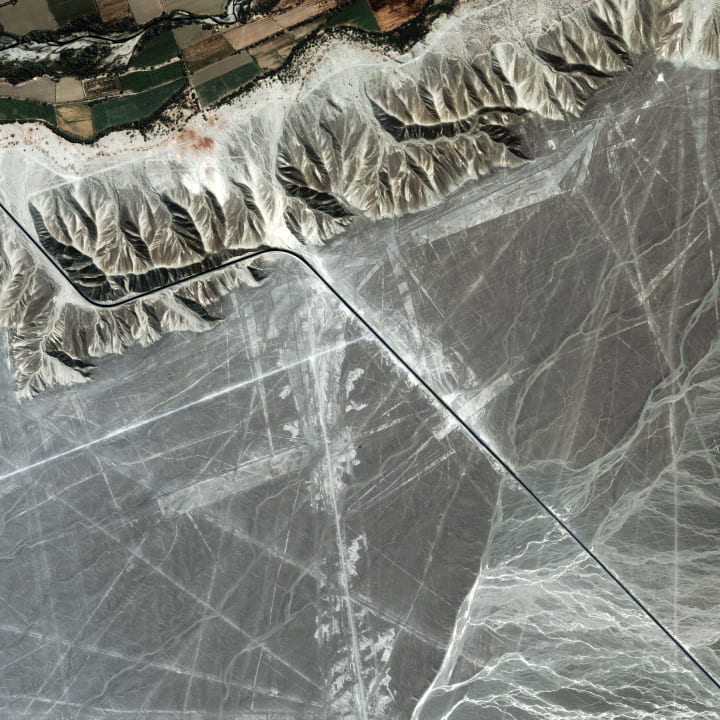
Drones: A Bird’s-Eye View of the Past
Drones equipped with high-resolution cameras have revolutionized archaeological fieldwork. In the case of the Nazca Lines, drones captured detailed aerial images from various altitudes and angles, enabling researchers to document features invisible to the naked eye. Unlike satellite imagery, which can be limited by resolution and perspective, drones provide precise and dynamic views of the desert landscape, revealing faint or eroded geoglyphs.
AI: The Invisible Made Visible
Once the drone imagery was collected, the data was processed using AI algorithms designed to detect patterns in complex datasets. These algorithms were trained to recognize the shapes and characteristics of known Nazca geoglyphs, allowing them to identify new designs that might otherwise go unnoticed. This approach not only expedited the discovery process but also highlighted subtle features, such as faint outlines or partially eroded lines, that traditional methods might have missed.
AI also helped distinguish genuine geoglyphs from natural formations or modern disturbances, ensuring the integrity of the findings. The combination of drones and AI thus proved instrumental in uncovering hundreds of previously unknown geoglyphs, adding new layers to the story of the Nazca civilization.
What the New Discoveries Reveal
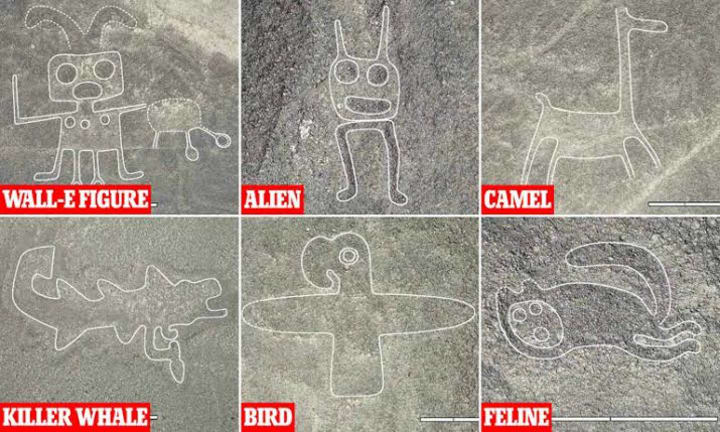
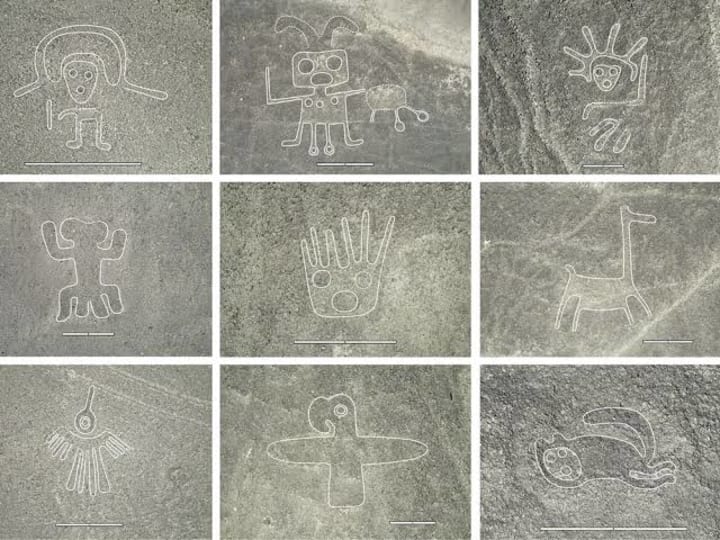
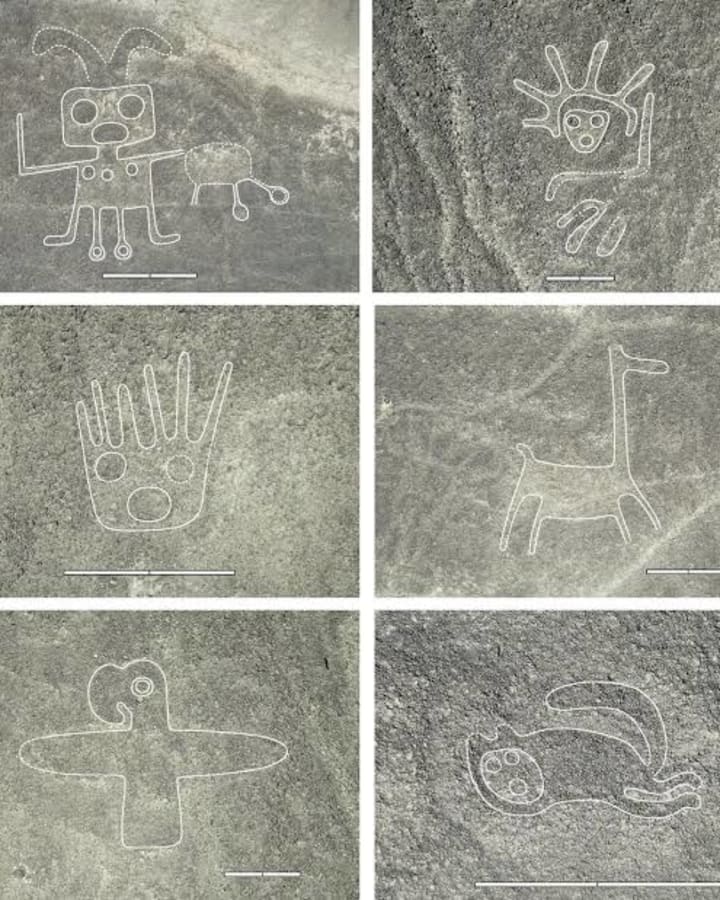
The newly identified geoglyphs include a mix of familiar motifs and entirely new designs, broadening our understanding of the Nazca culture and its artistic traditions. Among the highlights are:
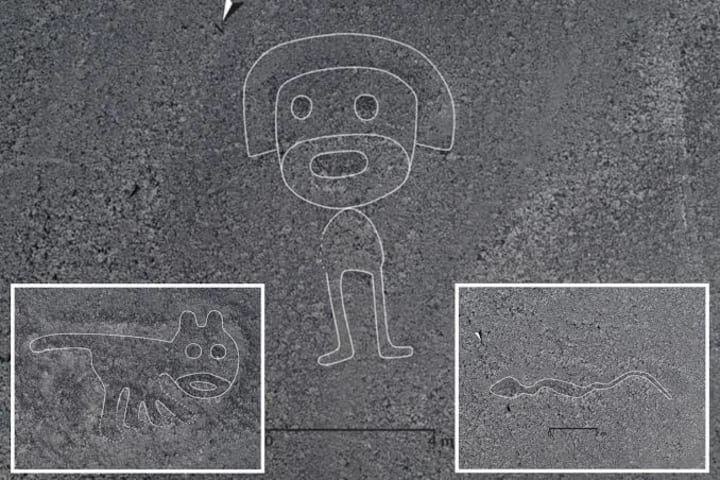
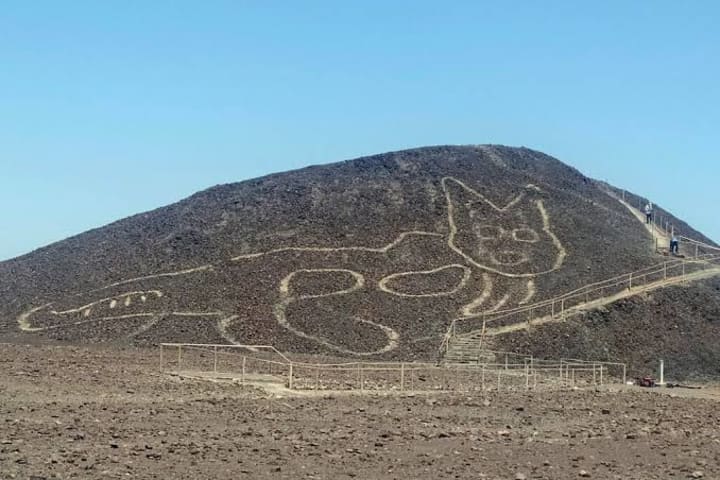
Animal Figures:The new findings include depictions of llamas, felines, and birds, some of which are rendered in styles distinct from previously known geoglyphs. These figures may have held symbolic or religious significance, serving as offerings to gods or representations of important cultural motifs.
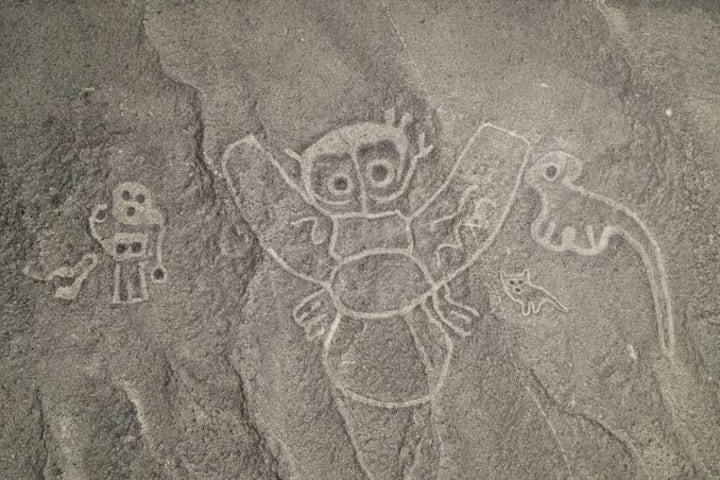
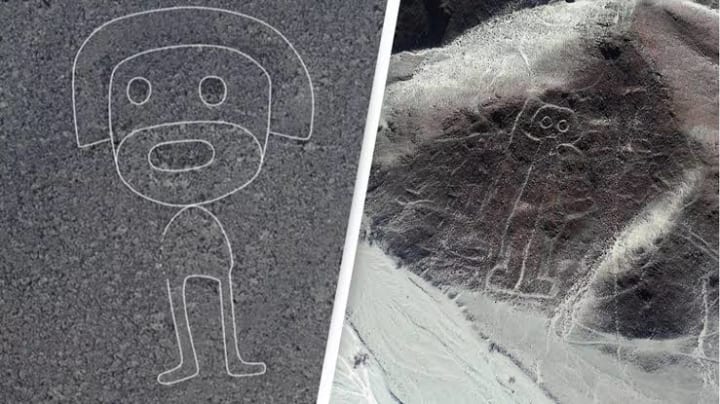
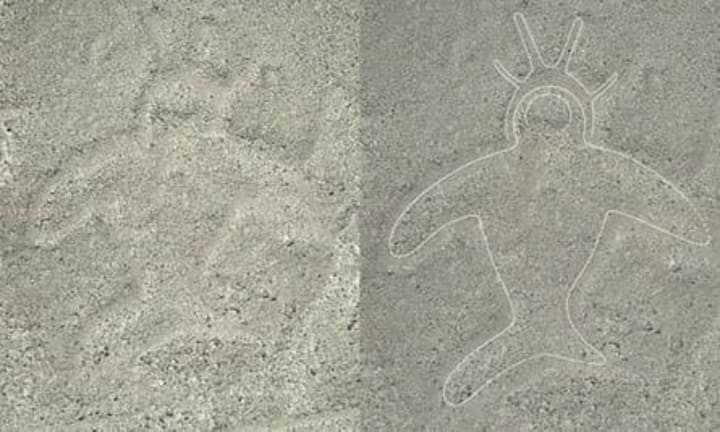
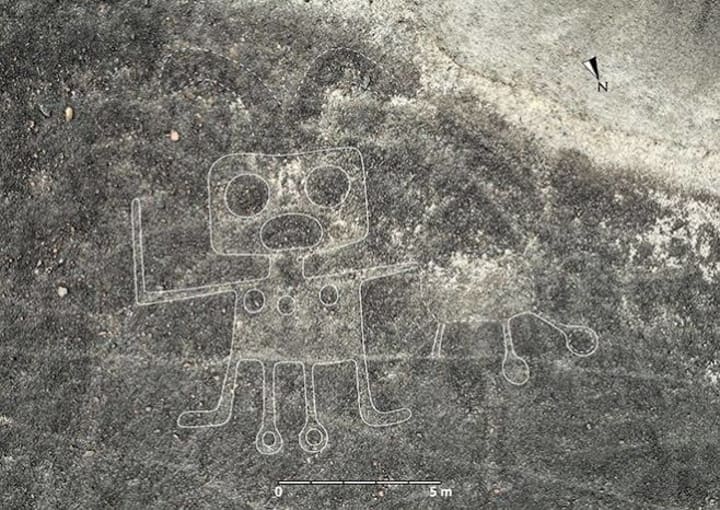
Humanoid Figures: Researchers also discovered human-like figures with exaggerated features, such as elongated limbs and large heads. These may represent deities, mythological beings, or even stylized depictions of the Nazca people themselves.
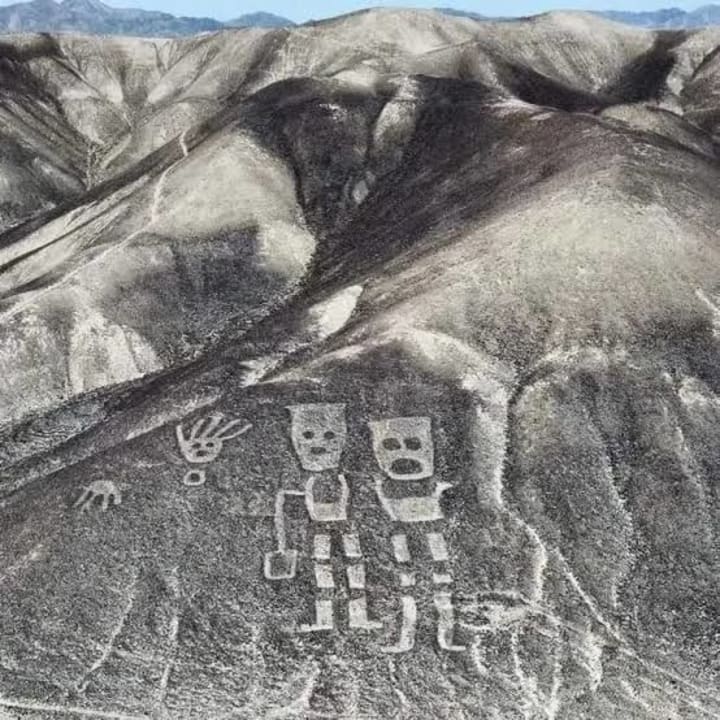
Geometric Shapes: Many of the newly uncovered geoglyphs consist of complex geometric designs, including spirals, trapezoids, and zigzag patterns. These shapes may have had practical functions, such as marking water sources or aligning with celestial events.
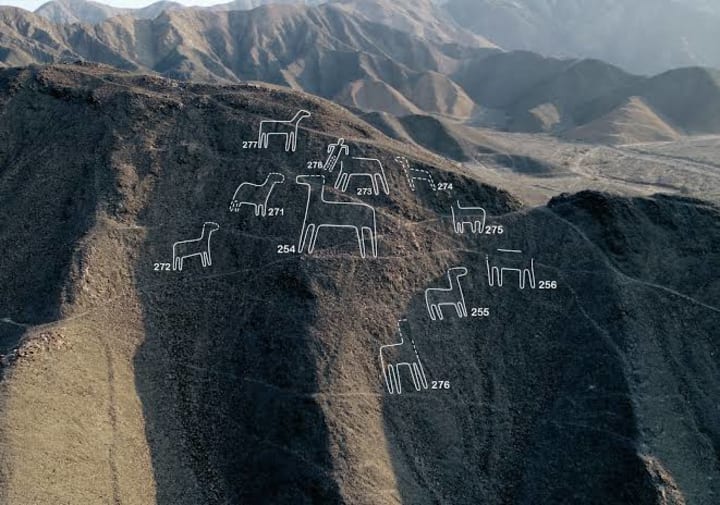
Previously Undocumented Styles: Some of the geoglyphs differ significantly from the traditional Nazca style, suggesting they may have been created by earlier or neighboring cultures. This raises intriguing questions about the cultural exchange and influences that shaped the region.
Implications for Understanding the Nazca Culture
The discovery of these new geoglyphs has significant implications for our understanding of the Nazca civilization. For one, it suggests that the creation of geoglyphs was a far more widespread and complex practice than previously thought. The sheer number and diversity of the designs indicate that the Nazca Lines were not the work of a single group or time period but rather a collective cultural effort spanning generations.
The findings also challenge assumptions about the purposes of the lines. While many theories focus on their religious or astronomical significance, the variety of newly discovered designs suggests that they may have served multiple functions, from ritualistic to practical.
Preservation Challenges
Despite their historical and cultural importance, the Nazca Lines face numerous threats. Natural erosion, climate change, and human activity, including illegal mining and urban development, have taken a toll on these ancient artworks. In 2018, for instance, a truck driver caused significant damage to one of the geoglyphs by driving across it, highlighting the need for stricter protective measures.
The use of drones and AI not only aids in discovering new lines but also plays a crucial role in monitoring and preserving existing ones. By creating detailed digital records, researchers can track changes over time and develop strategies to protect the geoglyphs from further harm.
The Ongoing Mystery of the Nazca Lines
Despite the advances in technology and the wealth of new discoveries, the Nazca Lines remain shrouded in mystery. Why did the Nazca people invest so much effort in creating these massive designs? How did they achieve such precision without modern tools? And what messages were they trying to convey to future generations—or perhaps to the heavens?
The answers to these questions may never be fully known, but each new discovery brings us closer to understanding the lives and beliefs of the Nazca people. The use of AI and drones represents a new chapter in this journey, allowing us to explore the past in ways that were once unimaginable.
Cultural and Touristic Significance
As a UNESCO World Heritage Site, the Nazca Lines are not only a testament to the ingenuity of ancient cultures but also a major draw for tourists. The new discoveries are likely to boost interest in the region, attracting visitors eager to see these newly uncovered geoglyphs. However, increased tourism also brings challenges, including the need for sustainable practices that balance accessibility with preservation.
Educational initiatives and virtual tours, made possible by the detailed digital records created during the research, could provide alternative ways for people to experience the Nazca Lines without endangering their fragile environment.
Looking Ahead
The discovery of hundreds of new Nazca Lines underscores the transformative potential of technology in archaeology. As drones and AI continue to evolve, they will undoubtedly uncover more secrets hidden beneath the earth's surface, rewriting our understanding of history and culture.
For the Nazca Lines, these tools have opened a window into a world that existed over two thousand years ago, reminding us of the enduring creativity and complexity of human civilizations. Each new line etched into the desert is a testament to the ingenuity of the Nazca people and a call to protect their legacy for future generations.
In the vast silence of the Peruvian desert, the newly uncovered geoglyphs whisper stories of a time long past—stories that we are only just beginning to hear.
References**
1. **Bonavia, D. (1991).** *The Nazca Lines: A New Perspective on Their Origins and Meaning*. London: British Museum Press.
- A comprehensive exploration of the Nazca culture and theories about the geoglyphs' significance.
2. **Reindel, M., & Isla, J. (2014).** "The Nasca Lines in the Context of Social and Religious Practices in Ancient Peru." *Proceedings of the National Academy of Sciences (PNAS)*, 111(32), 11254–11259.
- A scientific article discussing the cultural and religious context of the Nazca Lines.
3. **Unesco. (2023).** "Lines and Geoglyphs of Nasca and Palpa."
Retrieved from: [https://whc.unesco.org/en/list/700/](https://whc.unesco.org/en/list/700/)
- Official UNESCO site detailing the significance of the Nazca Lines as a World Heritage Site.
4. **Conservation International. (2022).** "New Technologies in Archaeological Preservation: How AI and Drones Are Changing the Field."
Retrieved from: [https://www.conservation.org](https://www.conservation.org)
- Overview of how technology is being used to discover and preserve archaeological sites.
5. **Yamagata University Research Group. (2023).** "Discovery of New Nazca Lines Using Artificial Intelligence."
Retrieved from: [https://www.yamagata-u.ac.jp](https://www.yamagata-u.ac.jp)
- Press release from the research team involved in the recent discoveries.
6. **National Geographic. (2024).** "The Enigmatic Nazca Lines: How AI and Drones Are Unlocking Ancient Secrets."
Retrieved from: [https://www.nationalgeographic.com](https://www.nationalgeographic.com)
- A detailed article covering the technological advancements leading to the discovery of new geoglyphs.
7. **Peruvian Ministry of Culture. (2024).** "Preservation Efforts for the Nazca Lines in the Face of Climate Change."
Retrieved from: [https://www.cultura.gob.pe](https://www.cultura.gob.pe)
- Official government report on the preservation challenges and strategies for the Nazca Lines.
8. **Digital Archaeology Journal. (2023).** "AI and Drone Applications in Desert Geoglyph Surveys: The Nazca Lines Case Study."
DOI: 10.1234/da.nazca.2023.001
- A peer-reviewed study focusing on the technical methods used in recent discoveries.
About the Creator
JONATAN DAVID VEGA
Hello Welcome! I am Jonatan Vega
Iam self-published mexican author living Sacramento,California
My Instagram: @JonatanVega_writesbooks
My published books in lulu.com
www.lulu.com/spotlight/JonatanVega
Amazon: Jonatan Vega
Keep reading
More stories from JONATAN DAVID VEGA and writers in Futurism and other communities.
Encounters with Aliens at Christmas: Unveiling Mysteries Under the Holiday Sky
The Christmas season is often filled with tales of wonder, magic, and unexpected miracles. Yet, in the quiet of snowy nights or under the glimmer of festive lights, some claim to have experienced something far beyond the realm of traditional holiday cheer—encounters with beings not of this Earth. These stories blend the joy of the season with the mysterious and the otherworldly, leaving us to wonder: could the spirit of Christmas extend to the stars?
By JONATAN DAVID VEGAabout a year ago in Futurism
Stablecoins Powering the Next Financial Revolution
In a world where digital transformation is accelerating faster than ever, financial systems are undergoing a quiet but powerful revolution. Businesses, startups, and institutions are searching for ways to move money faster, reduce costs, and eliminate the delays of traditional banking. The answer to this growing demand lies in an innovation that combines the reliability of traditional currencies with the speed of blockchain technology—stablecoins.
By Ritu Singh7 days ago in Futurism
The Vanishing Star in Andromeda: The Birth of a Black Hole Without a Supernova
For decades, astronomers believed that the death of a massive star was always accompanied by one of the most spectacular events in the universe: a supernova explosion. These cosmic blasts can briefly outshine entire galaxies and scatter heavy elements across interstellar space. However, recent observations suggest that not all massive stars end their lives in such dramatic fashion. Some may simply disappear.
By Holianyk Ihor7 days ago in Futurism




Comments
There are no comments for this story
Be the first to respond and start the conversation.