
Unlocking the Mysteries of Space: Exploring the Vast Universe
space
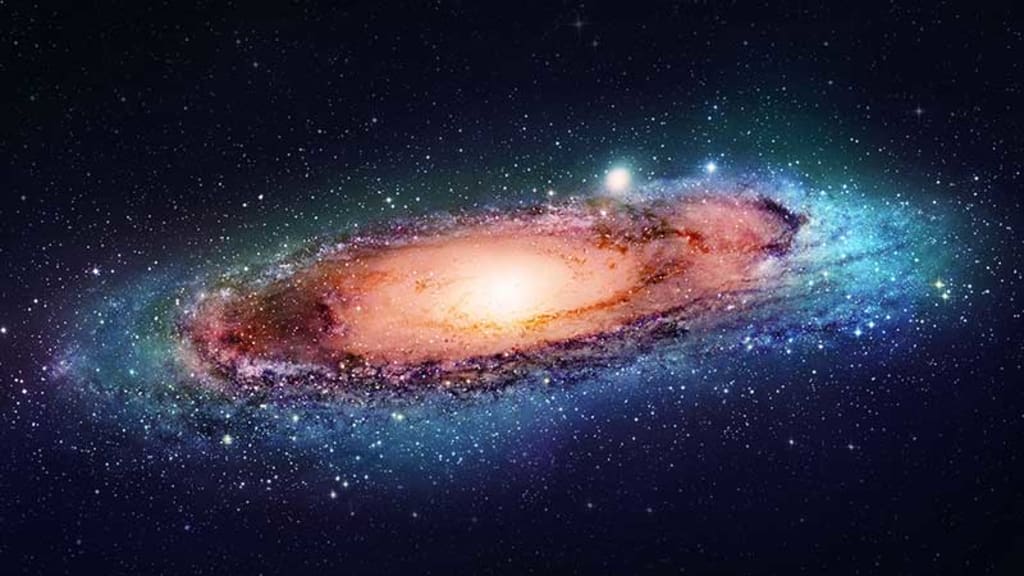
The vast expanse of space has captivated human curiosity for centuries. From the twinkling stars in the night sky to the awe-inspiring wonders of distant galaxies, the exploration of space has been a relentless pursuit of knowledge and understanding. This article delves into the mysteries of space, shedding light on our quest to unravel the secrets of the universe.
The Universe: A Cosmic Playground:
The universe, a vast and seemingly infinite expanse, encompasses all matter, energy, and the physical laws governing them. It is home to countless celestial objects, including stars, planets, galaxies, nebulae, and black holes. Scientists estimate that the observable universe alone contains billions of galaxies, each with billions of stars.
Space Exploration:
Throughout history, humans have sought to explore space and expand our knowledge of the cosmos. The launch of Sputnik 1 by the Soviet Union in 1957 marked the beginning of the space age. Since then, numerous manned and unmanned missions have been sent to explore our own solar system and venture beyond.
The Solar System:
Our solar system, consisting of the sun, eight planets, and various other celestial bodies, is a small part of the vast universe. The planets, including Earth, orbit the sun, with each offering unique features and mysteries to be unraveled. Robotic missions, such as the Mars rovers and the Voyager spacecraft, have provided invaluable insights into the planets and moons within our solar neighborhood.
Beyond Our Solar System:
The exploration of space extends far beyond our solar system. Scientists use powerful telescopes and instruments to study distant stars, galaxies, and cosmic phenomena. The Hubble Space Telescope, for instance, has revolutionized our understanding of the universe, capturing breathtaking images and unraveling mysteries that were once beyond our reach.
The Search for Extraterrestrial Life:
One of the most intriguing aspects of space exploration is the search for extraterrestrial life. Scientists analyze the conditions on other planets and moons, searching for signs of habitability and potential life forms. The discovery of exoplanets (planets orbiting stars outside our solar system) has fueled excitement and speculation about the existence of life beyond Earth.
Challenges and Future of Space Exploration:
Space exploration is not without its challenges. Astronauts face physical and psychological demands during long-duration missions, and the technical hurdles of venturing into deep space are immense. However, ongoing advancements in technology, such as reusable rockets and the development of next-generation spacecraft, promise to propel us further into the cosmos.
Conclusion:
Space, the final frontier, continues to beckon humanity with its mysteries and wonders. Through ongoing space exploration, we inch closer to unlocking the secrets of the universe and expanding our understanding of our place within it. From the exploration of our own solar system to the quest for extraterrestrial life, our journey into space holds limitless possibilities for discovery and enlightenment. The Milky Way: The Milky Way is the galaxy in which our solar system resides. It is a barred spiral galaxy, and it spans a diameter of approximately 100,000 light-years. The Milky Way is home to billions of stars, along with various other celestial objects.
Black Holes: Black holes are regions in space where gravitational forces are so strong that nothing, not even light, can escape their pull. They form when massive stars collapse under their own gravity. Black holes have a profound impact on the surrounding space-time and play a crucial role in shaping galaxies.
Nebulae: Nebulae are vast clouds of gas and dust scattered throughout the universe. They serve as stellar nurseries, where new stars are born. Nebulae come in different types, including emission nebulae, reflection nebulae, and planetary nebulae. These cosmic structures showcase the stunning beauty and complexity of the universe.
Exoplanets: Exoplanets, or extrasolar planets, are planets that orbit stars outside our solar system. Their discovery has revolutionized our understanding of planetary systems and the potential for life beyond Earth. Scientists use various methods, such as the transit and radial velocity methods, to detect and study exoplanets.
Cosmic Microwave Background Radiation: The cosmic microwave background (CMB) radiation is a remnant of the Big Bang, the event that marked the beginning of the universe. It is a faint glow of electromagnetic radiation present throughout space. Studying the CMB has provided valuable insights into the early universe and the formation of galaxies.
About the Creator
About Binding Prometheus
I want to start actively advocating on behalf of my own work, and the most valuable part of my canon is, without a doubt, Binding Prometheus, the play I have been working on since 2019 and only finished in 2023 as part of my MA. The play itself is an amalgamation of a million different inspirations. On one end, it evokes the Ancient Greek myth-play, deriving its own title from the earliest extant work of Western drama we have, Aeschylus’s Prometheus Bound. On the other end, it borrows significantly from the sci-fi bulwarks from over the years, namely Mary Shelley’s Frankenstein and Karel Capek’s Rossum’s Universal Robots. The play could be an episode of Black Mirror, I fear. I don’t know. I’ve only ever seen one episode of Black Mirror.
By Steven Christopher McKnight23 days ago in Futurism
Saudi Arabia Telehealth Market: Virtual Care Expansion, Digital Healthcare & Patient Accessibility
Saudi Arabia's telehealth market grows rapidly due to Vision 2030 initiatives, widespread smartphone adoption, and regulatory support from the Ministry of Health. Remote consultations surged post-pandemic, enhancing access in rural areas with AI-driven diagnostics and mobile apps. According to IMARC Group's latest research publication, Saudi Arabia telehealth market size reached USD 792.61 Million in 2025. The market is projected to reach USD 4,212.13 Million by 2034, exhibiting a growth rate of 20.39% during 2026-2034.
By Kishan Kumar3 days ago in Futurism



Comments
There are no comments for this story
Be the first to respond and start the conversation.