
United States Microwave Oven Market Forecast 2024–2033
Smart Kitchens, Faster Meals & a Market Headed Toward US$ 4.61 Billion

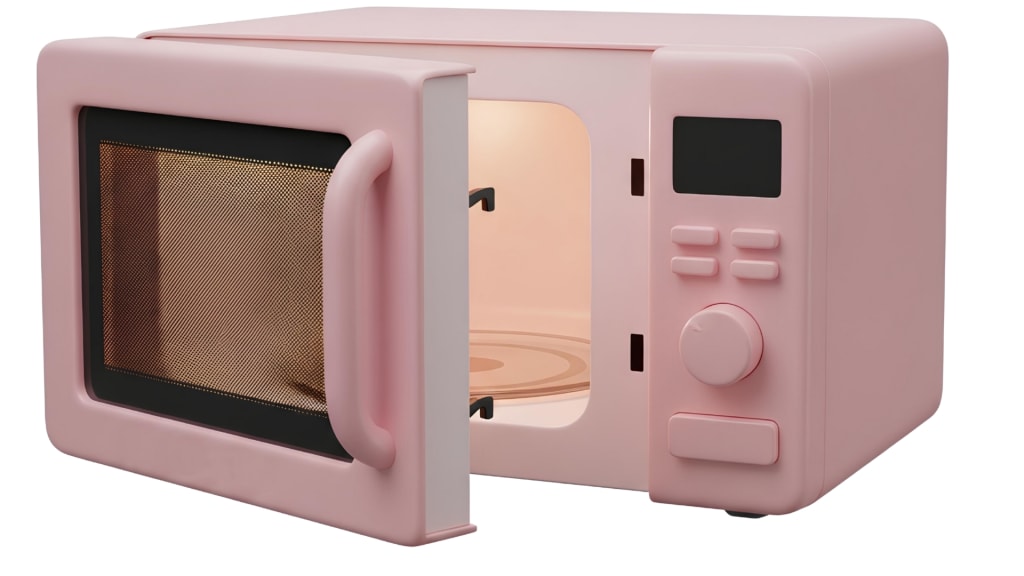
The hum of innovation inside America’s kitchens
If there is one appliance that silently changed modern cooking, it’s the microwave oven. No flames, no waiting, no guesswork — just faster meals, smarter automation, and a lifestyle of convenience. Across the United States, microwave ovens have shifted from “nice-to-have” gadgets to everyday kitchen non-negotiables.
According to Renub Research, the United States microwave oven market was valued at approximately US$ 3.33 Billion in 2024 and is projected to reach US$ 4.61 Billion by 2033, growing at a CAGR of 3.69% during 2025–2033. Demand growth aligns with lifestyle shifts, rising urbanization, smart home penetration, and the growing love affair with multifunctional cooking appliances.
What makes microwave ovens indispensable in the U.S.?
In essence, microwave ovens carry a promise — fast, efficient and fuss-free cooking.
From reheating breakfast-to-go meals in 30 seconds to baking desserts in convection microwaves, U.S. consumers are using these devices for:
Reheating leftovers
Defrosting frozen groceries
Cooking full meals in minimal time
Grilling, baking, roasting and steam-cooking (in advanced models)
Smart pre-programmed cooking via Wi-Fi and app controls
The convenience factor has made them staples in American homes, offices, dorms, gyms, gas stations, QSR chains, and commercial kitchens.
Why is the U.S. microwave market booming? Key growth drivers
1. The time-crunch lifestyle
The average American is busier than ever. A 2024 Pew Research Center survey found that:
52% of Americans frequently multitask
60% feel too busy to enjoy life
74% of parents feel overwhelmed by time shortages
With 83% of the population living in urban areas (projected to reach 89% by 2050 as per UN estimates), quick cooking solutions are less of a luxury — and more of a survival strategy.
2. Smarter technology, smarter kitchens
The microwave is no longer just a “heating box.” Today’s models come with:
Voice control via Alexa/Google Assistant
Auto-cook presets and humidity sensors
AI-guided cooking suggestions
Wi-Fi connectivity and app integration
Smart energy usage and safety locks
Major launches in 2024 included:
LG’s new low-profile over-the-range microwaves at the Kitchen & Bath Industry Show
Panasonic’s HomeCHEF 4-in-1 smart multi-oven unveiled at CES 2024 in partnership with Fresco’s cooking AI
3. Space-saving built-ins for compact living
Urban households love minimalism and efficient storage. This trend has boosted:
✔ Built-in microwaves for seamless kitchen integration
✔ Countertop compact models for dorms and rental apartments
In 2024, KitchenAid launched flush-fit multifunction over-the-range microwave units, blending premium design with functionality.
Market challenges hindering growth
1. Intense competition & price sensitivity
With brands competing aggressively, pricing pressure is high. Consumers compare features aggressively, forcing companies to innovate faster while keeping prices affordable — a constant balancing act that affects profitability.
2. Demand for sustainability
Consumers want:
Low electricity consumption
Recyclable materials
Fewer emissions
Eco-friendly packaging
Delivering sustainability at scale requires significant R&D investment, cost, and structural innovation.
Segment Spotlight: Convection Microwaves Rising Fast
The Convection Microwave segment is witnessing strong demand because it combines:
Regular microwave heating
Grill cooking
Roasting
Baking
Air convection for consistent heat circulation
Perfect for compact kitchens, these “all-in-one ovens” are replacing traditional ovens in many households and apartments.
Commercial microwave ovens: Quiet engines of fast dining
Restaurants, cafes, corporate cafeterias, hospitals, college dining halls and QSRs rely on high-power commercial microwaves for:
Rapid reheating
Heavy-duty daily cycles
Pre-set menus
Programmable heating sequences
The rise of food delivery and fast-casual dining has further accelerated commercial microwave adoption.
Countertop microwaves still dominate by accessibility
Countertop microwaves remain the most popular category due to:
✔ Easy installation
✔ Portability
✔ No remodeling costs
✔ Budget-friendly pricing
Manufacturers are now pairing this segment with premium add-ons like smart controls and child locks to maintain demand.
State-wise market insights: The microwave map of America
California – The smart appliance capital
Highest adoption of energy-efficient models
Strong demand for built-ins due to small apartment living
Environmentally conscious buyers prefer eco options
Per capita disposable income reached US$ 63,133 (2022, World Data Atlas)
Texas – Growing urban kitchens, growing market
Rising population + strong suburban expansion
Demand for multi-functional and family-size microwaves
Strong penetration across Houston, Austin and Dallas
New York – Compact solutions for dense living
High preference for small, space-saving models
Increased adoption in studio apartments
Smart and connected appliances seeing rapid penetration
Florida – Where convenience meets tourism
Hospitality sector drives commercial microwave purchases
Retirees favor easy-use, low-maintenance models
Sustainable and energy-efficient microwaves trending
Market Segmentation Overview
By Type
Grill
Solo
Convection
By Application
Commercial
Household
By Structure
Built-In
Counter Top
By Distribution Channel
Online
Offline
By State (29-point coverage including):
California, Texas, New York, Florida, Illinois, Pennsylvania, Ohio, Georgia, New Jersey, Washington, North Carolina, Massachusetts, Virginia, Michigan, Maryland, Colorado, Tennessee, Indiana, Arizona, Minnesota, Wisconsin, Missouri, Connecticut, South Carolina, Oregon, Louisiana, Alabama, Kentucky, Rest of U.S.
Competitive Landscape — Key players shaping the future
Each brand is profiled across:
✅ Company Overview
✅ Recent Developments
✅ Revenue Insights
Leading companies include:
Illinois Tool Works Inc.
Sharp
LG Electronics
Whirlpool Corporation
GE Appliances
Panasonic Corporation
Samsung Electronics
Midea Group
These players compete on smart features, durability, design aesthetics, energy ratings, and smart home integration to sustain relevance in a progressively high-tech appliance market.
Final Verdict: The future tastes fast & smart
The U.S. microwave market is no longer just about reheating leftovers. It’s a symbol of:
🔹 Smart homes
🔹 Busy schedules
🔹 Healthier meals
🔹 Compact living
🔹 Energy-conscious choices
With increasing adoption of AI-enabled cooking, smart connectivity, multifunctional ovens, and sustainable features, the market is set for steady long-term growth.
By 2033, microwave ovens will not just be appliances, but intelligent cooking companions driving the transformation of American kitchen culture.
Final Thoughts
Microwaves have evolved from a time-saving device to a lifestyle centerpiece of modern U.S. living. Whether it's a college student warming noodles at midnight, a family baking together via convection mode, or a restaurant fast-tracking service, one thing is clear:
📌 The future of cooking in America is smarter, faster, and microwaved.
About the Creator
Janine Root
Janine Root is a skilled content writer with a passion for creating engaging, informative, and SEO-optimized content. She excels in crafting compelling narratives that resonate with audiences and drive results.
Keep reading
More stories from Janine Root and writers in Futurism and other communities.
Europe Sugar-Free Energy Drinks Market: The Zero-Sugar Surge Powering a €8.1 Billion Future
Europe is rewriting its energy drink narrative—one can at a time. Once dominated by sugar-loaded cans promising instant stimulation, the market is rapidly transitioning toward low-calorie, functional, and sugar-free alternatives. The movement isn't merely a diet fad; it's a fundamental shift in consumer behavior driven by rising diabetes concerns, fitness culture, clean-label demand, and regulatory action against sugar overload.
By Janine Root 2 months ago in Futurism
About Binding Prometheus
I want to start actively advocating on behalf of my own work, and the most valuable part of my canon is, without a doubt, Binding Prometheus, the play I have been working on since 2019 and only finished in 2023 as part of my MA. The play itself is an amalgamation of a million different inspirations. On one end, it evokes the Ancient Greek myth-play, deriving its own title from the earliest extant work of Western drama we have, Aeschylus’s Prometheus Bound. On the other end, it borrows significantly from the sci-fi bulwarks from over the years, namely Mary Shelley’s Frankenstein and Karel Capek’s Rossum’s Universal Robots. The play could be an episode of Black Mirror, I fear. I don’t know. I’ve only ever seen one episode of Black Mirror.
By Steven Christopher McKnight11 days ago in Futurism
Australia Cargo Security Surveillance Market: Supply Chain Protection, Smart Monitoring & Risk Mitigation
According to IMARC Group, the Australia cargo security and surveillance market was valued at USD 87.30 Million in 2025 and is projected to reach USD 212.13 Million by 2034, expanding at a robust compound annual growth rate (CAGR) of 10.37% during 2026–2034. This strong growth highlights the rising importance of cargo protection across Australia’s increasingly complex and high-value supply chains. As the country strengthens its position as a global exporter of commodities, manufactured goods and critical materials, securing cargo across ports, warehouses, road freight corridors and distribution hubs has become a strategic priority. Cargo security surveillance is rapidly evolving from basic monitoring into intelligent, data-driven systems designed to prevent theft, minimise losses and enhance supply chain resilience.
By Shrestha Roy3 days ago in Futurism
A Failed Artist, A Disillusioned Poet, An Underpaid Game Show Host
I took my son and niece to Gori, a small town in Georgia where Joseph Stalin was born. They talked me into visiting the Stalin's Museum, the largest in the post-Soviet space. I had resisted going there because I just can't stand the monster and know enough about him, or so I thought.
By Lana V Lynx6 days ago in FYI



Comments
There are no comments for this story
Be the first to respond and start the conversation.