
United Kingdom Software Development Market Size and Forecast 2026–2034
Cloud Adoption, AI Integration, and Enterprise Digital Transformation Power a Rapidly Expanding UK Software Economy


United Kingdom Software Development Market: Outlook
The United Kingdom software development market is entering a period of strong and sustained growth, supported by widespread digital transformation across industries, rapid adoption of cloud platforms, and accelerating use of artificial intelligence and automation technologies. According to Renub Research, the market is expected to expand from US$ 19.55 billion in 2025 to US$ 45.57 billion by 2034, registering a robust compound annual growth rate (CAGR) of 9.86% from 2026 to 2034.
This expansion reflects the UK’s position as one of Europe’s most advanced digital economies. From financial services and healthcare to e-commerce, government, and manufacturing, organisations increasingly rely on sophisticated software to manage operations, enhance customer experience, and remain competitive in a data-driven world. With a strong technology ecosystem, supportive government policies, and deep talent pools in key urban centres, the United Kingdom is becoming a global hub for innovation-led software development.
What Is Software Development?
Software development refers to the design, creation, testing, deployment, and maintenance of applications and systems that enable digital operations across personal, commercial, and public domains. It includes building enterprise platforms, mobile and web applications, embedded systems, and emerging solutions based on artificial intelligence (AI), machine learning (ML), cloud computing, and data analytics.
In the UK, software development has evolved from a technical support function into a strategic business capability. Organisations increasingly demand custom-built solutions to meet specific operational needs, comply with regulatory requirements, and differentiate themselves in competitive markets. The growing importance of cybersecurity, data governance, and performance optimisation further increases the value and complexity of software development across sectors.
Growth Drivers in the United Kingdom Software Development Market
Accelerated Digital Transformation Across Industries
Digital transformation remains the most significant driver of growth in the UK software development market. Companies across banking, retail, healthcare, manufacturing, logistics, and public services are replacing legacy infrastructure with modern, cloud-based systems and automation tools. Custom software solutions allow organisations to streamline workflows, improve operational efficiency, and deliver personalised customer experiences.
Financial services and professional services—cornerstones of the UK economy—are particularly dependent on tailored applications for compliance management, data analysis, and transaction processing. Meanwhile, small and medium-sized enterprises (SMEs) are rapidly adopting software-as-a-service (SaaS) platforms, CRM tools, and e-commerce solutions to compete with larger firms. As businesses increasingly treat software as a core strategic investment rather than a support tool, demand for development, integration, and maintenance services continues to expand.
Growth of Cloud Computing and Emerging Technologies
Cloud computing is reshaping how software is developed, deployed, and scaled in the UK. Organisations are moving away from traditional on-premise systems toward cloud-native architectures that offer flexibility, faster development cycles, and lower infrastructure costs. Developers are focusing on microservices, APIs, containerisation, and DevOps practices to deliver continuous innovation and rapid application updates.
At the same time, emerging technologies such as artificial intelligence, machine learning, and blockchain are being embedded into business software to enable automation, predictive analytics, fraud detection, and advanced decision-making. The UK’s strong research base and technology clusters accelerate experimentation and commercial adoption of these technologies, further driving demand for advanced software solutions.
Strong Startup Ecosystem and Government Support
The UK’s vibrant startup ecosystem plays a vital role in sustaining market growth. Technology startups rely heavily on custom software for product development, scalability, and market differentiation. Innovation hubs in London, Manchester, Cambridge, and Edinburgh foster collaboration between entrepreneurs, investors, and developers.
Government initiatives supporting digital transformation, innovation funding, and smart infrastructure also create opportunities for software development. Public sector projects involving e-government platforms, digital identity systems, healthcare IT, and data management require secure, scalable software solutions. Continued partnerships between universities, incubators, and private enterprises strengthen talent pipelines and innovation capacity, reinforcing long-term market expansion.
Challenges in the Software Development Market
Talent Shortages and Rising Labour Costs
Despite strong growth, the software development industry faces persistent talent shortages. Demand for specialists in cloud architecture, cybersecurity, AI, and full-stack development continues to outpace supply. Intense competition for skilled professionals drives up wages and recruitment costs, particularly in major technology hubs.
Smaller firms and startups often struggle to match the compensation packages offered by large multinational technology companies. In addition, rapid technological change requires continuous reskilling, increasing training expenses and placing further pressure on project timelines. Talent constraints can lead to delayed delivery, higher operational costs, and greater reliance on outsourcing.
Regulatory Complexity and Data Security Concerns
Software developers in the UK must operate within a complex regulatory environment, particularly in sectors such as finance, healthcare, and government. Compliance with data protection laws, cybersecurity frameworks, and industry-specific regulations adds layers of complexity to application design and development.
At the same time, growing cyber threats heighten the need for robust security architecture, encryption, and continuous system monitoring. Security breaches not only carry financial penalties but also risk reputational damage. Balancing rapid innovation with regulatory adherence and data protection remains a central challenge for software development firms.
United Kingdom Enterprise Software Development Market
Enterprise software development represents a high-value segment within the UK market. Large organisations are modernising legacy systems, integrating digital platforms, and deploying advanced analytics tools to improve decision-making and operational resilience. Enterprises demand scalable, secure, and highly customised solutions that support finance, supply chain, HR, customer management, and compliance.
Hybrid and cloud-based deployments are increasingly common, allowing enterprises to combine flexibility with control over sensitive data. Long-term contracts, ongoing upgrades, and maintenance requirements make enterprise software development a stable and lucrative segment of the broader market.
United Kingdom Large Enterprises Software Development Market
Large enterprises drive a substantial share of software development spending due to their operational complexity and regulatory obligations. These organisations require mission-critical systems capable of handling large transaction volumes, high-availability requirements, and sensitive information.
Investment priorities include cybersecurity platforms, disaster recovery solutions, data analytics systems, and AI-powered applications for strategic planning. Continuous digital modernisation ensures steady demand for custom development, integration, and optimisation services, reinforcing the market’s long-term growth trajectory.
United Kingdom Cloud Software Development Market
Cloud software development is among the fastest-growing segments in the UK. Businesses are shifting from on-premise environments to cloud-native applications that improve scalability, reduce infrastructure costs, and accelerate innovation. Developers focus on microservices, containerisation, and DevOps workflows to support rapid deployment and continuous integration.
As organisations adopt hybrid and multi-cloud strategies, demand for specialised cloud development, migration, and optimisation services continues to rise. Cloud platforms also facilitate integration with AI, analytics, and automation tools, making cloud-based software central to digital transformation initiatives across industries.
United Kingdom IT & Telecom Software Development Market
The IT and telecom sector relies heavily on advanced software to manage networks, optimise data traffic, and deliver digital services. Applications support billing systems, customer relationship management, cybersecurity, and service automation.
With the expansion of high-speed connectivity and digital communication services, telecom operators and IT service providers invest in scalable and secure platforms to enhance operational efficiency and customer experience. Software-driven network management and service delivery ensure that this segment remains a key contributor to overall market growth.
United Kingdom Healthcare Software Development Market
Healthcare software development is driven by the need to improve patient care, data management, and operational efficiency. Solutions such as electronic health records, telemedicine platforms, diagnostic tools, and healthcare analytics systems enable more effective and data-driven medical services.
Rising demand for remote care and interoperable digital systems increases investment in secure and compliant healthcare applications. Strict regulatory requirements surrounding patient data privacy further enhance the complexity and value of healthcare software projects. As digital health adoption continues to expand, this segment remains a major growth engine within the UK software development market.
Regional Market Analysis
London Software Development Market
London is the largest and most mature software development hub in the United Kingdom. As a global centre for finance, fintech, insurance, legal services, and professional consulting, the city generates strong demand for enterprise software, cybersecurity systems, cloud platforms, and advanced analytics tools.
Multinational corporations, venture-backed startups, and innovation labs drive continuous investment in high-value development projects. London’s diverse and highly skilled talent pool, supported by leading universities and international professionals, further strengthens its competitive position. Despite higher operational costs, the city remains the preferred location for mission-critical and innovation-driven software development.
Manchester Software Development Market
Manchester has emerged as one of the UK’s fastest-growing technology hubs. Lower operating costs compared to London, combined with a strong digital economy, attract startups and established firms alike. Key industries such as media, e-commerce, fintech, healthcare, and advanced manufacturing rely on custom software solutions to support growth.
Universities and technical institutions provide a steady stream of skilled developers, while public and private investments in digital infrastructure continue to enhance the city’s attractiveness. Manchester’s balance of affordability, talent, and innovation positions it as a strategic regional market.
Leeds Software Development Market
Leeds is gaining prominence as a centre for enterprise services, healthcare IT, and public sector digitalisation. The city hosts major financial services firms, healthcare organisations, and government institutions, all of which require secure, compliant, and scalable software systems.
Development activities focus on enterprise platforms, data management, healthcare applications, and cloud migration. Lower costs and strong collaboration between businesses, universities, and public agencies make Leeds an appealing destination for software firms seeking sustainable growth outside traditional hubs.
Market Segmentation Overview
By Application Type:
Enterprise Software
Mobile Application Development
Web Application Development
AI/ML and Data Analytics Software
Embedded Systems & IoT Software
By Organisation Size:
Small and Medium Enterprises (SMEs)
Large Enterprises
By Deployment Mode:
Cloud
On-Premise
By Industry Vertical:
IT & Telecom
Retail
BFSI
Manufacturing
Healthcare
Government
Others
By Cities:
London
Manchester
Birmingham
Leeds
Liverpool
Edinburgh
Glasgow
Tyneside
Bristol
Rest of United Kingdom
All major companies are analysed across five viewpoints: Overview, Key Personnel, Recent Developments, SWOT Analysis, and Revenue Performance. Leading market participants include Microsoft Corporation, Amazon (AWS), Google LLC, IBM Corporation, Accenture plc., Apple Inc., Oracle Corporation, Salesforce Inc., Adobe Inc., and NVIDIA Corporation.
Market Outlook and Competitive Landscape
The competitive environment of the UK software development market is characterised by a mix of global technology giants, specialised development firms, and innovative startups. Large vendors provide cloud platforms, enterprise software, and AI frameworks, while regional firms and niche providers deliver customised solutions tailored to specific industry needs.
Strategic partnerships, acquisitions, and continuous product innovation define the competitive dynamics. As demand grows for secure, scalable, and intelligent software solutions, companies that combine technical expertise with regulatory knowledge and industry-specific capabilities are best positioned to succeed.
Final Thoughts
The United Kingdom Software Development Market is set for sustained expansion, driven by cloud adoption, artificial intelligence integration, and enterprise digital modernisation. With Renub Research forecasting growth from US$ 19.55 billion in 2025 to US$ 45.57 billion by 2034 at a CAGR of 9.86%, the market reflects the UK’s strength as a technology-led economy.
While challenges such as talent shortages and regulatory complexity persist, continued innovation, government support, and a robust startup ecosystem provide strong foundations for long-term growth. For businesses, investors, and technology providers, software development in the UK represents not only a rapidly expanding market but also a critical pillar of the country’s digital future.
About the Creator
Marthan Sir
Educator with 30+ years of teaching experience | Passionate about sharing knowledge, life lessons & insights | Writing to inspire, inform, and empower readers.
Keep reading
More stories from Marthan Sir and writers in Futurism and other communities.
United States Cannabis Market Size & Forecast 2026–2034
Introduction The United States cannabis industry is entering a defining decade. What was once a tightly regulated and socially controversial product category has evolved into a structured, multi-billion-dollar commercial ecosystem spanning agriculture, pharmaceuticals, wellness, retail, and consumer packaged goods. According to Renub Research, the United States Cannabis Market is projected to grow from USD 11.73 billion in 2025 to USD 40.41 billion by 2034, registering a robust compound annual growth rate (CAGR) of 14.73% from 2026 to 2034.
By Marthan Sir3 days ago in Futurism
About Binding Prometheus
I want to start actively advocating on behalf of my own work, and the most valuable part of my canon is, without a doubt, Binding Prometheus, the play I have been working on since 2019 and only finished in 2023 as part of my MA. The play itself is an amalgamation of a million different inspirations. On one end, it evokes the Ancient Greek myth-play, deriving its own title from the earliest extant work of Western drama we have, Aeschylus’s Prometheus Bound. On the other end, it borrows significantly from the sci-fi bulwarks from over the years, namely Mary Shelley’s Frankenstein and Karel Capek’s Rossum’s Universal Robots. The play could be an episode of Black Mirror, I fear. I don’t know. I’ve only ever seen one episode of Black Mirror.
By Steven Christopher McKnight11 days ago in Futurism
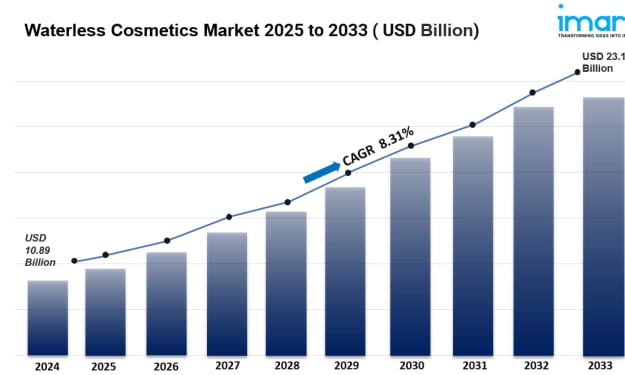
Waterless Cosmetics Market Set to Soar to USD 23.17 Billion Driven by Digital Shift and Diverse Content
Waterless Cosmetics Market – Overview The waterless cosmetics market refers to beauty and personal care products formulated without water as a primary ingredient. Instead of water, these products use alternatives like botanical extracts, oils, powders, and butters to deliver concentrated active ingredients that offer potent performance and sustainability benefits. Compared to traditional liquid formulations, waterless cosmetics reduce reliance on freshwater, minimize preservative needs, and often use more eco-friendly packaging.
By James Smithabout 2 hours ago in Futurism



Comments
There are no comments for this story
Be the first to respond and start the conversation.