
Saudi Arabia Cloud Computing Market & Forecast 2025–2033
Vision 2030 Fuels a Cloud-Powered Digital Economy Across the Kingdom


Introduction
Saudi Arabia’s digital transformation is entering a decisive phase, with cloud computing at the core of the Kingdom’s technology roadmap. As enterprises, government agencies, and startups accelerate their shift toward digital platforms, cloud infrastructure is rapidly becoming the backbone of innovation, efficiency, and scalability across industries.
According to Renub Research, the Saudi Arabia Cloud Computing Market is anticipated to grow from US$ 14.55 billion in 2024 to US$ 38.23 billion by 2033, expanding at a compound annual growth rate (CAGR) of 11.33% during 2025–2033. This remarkable growth is driven by large-scale digital transformation initiatives, rising enterprise adoption of cloud services, and strong government support under Vision 2030 for modernizing IT infrastructure and promoting innovation across sectors.
From smart cities such as NEOM to digitized healthcare, fintech platforms, and industrial automation, cloud computing is reshaping how Saudi Arabia builds, operates, and competes in the global digital economy.
Saudi Arabia Cloud Computing Market Overview
Cloud computing refers to the delivery of computing resources—including storage, processing power, databases, networking, and software—over the internet. Instead of investing in physical servers and on-premise data centers, organizations access scalable resources on demand from cloud providers. The three primary service models—Infrastructure as a Service (IaaS), Platform as a Service (PaaS), and Software as a Service (SaaS)—offer flexibility, operational efficiency, and cost optimization.
In Saudi Arabia, cloud adoption has accelerated as part of the national digital agenda. Public and private organizations increasingly rely on cloud platforms to enhance cybersecurity, enable artificial intelligence (AI) and big data initiatives, and improve service delivery. Partnerships with major global providers such as Microsoft Azure, Google Cloud, Oracle, and AWS have further strengthened the ecosystem, while government-backed investments and regulatory reforms have helped build trust in cloud-based solutions.
The rapid development of smart cities, e-governance platforms, fintech services, and digital healthcare systems is creating sustained demand for advanced cloud infrastructure, positioning Saudi Arabia as one of the fastest-growing cloud markets in the Middle East.
Growth Drivers in the Saudi Arabia Cloud Computing Market
Vision 2030 and National Digital Transformation
Saudi Arabia’s Vision 2030 is the primary engine behind cloud market expansion. The initiative aims to diversify the economy, reduce oil dependency, and establish the Kingdom as a regional technology and innovation hub. Cloud computing is central to this transformation, enabling e-government platforms, smart infrastructure, and data-driven public services.
In April 2023, the Crown Prince inaugurated the Cloud Computing Special Economic Zone, designed to accelerate investment in digital infrastructure and strengthen Saudi Arabia’s position as a regional ICT powerhouse. This move has encouraged enterprises to modernize IT operations while attracting international technology companies to establish data centers within the Kingdom.
Growth of Smart Cities and IoT Deployments
Massive smart city projects such as NEOM, along with increasing adoption of Internet of Things (IoT) technologies, are generating unprecedented volumes of real-time data. Cloud platforms provide the scalable storage, analytics, and computing capabilities required to manage these systems efficiently.
Urban planning, transportation networks, energy management, and public safety applications all rely on cloud-based infrastructure. To meet growing demand, global providers are expanding their footprint in the Kingdom. In February 2023, Oracle announced a US$ 1.5 billion investment to establish a third public cloud region in Saudi Arabia, adding to existing and planned regions in Jeddah and NEOM. These developments underscore the strategic role of cloud infrastructure in supporting Saudi Arabia’s smart city ambitions.
Rising Demand from BFSI and Healthcare
The banking, financial services, insurance (BFSI), and healthcare sectors are among the fastest adopters of cloud technology in Saudi Arabia. Financial institutions are leveraging cloud platforms for core banking, digital wallets, fraud detection, and regulatory compliance, while healthcare providers are using cloud solutions for electronic health records, telemedicine, and AI-assisted diagnostics.
In August 2024, Google introduced enhanced data sovereignty, security, and AI capabilities for its Saudi operations, enabling organizations to meet regulatory requirements while accelerating digital innovation. These sector-specific advancements are driving widespread enterprise confidence in cloud adoption.
Challenges in the Saudi Arabia Cloud Computing Market
Data Residency and Regulatory Compliance
Despite strong momentum, concerns around data sovereignty and regulatory compliance remain a key challenge. Many organizations are cautious about hosting sensitive data outside the Kingdom. While government initiatives have expanded local data center capacity and clarified cloud governance frameworks, enterprises in regulated industries continue to demand stringent compliance, slowing the pace of full-scale migration.
Shortage of Skilled Cloud Professionals
Another significant constraint is the limited availability of skilled cloud professionals. Expertise in cloud architecture, cybersecurity, DevOps, and AI integration is essential for successful implementation. Although universities and training institutions are introducing cloud-focused curricula, the talent pipeline is still developing. This skills gap increases reliance on foreign expertise and may hinder widespread adoption, particularly among small and medium enterprises.
Market Segmentation and Key Trends
Public Cloud Computing Market
Public cloud services are experiencing rapid growth due to cost efficiency, scalability, and reduced infrastructure requirements. Government initiatives encourage businesses to use public cloud platforms for non-sensitive workloads such as web hosting, CRM systems, and e-commerce operations. With major providers expanding local data centers to meet regulatory needs, adoption is accelerating across retail, education, media, and logistics.
Private Cloud Computing Market
Private cloud remains essential for organizations handling highly sensitive data, including government agencies, financial institutions, and large enterprises. Private cloud infrastructure offers greater control, customization, and security, helping organizations comply with data residency laws and cybersecurity standards. The increasing adoption of hybrid cloud models, combining private and public cloud capabilities, further supports market growth.
Large Enterprises Cloud Computing Market
Large enterprises are leading cloud adoption in Saudi Arabia, leveraging advanced solutions such as multi-cloud environments, disaster recovery systems, and high-performance computing platforms. These organizations view cloud computing as a strategic asset for enhancing customer experience, optimizing operations, and integrating legacy systems with emerging digital technologies.
BFSI Cloud Computing Market
Saudi Arabia’s BFSI sector is undergoing rapid digitalization. Banks and fintech companies are using cloud platforms to streamline operations, launch mobile-first services, and strengthen fraud prevention mechanisms. Collaborations between financial institutions and global cloud providers are driving innovation in payments, lending, wealth management, and regulatory technology (RegTech).
Manufacturing Cloud Computing Market
Cloud computing is transforming Saudi Arabia’s manufacturing sector by enabling predictive maintenance, real-time production monitoring, and supply chain optimization. As the government promotes Industry 4.0 and smart factory initiatives, manufacturers increasingly rely on cloud-based IoT integration and big data analytics to improve efficiency, reduce downtime, and enhance competitiveness.
Healthcare Cloud Computing Market
Healthcare digitization is a major growth driver for the cloud market. Hospitals and clinics are adopting cloud platforms to manage patient records securely, support telemedicine, and integrate AI-driven diagnostic tools. With the Ministry of Health actively promoting digital health initiatives, cloud computing is improving accessibility, operational efficiency, and patient outcomes across the Kingdom.
Regional Outlook
Western Saudi Arabia
Western Saudi Arabia, including Jeddah and Makkah, is experiencing robust cloud adoption driven by smart city projects, tourism digitalization, and infrastructure development. Government agencies and private enterprises are using cloud platforms to improve transportation systems, hospitality services, and logistics operations. High smartphone penetration and a growing tech-savvy population further fuel demand for cloud-based applications in retail and finance.
Eastern Saudi Arabia
The Eastern region, home to major oil and gas operations, is increasingly using cloud computing for industrial automation, real-time data analytics, and cybersecurity. Energy companies leverage cloud platforms to remotely monitor facilities, optimize production, and enhance safety compliance. The presence of industrial parks and logistics hubs makes this region a key growth area for enterprise cloud services.
Southern Saudi Arabia
Cloud adoption in Southern Saudi Arabia is gradually expanding, supported by government digitization initiatives, education modernization, and SME digital transformation. While infrastructure development is ongoing, increasing connectivity and digital literacy are enabling healthcare providers, educational institutions, and local businesses to adopt cloud-based platforms, contributing to long-term regional growth.
Market Segmentation
By Deployment:
Public Cloud
Software as a Service (SaaS)
Platform as a Service (PaaS)
Infrastructure as a Service (IaaS)
Private Cloud
By Enterprise Size:
Small & Medium Enterprises (SMEs)
Large Enterprises
By End Use:
BFSI
IT & Telecom
Retail & Consumer Goods
Media & Entertainment
Manufacturing
Energy & Utilities
Healthcare
Government & Public Sector
Others
By Region:
Northern and Central Region
Western Region
Eastern Region
Southern Region
Key Players Analysis
Major companies shaping Saudi Arabia’s cloud computing ecosystem include:
Google LLC (Alphabet Inc.), Amazon Web Services (AWS), Alibaba Cloud, Microsoft Corporation, Oracle Corporation, CloudSigma, VMware, Salesforce, Saudi Telecom Company (STC), and IBM Corporation.
These companies are actively expanding data center infrastructure, launching region-specific services, and forming strategic partnerships with government agencies and enterprises. Each player contributes through technology innovation, regulatory alignment, cybersecurity enhancement, and AI integration, strengthening the Kingdom’s cloud ecosystem.
Competitive Landscape: Five Viewpoints
Overview: Providers focus on scalable infrastructure and compliance with local regulations.
Key Personnel: Leadership emphasizes digital sovereignty and strategic partnerships.
Recent Developments: New data centers, AI-enabled services, and investments in local talent.
SWOT Analysis: Strengths in infrastructure and innovation; challenges in regulation and skills availability.
Revenue Analysis: Rising enterprise adoption across BFSI, healthcare, manufacturing, and government sectors.
Future Outlook: 2025–2033
With sustained government backing, expanding data center capacity, and increasing enterprise digitization, Saudi Arabia’s cloud computing market is poised for strong long-term growth. The integration of AI, machine learning, edge computing, and IoT will further enhance the value proposition of cloud platforms, while hybrid and multi-cloud strategies will become standard across large organizations.
As regulatory frameworks mature and local talent development accelerates, barriers to adoption will diminish, enabling SMEs and regional enterprises to fully embrace cloud technologies. The Kingdom’s ambition to become a regional technology hub ensures continued investment, innovation, and competitive intensity in the cloud ecosystem.
Final Thoughts
Saudi Arabia’s cloud computing market is no longer an emerging opportunity—it is a foundational pillar of the Kingdom’s digital economy. Backed by Vision 2030, massive infrastructure investments, and accelerating enterprise adoption, cloud platforms are redefining how businesses operate, governments deliver services, and industries innovate.
With the market expected to grow from US$ 14.55 billion in 2024 to US$ 38.23 billion by 2033 at a CAGR of 11.33%, cloud computing will remain central to Saudi Arabia’s transformation into a globally competitive, technology-driven economy. For enterprises, policymakers, and investors alike, the Kingdom’s cloud journey represents one of the most compelling digital growth stories of the decade.
About the Creator
jaiklin Fanandish
Jaiklin Fanandish, a passionate storyteller with 10 years of experience, crafts engaging narratives that blend creativity, emotion, and imagination to inspire and connect with readers worldwide.
Keep reading
More stories from jaiklin Fanandish and writers in Futurism and other communities.
Saudi Arabia 5G Infrastructure Market Size and Forecast 2025–2033
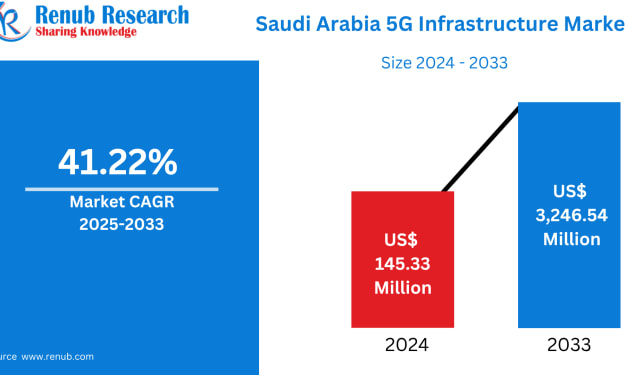
Saudi Arabia 5G Infrastructure Market Outlook The Saudi Arabia 5G Infrastructure Market is poised for extraordinary expansion, projected to grow from US$ 145.33 million in 2024 to US$ 3,246.54 million by 2033, registering a remarkable CAGR of 41.22% during 2025–2033. This explosive growth reflects the Kingdom’s ambitious digital transformation agenda, driven by Vision 2030, large-scale smart city investments, and accelerating demand for ultra-high-speed, low-latency connectivity across critical sectors such as healthcare, energy, manufacturing, and telecommunications.
By jaiklin Fanandishabout 15 hours ago in Futurism
About Binding Prometheus
I want to start actively advocating on behalf of my own work, and the most valuable part of my canon is, without a doubt, Binding Prometheus, the play I have been working on since 2019 and only finished in 2023 as part of my MA. The play itself is an amalgamation of a million different inspirations. On one end, it evokes the Ancient Greek myth-play, deriving its own title from the earliest extant work of Western drama we have, Aeschylus’s Prometheus Bound. On the other end, it borrows significantly from the sci-fi bulwarks from over the years, namely Mary Shelley’s Frankenstein and Karel Capek’s Rossum’s Universal Robots. The play could be an episode of Black Mirror, I fear. I don’t know. I’ve only ever seen one episode of Black Mirror.
By Steven Christopher McKnight15 days ago in Futurism
Europe Commercial Drone Market Size & Forecast 2026–2034
The Europe commercial drone market is set to witness significant growth, expanding from US$ 9.43 billion in 2025 to US$ 19.02 billion by 2034, driven by rising adoption across construction, agriculture, logistics, public safety, and environmental monitoring. This trajectory represents a CAGR of 8.11% during 2026–2034. Improved drone technology, maturing regulatory frameworks, and the growing demand for aerial data and automation are accelerating development across the region. According to Renub Research, Europe’s commercial drone ecosystem is transitioning from experimental deployments to essential, revenue-generating infrastructure for modern industry.
By Renub Research7 days ago in Futurism


Comments
There are no comments for this story
Be the first to respond and start the conversation.