
Trump’s Address to the Arab-Islamic Summit
A Message to Muslim and Arab Leaders — “Toward Partnership and Common Security”

The vast hall shimmered under chandeliers that hung like frozen waterfalls of glass. Delegates from across the Arab and Muslim world filled the seats, their flowing robes and tailored suits forming a mosaic of traditions and identities. Flags stood tall along the walls, a reminder that the world had converged in one place for a rare moment in history. The city outside buzzed with excitement, but inside the hall, silence fell as Donald J. Trump approached the podium.
It was May of 2017, Riyadh. For weeks, analysts, journalists, and diplomats had speculated about this speech. Would Trump bridge divides or deepen them? Would he bring reassurance or controversy? Every word mattered, every pause carried weight.
Trump adjusted his microphone and began. His voice carried a gravity that blended with the room’s formality. He spoke not just as the President of the United States but as a man attempting to redraw the contours of an often fragile partnership. “We are here,” he began, “to form a coalition of nations committed to peace, prosperity, and the eradication of extremism.”
Mira, a young interpreter seated at the side of the hall, watched intently. Her job was to translate his words into Arabic for some of the delegates. But as she translated, she found herself listening beyond the words—hearing the intent, the tone, the careful calibration. For her, the speech was more than politics. It was a moment where history brushed against everyday lives.
Trump spoke of security, of the shared threat of terrorism. “This is not a battle between different faiths,” he said. “This is a battle between good and evil.” The words echoed through the hall. Some delegates nodded, recognizing their own struggles mirrored in his language. Others shifted uneasily, weighing the balance between rhetoric and reality.
Mira recalled her own city, years ago, shaken by violence. A market reduced to silence, a family friend lost to an explosion that had no justification. She had grown up hearing leaders promise an end to such horrors, yet the cycle seemed unbroken. As she translated “drive out the extremists,” she wondered: could words ever achieve what bombs and policies had not?
The cameras flashed. The world outside was listening too. Trump praised nations for their resilience, called for unity in intelligence-sharing, and encouraged investment in stability rather than destruction. Yet beneath the diplomatic language, Mira could sense a tug-of-war. His message was both a call for cooperation and a reminder of American power. It was a hand extended, but also a signal of expectation.
The leaders in the audience represented a spectrum of realities—oil-rich monarchies, struggling republics, nations scarred by war. For some, Trump’s speech promised opportunity. For others, it stirred doubts. Would this alliance be one of equals, or another reminder of imbalance in global politics?
But there was something undeniable about the atmosphere. For that brief afternoon, the hall was united in stillness. Men who often disagreed on borders, ideologies, and sectarian divides sat shoulder-to-shoulder, their gazes fixed on a single speaker. It was as if the rain of history paused, drops suspended mid-air, waiting to fall in a direction no one yet knew.
After nearly half an hour, Trump concluded. “Together, we can achieve a future of dignity and peace,” he said. His voice dropped slightly, the tone more earnest than commanding. “But we must act with courage, with conviction, and with shared responsibility.”
Applause broke out. It was measured at first, then fuller, though not thunderous. Some clapped with genuine conviction; others out of formality. The speech had ended, but the questions had only begun.
Mira lowered her headset and exhaled. She felt the weight of the words linger in her chest. She thought of the raindrops she used to watch as a child—each one carrying its own path down the glass. Trump’s address felt the same: each leader would interpret it differently, letting it merge or separate from their own agendas. Some would see cooperation. Others would see caution.
Later that night, the city of Riyadh glittered under neon lights. Streets were filled with cars, conversations, and speculations. In hotel lobbies, analysts scribbled notes; in cafés, young Saudis debated whether Trump’s words meant genuine partnership or temporary diplomacy. In embassies, cables were drafted, carrying interpretations back to capitals across the globe.
Mira sat by her own window, watching the desert night sky. She wondered whether the words she had translated earlier would ripple outward into actual change. Would security improve? Would economies grow together? Or would promises dissolve into the dry air, leaving only echoes of applause in a chandelier-lit hall?
She knew one thing: speeches were not solutions, but they could be seeds. Seeds needed time, care, and honesty to grow. And somewhere within that hall, perhaps in the heart of a leader or a delegate, a seed had been planted.
For Mira, that was enough hope to carry forward.
About the Creator
Game-Based Learning Industry Trends: AR/VR Adoption, Mobile Learning & Forecast 2034
Global education sector is undergoing a massive shift as traditional rote learning is replaced by interactive, game-driven methodologies that prioritize engagement and skill retention. Once a niche tool for primary education, game-based learning has become a critical strategic asset for both K-12 institutions and corporate training programs worldwide. According to IMARC Group’s latest data, the global game-based learning market size reached USD 24.5 Billion in 2025. Looking forward, IMARC Group estimates the market to reach USD 88.6 Billion by 2034, exhibiting a CAGR of 14.59% during 2026-2034. North America currently dominates the market, supported by a highly developed digital infrastructure and the rapid adoption of advanced EdTech solutions in both schools and workplaces.
By Suhaira Yusuf7 days ago in Futurism
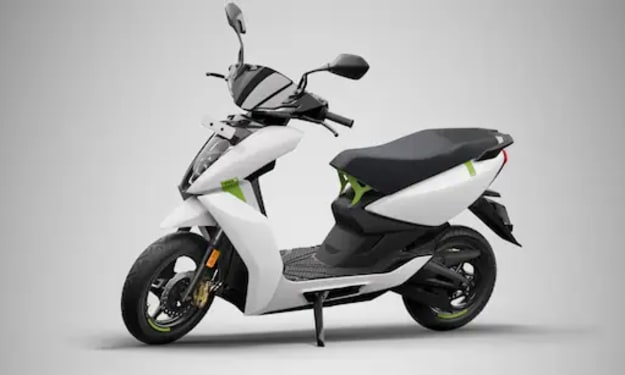
Saudi Arabia Electric Scooters Market: Eco-Friendly Commuting, Last-Mile Connectivity & Tech-Driven Mobility
The electric scooter market in Saudi Arabia is picking up speed — and for good reason. Saudi Arabia's cities are growing fast, environmental goals are getting more ambitious, and residents are actively looking for smarter ways to get around. According to IMARC Group's latest research, the Saudi Arabia electric scooters market size reached USD 367.7 Million in 2025. Looking forward, IMARC Group estimates the market to reach USD 888.6 Million by 2034, exhibiting a CAGR of 10.30% from 2026-2034. The Northern and Central Region, anchored by Riyadh, currently leads the country in adoption, driven by the city's ambitious target of making 30% of all vehicles electric by 2030.
By Kishan Kumarabout 2 hours ago in Futurism

Comments
There are no comments for this story
Be the first to respond and start the conversation.