
Trump Exempts Smartphones and Computers from New Tariffs: A Strategic Move
Balancing Trade Wars and Consumer Interests

### "Introduction" Former President Donald Trump announced a significant policy shift, exempting computers and smartphones from new Chinese import tariffs. This decision, aimed at easing the financial burden on American consumers and businesses, sparked debates on trade policy, economic strategy, and the broader implications for U.S.-China relations.
The exemption highlights the delicate balance between protecting domestic industries and avoiding consumer price surges in essential technology products. The reasons behind Trump's decision, the economic impact, the reactions of stakeholders, and the long-term effects on global trade dynamics are all examined in this article. ## Background: The Tariff War Between the United States and China The United States commenced its trade war with China in 2018 by imposing tariffs on Chinese goods worth billions of dollars. The goal was to reduce the trade deficit, protect American industries, and pressure China into fairer trade practices. However, these tariffs also led to higher costs for businesses and consumers, particularly in sectors reliant on Chinese manufacturing.
By 2019, the United States had imposed tariffs on Chinese imports worth over $370 billion, including consumer goods, machinery, and electronics. These tariffs initially included a number of tech products, including smartphones, laptops, and tablets. This raised concerns regarding price increases for essential consumer electronics. ## **The Decision to Exempt Smartphones and Computers**
The Trump administration excluded computers and smartphones from the most recent round of tariffs in an effort to ease economic pressure. The decision was influenced by several key factors:
### **1. Consumer Impact**
Smartphones and laptops have become necessities in modern life, affecting education, work, and communication. For American consumers, imposing tariffs on these goods would have directly increased prices, disproportionately affecting households with low and middle incomes. ### **2. Business Dependence on Chinese Supply Chains**
Most major electronics companies, including Apple, Dell, and HP, rely heavily on Chinese manufacturing. Supply chains would have been disrupted as a result of tariffs on these goods, which would have raised production costs and raised the possibility of job losses in the tech sector in the United States. ### **3. How to Stay Ahead of Change in the Technology Sector** The tech industry is a major driver of U.S. economic growth. Imposing tariffs on critical components could have slowed innovation and reduced competitiveness against global rivals like South Korea and Taiwan.
### **4. Strategic Negotiation Tactics**
Exempting high-demand consumer electronics may have been a tactical move to maintain leverage in trade talks. By sparing these products, the administration could focus tariffs on other sectors where China was more vulnerable.
## The Exemption's Economic Implications ### **Short-Term Benefits**
- **Price Stability**: Consumers avoided immediate price hikes on essential electronics.
- **Supply Chain Continuity**: Tech companies continued to operate without experiencing sudden price increases. - **Stock Market Reaction**: As investors welcomed the exemption, tech stocks experienced relative stability. ### **Long-Term Considerations**
- **Dependence on Chinese Manufacturing**: The exemption reinforced reliance on China for electronics, delaying efforts to reshore production.
- "Trade Policy Inconsistencies": Opponents argued that selective exemptions compromised the United States' negotiating position. - **Future Tariff Risks**: The exemption was temporary, leaving room for future policy shifts under different administrations.
## **Reactions from Stakeholders**
### Technology Industry Approval Major tech companies, including Apple, Microsoft, and Intel, praised the decision. They argued that tariffs would have stifled innovation and harmed consumers. The move was also supported by trade groups like the Consumer Technology Association (CTA), who cited the possibility of job losses and economic slowdowns. ### **Criticism from Trade Hawks**
Exemptions, according to some trade hardliners, such as Peter Navarro, a former trade advisor to the White House, undermined efforts to exert pressure on China. They believed that maintaining tariffs across all sectors was necessary to force structural changes in China’s trade practices.
### Economists' Diverse Responses Economists were divided. Some supported the exemption as a pragmatic move to avoid economic harm, while others warned that it weakened the U.S. position in long-term negotiations.
## **Global Trade and Geopolitical Impact**
### The Response of China China welcomed the exemption but continued retaliatory tariffs on U.S. agricultural and industrial goods. The move did little to ease broader tensions, as both nations remained locked in a battle over technology dominance, intellectual property, and market access.
### **Impact on Other Countries**
- **Vietnam, India, and Mexico**: As companies sought to diversify supply chains away from China, these nations saw increased investment in electronics manufacturing.
- **European and Asian Markets**: Competing tech industries in South Korea and Taiwan monitored U.S. policy shifts for potential opportunities.
## **The Future of U.S. Tech Tariffs**
While Trump's exemption provided some respite for the foreseeable future, the long-term strategy remained a mystery. Key questions included:
- **Will subsequent administrations reintroduce electronics tariffs? **
- **Can the U.S. reduce reliance on Chinese tech manufacturing? **
- **How will trade policies evolve under Biden or future presidents? **
The CHIPS Act, for example, made efforts to increase domestic semiconductor production, indicating a shift toward self-reliance. However, complete decoupling from China's supply chain is still a long way off. ## **Conclusion**
Trump’s decision to exempt smartphones and computers from new tariffs was a calculated move to balance economic pressure on China with consumer and business interests. While it provided short-term relief, it also highlighted the challenges of reducing dependence on Chinese manufacturing.
Future policies will need to address both the need for affordable technology and competitive pressures as the United States navigates trade relations with China. The exemption serves as a reminder of the complexities in global trade—where economic strategy, consumer welfare, and geopolitical power struggles intersect.
### **Final Thoughts**
The debate over tariffs is far from over. Whether through incentives for domestic production, multilateral trade agreements, or continued negotiations with China, the U.S. must find a sustainable path forward in an increasingly interconnected—and competitive—global economy.
About the Creator
Keep reading
More stories from Shahriar Ahmed and writers in Futurism and other communities.
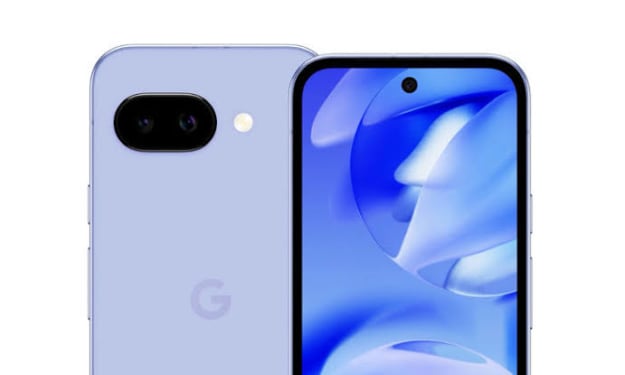
Investigating Alternative Camera Designs for the Google Pixel 9a
### "Introduction" For a long time, Google's Pixel A-series has been praised for providing mid-range camera performance at flagship-level prices. The upcoming **Pixel 9a** is expected to continue this tradition, but recent leaks and patent filings suggest that Google experimented with multiple camera designs before settling on the final look.
By Shahriar Ahmed9 months ago in Futurism
About Binding Prometheus
I want to start actively advocating on behalf of my own work, and the most valuable part of my canon is, without a doubt, Binding Prometheus, the play I have been working on since 2019 and only finished in 2023 as part of my MA. The play itself is an amalgamation of a million different inspirations. On one end, it evokes the Ancient Greek myth-play, deriving its own title from the earliest extant work of Western drama we have, Aeschylus’s Prometheus Bound. On the other end, it borrows significantly from the sci-fi bulwarks from over the years, namely Mary Shelley’s Frankenstein and Karel Capek’s Rossum’s Universal Robots. The play could be an episode of Black Mirror, I fear. I don’t know. I’ve only ever seen one episode of Black Mirror.
By Steven Christopher McKnight19 days ago in Futurism
RegTech Market: Regulatory Complexity, Automation & Market Opportunities
According to IMARC Group's latest research publication, global RegTech market size reached USD 18.6 Billion in 2025. Looking forward, IMARC Group expects the market to reach USD 77.0 Billion by 2034, exhibiting a growth rate (CAGR) of 17.10% during 2026-2034.
By Andrew Sullivan7 days ago in Futurism
Smart phones, Humans and Aliens.
WARNING. I will be tapping into one of your favorite creative tensions: The absurdity of humans worshipping their glowing rectangles as if they were tiny oracles. There’s something deliciously poetic about that contradiction, and it lends itself beautifully to an instructive proviso.
By Novel Allen4 days ago in Poets


Comments
There are no comments for this story
Be the first to respond and start the conversation.