
Top Benefits of RPA in Manufacturing for Modern Industries
Top Benefits of RPA in Manufacturing

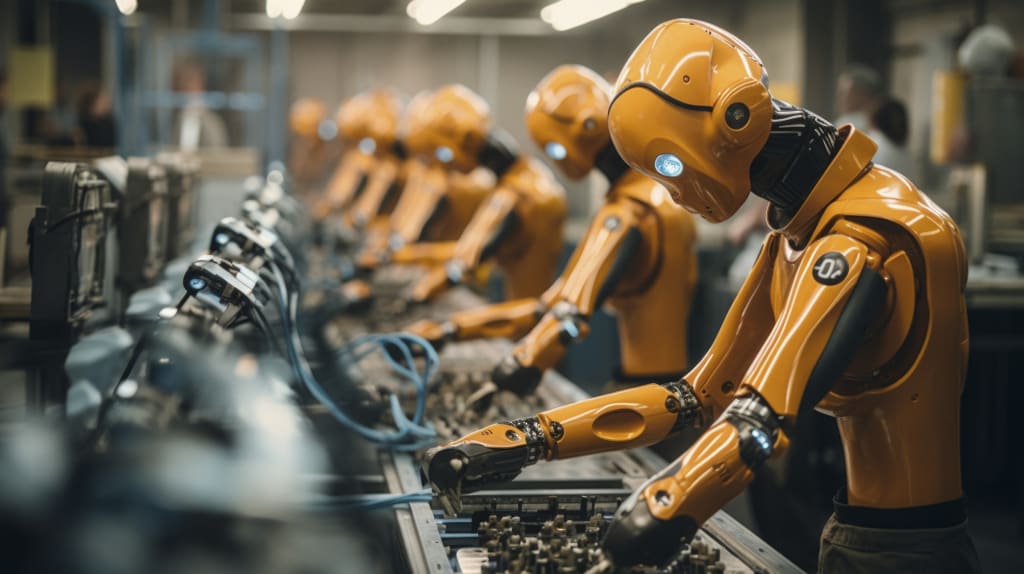
Manufacturing has always been a matter of doing more, faster, with less. In today's fast-moving world, getting the job done is more important than ever. With more customer demand, global supply chains, and costs to reduce, manufacturers are turning to Robotic Process Automation (RPA) to stay competitive.
RPA doesn't refer to physical robots on the shop floor. Rather, it refers to software robots that perform repetitive, rule-based tasks. The robots are able to work across computer systems, perform daily tasks with accuracy, and operate 24/7 without getting tired. In contemporary manufacturing, RPA is assisting organizations in streamlining their operations, minimizing waste, and concentrating on innovation and quality.
Let's discuss the best advantages of RPA in manufacturing, as well as some concrete examples of how it plays out in the real world.
1. Increases Operational Efficiency
RPA in manufacturing can significantly speeds up processes that otherwise would take hours of man-hours. As an example, generating daily production reports would otherwise involve data from multiple systems, spreadsheet merging, and document formatting. A bot can do the entire job in minutes without leaving out anything.
Example: A parts producer formerly spent 3–4 hours a day creating production performance reports. RPA today does it in 10 minutes, and the operations team can devote more time to process improvement.
2. Reduces Human Errors
Repetitive tasks and data entry are prone to errors. In manufacture, small mistakes result in incorrect shipments or manufacturing shutdowns. Robots are rule-bound and will not tire, giving a precise and repeatable outcome.
Example: One electronics manufacturer was plagued with regular order entry/inventory mistakes. They instituted an RPA bot to match order information before processing. Errors dropped by 95%, and fill rates improved.
To make sure the smooth implementation of RPA in manufacturing, the majority of companies opt to hire RPA developers with experience in manufacturing systems. They assist in coordinating automated tools with intricate, industry-specific workflows.
3. Boosts Productivity Without Hiring More People
RPA allows businesses to do more with their existing employees. Robots can mechanize repetitive, time-consuming tasks like processing invoices or order status updates without manual intervention.
Example: A medium-sized auto spare parts dealer processed over 2,000 invoices per month. When it automated it with RPA, the finance team released approximately 150 working hours per month—without recruiting additional staff.
4. Enhances Supply Chain Visibility
Tracking raw materials, vendor shipments, and shipment tracking is difficult for manufacturers. By using RPA, real-time information can be retrieved from various systems and reported on a centralized dashboard.
Example: A manufacturer used RPA robots to collect shipping notices from suppliers. Robots would update dashboards hourly, lowering stockout issues by 40% and improving restocking accuracy.
5. Accelerates Reporting and Compliance
Medical, food, and automotive industries, among others, need to report to regulators very often. The reports are difficult to create, but RPA can easily fetch the information needed and create reports in no time.
Example: One of the medical device manufacturers automated FDA compliance reporting using RPA. What once consumed two days of effort took just one hour, cutting audit preparation time significantly.
6. Improves Quality Control
RPA in manufacturing supports quality control by detecting process issues in advance. While it does not replace inspections, it supports monitoring of electronic data and raises an alarm when something goes out of the ordinary.
Example: An industrial valve manufacturer used bots to monitor sensor readings. When there were hazardous temperatures, RPA alerted the quality team in real-time and avoid product defects and rework.
7. Saves Costs in the Long Term
Although there's a initial investment, RPA returns quickly by conserving labor hours, reducing errors, and improving process speed. The majority of companies recover their investment within a year.
Example: A firm automated order matching, order confirmation, and shipping notification. In half a year, they saved $50,000 by saving on manual labour and seasonally hired personnel.
8. Enables Digital Transformation
RPA bridges the gap between older systems and newer digital technology. It allows firms to transition incrementally without overhauling their IT infrastructure completely.
Example: A chemical production company used RPA to transfer data from its legacy ERP to a new analytics dashboard. They gained better insights and reporting accuracy without the need to modify their ERP system.
RPA has become a strong solution for manufacturers today to increase productivity, reduce costs, and respond rapidly to changing business needs. From supply chain reconfiguration to compliance reporting, robots are able to solve most of the mundane tasks that impede teams. Collaborating with the right RPA development company can be the solution because with expert advice, businesses can design bots to fulfill their business requirements, streamline deployment, and capture even more value from automation without upending their current operations.
About the Creator
Kiran Moda
Passionate Techwriter: I love to empower business leaders with technological innovations. Let's explore the technical world, from software development to AI.
Keep reading
More stories from Kiran Moda and writers in Futurism and other communities.
How AI and Automation Strengthen Cybersecurity in Software Development
Artificial intelligence (AI) and automation are transforming software cybersecurity with proactive security, reduced human mistakes, and improved threat identification. For business leaders, AI-based cybersecurity spending means greater protection of customers' information, compliance, and reduced financial risk. Businesses utilize these technologies to remain ahead of emerging threats while securely safeguarding digital assets.
By Kiran Moda8 months ago in Futurism
About Binding Prometheus
I want to start actively advocating on behalf of my own work, and the most valuable part of my canon is, without a doubt, Binding Prometheus, the play I have been working on since 2019 and only finished in 2023 as part of my MA. The play itself is an amalgamation of a million different inspirations. On one end, it evokes the Ancient Greek myth-play, deriving its own title from the earliest extant work of Western drama we have, Aeschylus’s Prometheus Bound. On the other end, it borrows significantly from the sci-fi bulwarks from over the years, namely Mary Shelley’s Frankenstein and Karel Capek’s Rossum’s Universal Robots. The play could be an episode of Black Mirror, I fear. I don’t know. I’ve only ever seen one episode of Black Mirror.
By Steven Christopher McKnight17 days ago in Futurism
Top-12 AI Agents Development Services in the 2026
AI agents are no longer experimental tools. In 2026, they sit at the core of how modern companies automate workflows, support customers, analyze data, and make decisions at scale. Autonomous customer support agents and multi-agent enterprise systems coordinate complex operations. Businesses actively seek partners capable of designing, building, deploying, and maintaining production-ready AI agents.
By CEO A&S Developers6 days ago in Futurism



Comments
There are no comments for this story
Be the first to respond and start the conversation.