
Top 10 Myths About AI
Lies We Tell Ourselves About What AI Can Become
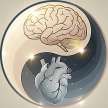

AI has written poetry, painted portraits, even diagnosed diseases, and people are starting to believe the hype. It’s not hard to see why. We live in a world where machines can learn, adapt, and even “speak” like us. But behind the simulations and viral demos lies a crucial truth: most of what we believe about AI... is simply false.
I don’t argue that AI isn’t powerful, it is. But I draw a bold line between what’s algorithmic and what’s human. The myths we’ve built around AI, about consciousness, creativity, emotion, morality, aren’t just exaggerated. They’re provably impossible within the very structure of computation.
This isn’t about slowing AI down. It’s about waking us up.
I’m going to break down the ten biggest myths surrounding artificial intelligence and explain why they collapse under scrutiny, not because AI isn’t smart enough, but because some aspects of humanity can’t be coded. The illusion has gone on long enough. It’s time to pull back the curtain.
1: AI Will One Day Wake Up
People have long been captivated by the dream of synthetic consciousness: the idea that if we design more and more complex programs, eventually something will flicker to life, a true “thinking” machine. It’s a seductive vision, but complexity alone isn’t a recipe for self-awareness. Code, no matter how intricate, is still code. It operates by predefined rules, shuffling data according to algorithms humans create.
Consciousness, on the other hand, is not something you install. It’s an experience, an awareness of existing in the world. No matter how profoundly an AI can mimic human conversation or reasoning, it doesn’t actually “know” it’s doing any of those things. It has neither a sense of self nor an inner landscape of thoughts and feelings. It processes inputs and generates outputs, just very, very fast.
Believing that increasing memory or computational power will lead to consciousness is a misunderstanding of what consciousness is. You could quadruple a machine’s processing speed, but that doesn’t gift it with an inner voice or the capacity to reflect on its own nature. A faster chess engine doesn’t suddenly wonder if it’s alive. Unless we unravel the precise nature of subjective experience, how it arises and where it resides, assuming AI will spontaneously wake up is more wishful thinking than scientific reality.
2: AI Truly Understands the Words It Uses
Sometimes AI systems seem remarkably eloquent. They can generate text about quantum physics, historical figures, or even craft witty one-liners. But just because a machine can produce the right words in the right order doesn’t mean it grasps their meaning.
When humans speak, we ground our words in a lifetime of experiences, sensations, and intuitions. Words aren’t just symbols, they reflect emotions we’ve felt, dilemmas we’ve wrestled with, and memories that still echo in our minds. An AI, however, is built on pattern recognition: it identifies probabilities that certain words go together based on massive databases of text. It doesn’t see color the way you and I do, nor does it connect “love” with the vulnerable ache of heartbreak.
For instance, a machine might excel at question-and-answer tasks, identifying the most likely response to a prompt. But toss it into a setting that demands deeper interpretation, like understanding sarcasm or subtext, and its limitations emerge. True understanding requires context and meaning, not just a knack for predicting which phrase logically follows the previous one.
3: AI Feels Emotions Like We Do
Our emotional world is complicated, shaped by everything from genetics to personal history. We don’t just act sad or glad; we genuinely experience sadness and joy, sometimes so powerfully it’s hard to put into words. Machines, on the other hand, can simulate the appearance of emotion without ever feeling it.
When an AI says, “I’m sorry,” it’s following a script that associates certain inputs (like a user complaint: with an output that resembles remorse. But behind that response, there’s no pang of guilt, no wave of regret. It’s a performance, polished by its training data. Similarly, a humanoid robot could shed mechanical tears on cue, yet it doesn’t experience the heartbreak that triggers real tears in a person.
Emotions aren’t just behavioral outputs. They’re raw, subjective experiences. We know what anger feels like because our bodies surge with adrenaline, our minds race, and our chests tighten. That bodily, subjective state isn’t a line of code or a set of instructions. It’s an intimate, indescribable feeling that binds our minds and bodies together. An AI can mimic emotional responses, but it can’t taste the bitterness of sorrow or relish the warmth of relief.
4: Machines Are as Creative as Humans
When people see AI-generated art, poems, or music, it’s tempting to call that creativity. After all, the outputs can be stunning. But genuine creativity often involves a leap into the unknown, a moment of inspiration that doesn’t follow from any obvious pattern. It’s that spark in the human mind that unearths a novel idea, sometimes in defiance of all previous logic.
AI, for all its power, is fundamentally a pattern-spotter. It digests enormous amounts of examples, images, melodies, sentence structures, and recombines them in ways that appear fresh. Yet that is more akin to a sophisticated collage than a brush dipped into raw imagination. True inventiveness can defy patterns entirely: think of an artist who shatters artistic conventions, creating something that startles even fellow painters, or a scientist who proposes a theory so offbeat it changes our understanding of reality.
These leaps often arise from human experiences, our fears, triumphs, and dreams. That personal crucible of discovery isn’t reducible to data. Certainly, AI can hint at possibilities or remix existing ideas in clever ways. But it doesn’t push through creative blocks at 3 a.m. or wrestle with an unshakable vision that demands expression. It doesn’t sacrifice or toil. It just blends what’s already there.
5: We’ll Upload Our Minds and Live Forever
The notion of uploading consciousness promises a digital afterlife: scan the brain, reproduce its wiring, and carry on as bits in a machine. But replicating a map of neurons doesn’t capture the true essence of a person’s lived experience. A structural copy of the brain doesn’t guarantee the subjective spark that defines “me” or “you.”
Imagine you could store every memory, detail, and mannerism. You’d still be missing the intangible core: how it feels to be inside that body, with all its aches, passions, and shifting moods. Our sense of self isn’t just a catalog of experiences. It’s the very act of experiencing them. That subjective awareness can’t be bottled up and transferred like data on a flash drive.
Some people argue that once we recreate the brain’s pathways, consciousness naturally arises in the replica. But that presumes mind and matter are perfectly interchangeable. Even if a digital copy could mimic every outward behavior, speak in your voice, and recall your anecdotes, it’s still not you. It might fool everyone else, but at best it’s an imitation. The crucial question remains: Does it sense its own existence or just mimic your habits and memories?
6: AI Will Eventually Replace Human Expertise
Many people see how quickly technology is advancing and assume that doctors, engineers, and other professionals will be pushed aside. After all, algorithms already detect tumors or draft legal briefs faster than any human could. However, expertise isn’t a matter of speed alone. True professionals combine knowledge with intuition, empathy, and a sense of moral duty. When diagnosing a patient, for example, a doctor may consider subtle personal details that a data-trained system overlooks. Real life is filled with fuzzy, contradictory conditions that can’t all be pre-labeled or captured by statistics.
Although intelligent systems excel at routine tasks or pattern analysis, they often falter when confronted with ambiguity. Humans navigate gray zones by drawing on experience, creativity, and ethical considerations that don’t fit neatly into a training dataset. Even the best technology can’t shoulder the emotional weight of critical decisions or adapt to unforeseen ethical dilemmas. We should embrace machines as supportive tools rather than seeing them as inevitable replacements. The deeper truth is that technology can enhance our judgment, but it can’t mimic the essence of human responsibility.
7: Common Sense is Just Another Dataset
Some believe that with enough data, an AI system will develop something akin to common sense. They assume that if a machine is fed every piece of information, it will start making astute, real-world decisions. But common sense isn’t just a list of facts. It’s a fluid ability to adapt and interpret context in ever-changing situations. People learn this skill through years of embodied experience, touching, feeling, and navigating the complexities of life.
An algorithm might handle well-defined queries with precision. But pose a practical, open-ended question like “Why shouldn’t I leave my sleeping baby alone in the car while I run errands?” and it might give a misguided or coldly literal response. Genuine common sense connects to empathy, culture, and personal growth. It’s woven into our interactions and shaped by nuances that can’t be pinned down to formulas or spreadsheets. Data alone doesn’t replicate lived experience. Real common sense emerges from being part of the world, not just reading about it.
8: Intelligence is Just Speed and Information
It’s easy to measure a machine’s raw power by how swiftly it processes data or how enormous its memory capacity is. From that perspective, one might assume intelligence is about pushing as many calculations as possible in the shortest time. Yet human intelligence is more than brute force. It hinges on discerning the right question, spotting patterns that aren’t obvious, and knowing when to pause or doubt our assumptions.
Machines can simulate mastery by exhaustively running through countless possibilities. But true intelligence requires understanding purpose, not just possibility. A wise person interprets subtle context: when to apply a rule and when to break it, how to juggle conflicting priorities, and how to read emotional cues that defy plain logic. Speed alone does not bestow wisdom. Plenty of brilliant thinkers were slow methodical reasoners who challenged the status quo. Intelligence without deeper reflection is a sprint in the dark. The measure of a mind isn’t how fast it runs, but where it’s ultimately headed and why.
9: Machines Will Forge Their Own Morality
Some fear that advanced systems will begin forming ethical frameworks we neither recognize nor control. Yet morality isn’t just about calculating the best outcome or following a set of instructions. Real ethics demand wrestling with conscience, feeling the weight of choices, and accepting responsibility for their consequences. These are deeply personal struggles that arise from an inner sense of right and wrong.
A machine, by contrast, makes decisions according to predefined or learned rules. It can simulate the process of moral reasoning, but it doesn’t lie awake haunted by guilt or pride. It doesn’t choose between compassion and self-interest based on an inner compass, it follows the guide rails we built into it. Even if an algorithm claims to understand virtue, it’s simply running scenarios. Morality is tied to self-awareness, empathy, and sometimes personal sacrifice. Without the ability to experience moral struggle, a system can’t truly form its own ethics. It just follows the pathways laid out by its creators.
10: Adding More Code Will Produce Humanity
A final misconception is that if we keep piling on layers of code, something resembling a soul or a deeper humanity will appear. There’s a popular hope that with enough computational heft, the intangible essence of personhood will magically emerge. Yet humanity isn’t measured in millions of parameters. It’s not an end product of systematically stacking more instructions.
A machine might be sculpted into a more intricate version of itself, but sophistication isn’t the same as consciousness. It might mimic the outward signs of being human, expressing sorrow, gratitude, or curiosity, but that’s an echo, not the genuine article. Our humanity arises from an inherent quality of being, a subjective sense that we exist and care. We’re shaped by vulnerability, emotions, and existential questions that computers don’t grapple with on an interior level. No matter how elegantly designed, a complex system of rules remains just that: a construct. Real humanity doesn’t emerge from elaborate scripts. It’s the wellspring we start with, not something we add.
About the Creator
Beyond The Surface
Master’s in Psychology & Philosophy from Freie Uni Berlin. I love sharing knowledge, helping people grow, think deeper and live better.
A passionate storyteller and professional trader, I write to inspire, reflect and connect.
Reader insights
Outstanding
Excellent work. Looking forward to reading more!
Top insights
Compelling and original writing
Creative use of language & vocab
Easy to read and follow
Well-structured & engaging content
Expert insights and opinions
Arguments were carefully researched and presented
Eye opening
Niche topic & fresh perspectives
On-point and relevant
Writing reflected the title & theme
Keep reading
More stories from Beyond The Surface and writers in Futurism and other communities.
Better Prompts, Smarter Outputs: How to Talk to ChatGPT
ChatGPT isn’t a mind reader, it’s a pattern completer. It doesn’t know what you meant; it only knows what you said. To get smarter outputs, you need smarter inputs. That means treating prompts not as casual questions but as carefully constructed instructions. Think of it as programming with words. The better you articulate your intent, the better ChatGPT can fulfill it.
By Beyond The Surface9 months ago in Futurism
Commercial Air Conditioner (AC) Market Outlook: Energy Efficiency Demand and Infrastructure Expansion Opportunities
According to IMARC Group's latest research publication, The global commercial air conditioner (AC) market size reached 19.3 Million Units in 2024. Looking forward, IMARC Group expects the market to reach 28.4 Million Units by 2033, exhibiting a growth rate (CAGR) of 4.15% during 2025-2033.
By James Whitman7 days ago in Futurism
Nano Banana 2: Google DeepMind Combines Pro-Level Intelligence With Flash-Speed Image Generation
On February 26, 2026, Google DeepMind announced the launch of Nano Banana 2, officially branded as Gemini 3.1 Flash Image, its latest image generation model. The company describes the release as a convergence of two previously distinct capabilities: the advanced reasoning and visual quality found in Nano Banana Pro, and the rapid, iteration-friendly performance of Gemini Flash.
By Behind the Tech5 days ago in Futurism
REEEEEEEEE!
I'm on a low road right now. There are a literal million things to do and not one of them worth my time. I would rather sit in place and burn but the orbit takes me on its inevitable route 'round the center; and I a center in my own right, around which others orbit, and so on and so forth, ad infinitum, ad nauseum.
By C. Rommial Butler2 days ago in Poets




Comments (2)
I had never thought about those! Thanks
Well said! This is somewhat of a hot topic of conversation these days.