
Time Travel: The Mystery of Andrew Carlssin and the Science Behind It
A Wild Tale, Movie Magic, and What Scientists Say About Jumping Through Time

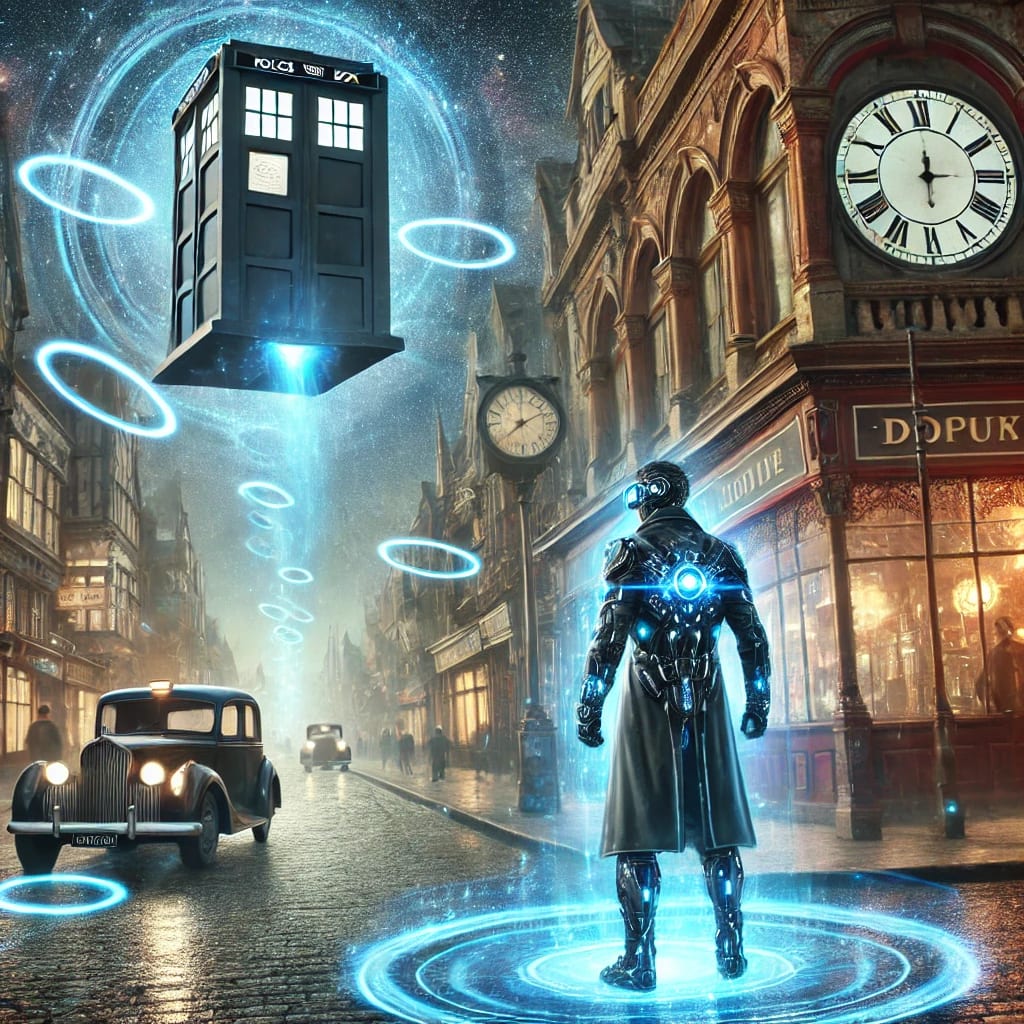
### Travel to the Future and Past: The Story of Andrew Carlssin and Scientific Reality
#### The Fascinating Story of Andrew Carlssin
In 2003, newspapers shared an astonishing story about Andrew Carlssin, a 44-year-old man who turned $800 into $350 million in just two weeks. His incredible success in the stock market caught the attention of the FBI, who suspected him of insider trading. When questioned, Carlssin claimed he was a time traveler from 250 years in the future. He said he knew which stocks would perform well because of his knowledge from the future, leading to his extraordinary results. The FBI dug deeper and found no record of Carlssin before December 2002, which was surprising. Even more shocking, on April 3, 2003, he was supposed to appear in court for his bail hearing but vanished, never to be seen again.
At first, this story sounds thrilling, but research revealed it was a fictional tale published by *Weekly World News*, a tabloid known for its wild, made-up stories. Still, it makes us wonder: could someone really travel through time?
#### The Scientific Basis of Time Travel
Scientists have taken time travel seriously, especially because of Albert Einstein’s theories. His theory of special relativity says that if you travel very fast—close to the speed of light—time slows down for you. For example, astronaut Scott Kelly aged slightly less than his twin brother on Earth after spending a year in space (*Space.com*). This is called "time dilation." Einstein’s general relativity theory adds that gravity can also affect time; near a black hole, time moves slower.
Traveling to the future is simple—we’re all doing it right now, one second at a time. But going to the past is trickier. Scientists talk about wormholes (tunnels in space-time) or black holes as possible ways, but these are just ideas, not reality yet. No one has built a time machine so far.
#### H.G. Wells and the Start of Time Travel
The idea of time travel began with fiction, especially in 1895 when H.G. Wells wrote his famous novel *The Time Machine*. He imagined a machine that could take you to the past or future, making the term "time machine" popular. Though it was a science fiction story, it inspired philosophers, physicists, and filmmakers. After that, many movies and research papers explored the idea, like *Back to the Future* and *12 Monkeys*.
#### Types of Time Travel: Lessons from Sci-Fi Movies
Science fiction films have shown time travel in different ways, and we can split them into three types:
- **Immutable Timelines:** You can’t change the past; everything is fixed. In *12 Monkeys*, Bruce Willis tries to stop a virus, but it’s already set in stone.
- **Mutable Timelines:** You can change the past, and it alters the future. In *Back to the Future*, Marty McFly fixes his parents’ meeting, changing his family’s future.
- **Alternate Histories:** Every choice creates a new universe. In *Everything Everywhere All at Once*, Evelyn jumps between different versions of her life.
These movies help us understand time travel in a fun way and make us wonder if we’ll ever do it for real.
---
### Detailed Look: The Reality and Fiction of Time Travel
#### Background of Andrew Carlssin’s Story
In 2003, a jaw-dropping story hit the news: Andrew Carlssin, a 44-year-old man, turned $800 into $350 million in two weeks—an unheard-of feat in stock market history. The FBI arrested him, suspecting insider trading. When asked, he claimed he was a time traveler from 250 years in the future, using his knowledge to pick winning stocks. The FBI found no trace of him before December 2002, which was odd. Stranger still, he disappeared before his court date on April 3, 2003, and was never found.
It sounds like a movie plot, but it turned out to be fake—a story cooked up by *Weekly World News*, a tabloid famous for crazy tales (*Snopes.com*). Even so, it sparks curiosity about time travel, a topic loved by both science and fiction fans.
#### Scientific Theories Behind Time Travel
Time travel isn’t just a wild dream—science has some answers, thanks to Albert Einstein. His special relativity theory says that moving near light speed slows time for you. Astronaut Scott Kelly, for instance, came back from space a tiny bit younger than his twin because time moved slower for him (*Space.com*). General relativity says gravity bends time too; near a black hole, time crawls.
Going forward in time is doable, but backward? That’s tough. Scientists suggest wormholes—tunnels through space-time—or black holes might work, but it’s all theoretical. There’s also the "grandfather paradox": if you went back and stopped your grandpa from meeting your grandma, would you still exist? It’s a puzzle science hasn’t solved yet.
#### H.G. Wells and Time Travel’s Cultural Rise
The time travel craze kicked off with H.G. Wells’ 1895 novel *The Time Machine*. He dreamed up a device to zip through time, and it stuck in people’s minds. It was fiction, but it lit a spark. Soon, philosophers and scientists wrote papers, and movies like *Back to the Future* (1985), *12 Monkeys* (1995), and *Everything Everywhere All at Once* (2022) brought it to life.
These ideas make time travel exciting. In *12 Monkeys*, the past is unchangeable. In *Back to the Future*, Marty’s tweaks make his dad a success. And in *Everything Everywhere*, every choice spins a new reality—like being a movie star in one life and a shopkeeper in another.
#### Conclusion: Real or Just a Story?
Andrew Carlssin’s tale was fake but fun, pushing us to think about time travel. Science says moving to the future is possible with speed or gravity, but the past is still a mystery. Maybe one day we’ll build a time machine, or maybe it’ll stay in books and films like H.G. Wells imagined. If you had a time machine, would you fix a mistake in the past or peek at the future? It’s a question that keeps us dreaming.
---
About the Creator
Keep reading
More stories from Muhammad Waseem khan and writers in Futurism and other communities.
Apple’s AI Health Revolution: Inside Project Mulberry
Detailed Analysis and Observations Apple’s venture into AI-driven health coaching with "Project Mulberry" marks a significant expansion of its health tech portfolio, building on previous efforts and aiming to integrate seamlessly with its ecosystem. This section provides a comprehensive overview, expanding on the key points and including additional context for a thorough understanding.
By Muhammad Waseem khan10 months ago in Longevity
About Binding Prometheus
I want to start actively advocating on behalf of my own work, and the most valuable part of my canon is, without a doubt, Binding Prometheus, the play I have been working on since 2019 and only finished in 2023 as part of my MA. The play itself is an amalgamation of a million different inspirations. On one end, it evokes the Ancient Greek myth-play, deriving its own title from the earliest extant work of Western drama we have, Aeschylus’s Prometheus Bound. On the other end, it borrows significantly from the sci-fi bulwarks from over the years, namely Mary Shelley’s Frankenstein and Karel Capek’s Rossum’s Universal Robots. The play could be an episode of Black Mirror, I fear. I don’t know. I’ve only ever seen one episode of Black Mirror.
By Steven Christopher McKnight19 days ago in Futurism
Third-Party Logistics (3PL) in Saudi Arabia: Access the Latest 2026 Market Data & Forecasts
According to IMARC Group's latest research publication, Saudi Arabia third-party logistics (3PL) market size reached USD 14.5 Billion in 2025. The market is projected to reach USD 24.9 Billion by 2034, exhibiting a growth rate of 6.20% during 2026-2034.
By Faisal Al-Harbi5 days ago in Futurism
Miss Persephone's Manual to a Seemingly Ordinary Life
Miss Persephone was found at the dining table, her blue eyes swollen, her tears arriving and retreating like the tides of the ocean. Earlier that day, her family had visited her in the retirement home where she had lived for eight years. It was her eightieth birthday.
By Imola Tóth4 days ago in Fiction




Comments
There are no comments for this story
Be the first to respond and start the conversation.