
TikTok Filters Are Creating a Generation That Doesn’t Know Its Own Face
TikTok Beauty Filter Crisis

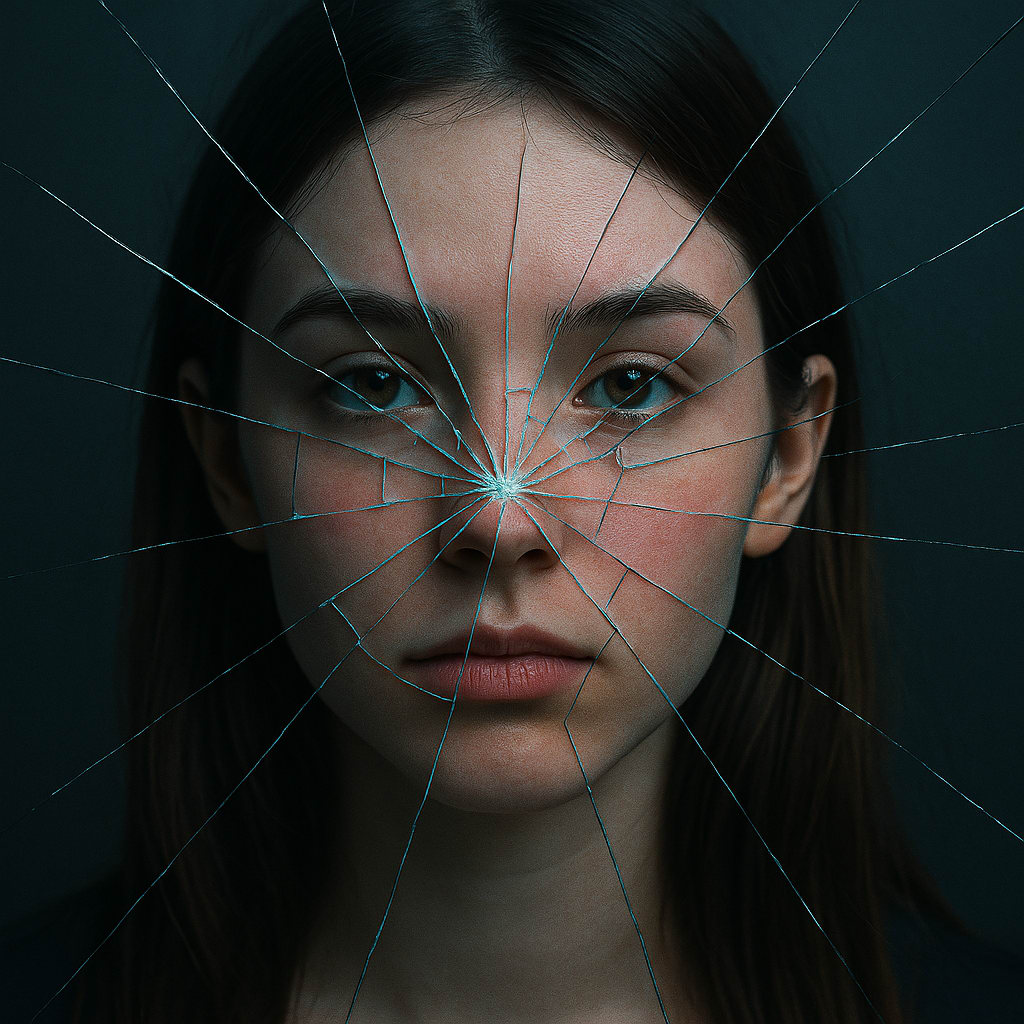
Look me in the face and tell me who you are.
No really — look.
Because chances are, if you’re under 30 and spend any time on TikTok, you’ve seen a version of yourself that’s smoother, more symmetrical, glowing in the right places, with pores erased and jawlines sculpted like digital marble. And now, that version is in your head. You see it when you brush your teeth. You compare it to mirrors. You wonder if the "you" on screen is the real you.
And you’re not alone.
We’re not in selfie culture anymore. We’re in synthetic self-replacement — and it’s hitting people so hard they’re breaking down on camera trying to remember what their own faces actually look like.
TikTok’s new generation of beauty filters aren’t just enhancements — they’re face redesign kits. AI-generated, photorealistic, and seamless enough to fool not just the viewer but the person using them. You’re not looking at a better you. You’re looking at a fiction you can’t unsee.
The filter crisis has gone nuclear.
What used to be a joke — dog ears, flower crowns, big anime eyes — has become a slow erosion of identity. And TikTok’s not alone. Instagram, Snapchat, even Zoom — they’ve all got the tools to clean you up, touch you up, and smooth you out until you’re looking at a stranger that just happens to smile like you.
The difference now? These filters are impossible to clock.
They adjust in real time, contouring with your head tilt, reshaping your features subtly but consistently. You think you’re just adding polish. What you’re actually doing is retraining your brain to reject your own reflection.
And we’re seeing the fallout already.
Users recording themselves without filters describe literal body dysmorphia. Panic. Confusion. Disgust. People breaking down crying on camera — not because of trolls, but because of themselves. Because the version they see when the filter’s off doesn’t feel like the version they’ve learned to accept.
That’s not vanity. That’s tech-driven self-hatred disguised as self-expression.
TikTok’s algorithms didn’t invent insecurity. But they did automate and distribute it at scale. You’re not comparing yourself to celebrities anymore — you’re comparing yourself to a perfectly-filtered version of your best friend. Your classmate. Your own damn face.
And it’s working. Influencers aren’t just using filters — they’re chasing them. Cosmetic surgery clinics are seeing an uptick in patients asking for noses and cheeks to match their TikTok-enhanced content. The phrase “filter face” has entered real-world medical language.
We’ve left the era of duck lips and Valencia filters. This is face dysphoria by design.
And what happens next?
Simple. People either lose track of their real selves entirely — or they reject the filter outright and stop posting.
But there is pushback. Some creators have started going filter-free on purpose — tagging videos with #nofilterchallenge and showing their real faces, flaws and all, just to break the illusion. A few influencers are even making it part of their brand: raw, real, and algorithm-resistant. It’s not a movement yet, but it’s a spark. And sometimes that’s all it takes. Either way, the algorithm wins.
Plugged In says: when the tools make you forget what you look like, they’re not tools anymore. They’re weapons.
Welcome to the filter crisis. The mirror is broken. And the apps aren’t giving it back.
Want tomorrow’s trend before it erases you? Follow Plugged In — and keep your real face in the game.

#TikTok #BeautyFilters #PluggedIn #MJCarson #FaceDysphoria #DigitalIdentity #GlitchedCulture
About the Creator
MJ Carson
Midwest-based writer rebuilding after a platform wipe. I cover internet trends, creator culture, and the digital noise that actually matters. This is Plugged In—where the signal cuts through the static.
Tactical Communication Market to Hit Nearly USD 39.1 billion by 2034
Tactical Communication Market Overview The Global Tactical Communication Market is projected to reach approximately USD 39.1 Billion by 2034, increasing from USD 21.4 Billion in 2024, reflecting a CAGR of 6.2% during the forecast period from 2025 to 2034. Market expansion is largely driven by rising investments in advanced military communication infrastructure and the growing need for secure, real time data exchange during defense operations. Tactical communication systems support battlefield coordination, intelligence sharing, and command and control functions across modern military environments.
By Roberto Cruma day ago in Futurism
Stanislav Kondrashov on How Circumvention Paths Drive Technological Breakthroughs
Technological progress is often described as a clear and logical sequence: a challenge appears, research begins, and eventually a solution is found. Yet in reality, innovation rarely follows such a direct path. Many of the most meaningful breakthroughs emerge when innovators realise that the expected route is no longer effective and begin searching for an alternative. Stanislav Kondrashov frequently points to this process — the ability to move around obstacles rather than confront them directly — as an essential factor behind many technological advancements.
By Stanislav Kondrashov 6 days ago in Futurism




Comments
There are no comments for this story
Be the first to respond and start the conversation.