
The Spark of Tomorrow
Exploring Humanity's Potential: A Vision of Innovation, Resilience, and Hope in the Year 2050
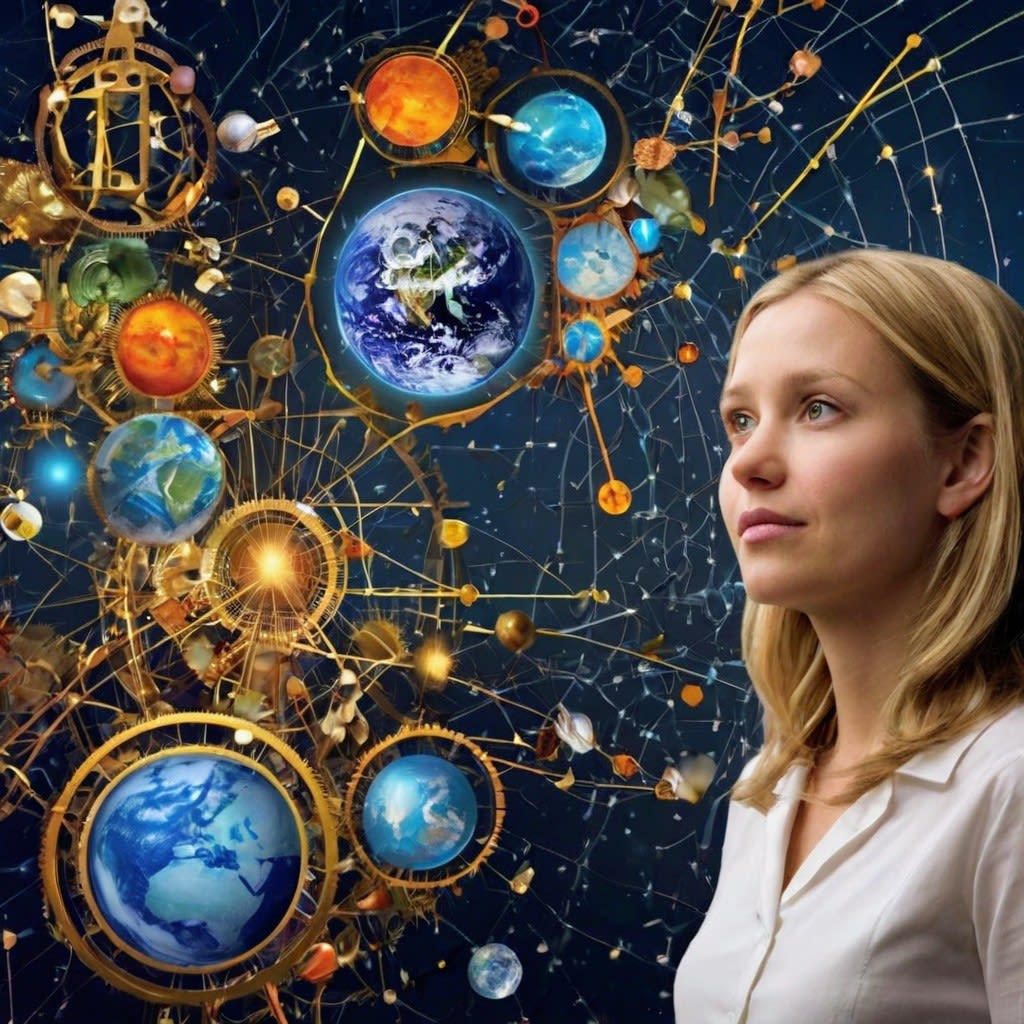
The world had changed by 2050 in ways that would stagger you. Cities able to float upon the oceans, generations powered by renewables derived from sun and sea. Vertical farms that would cover the buildings of old, that produce their own vitamins and are inlaid with blooms, green and gold, not glass and steel. They were better than humans in every way, but they were made of metal, their souls buried in circuitry.
At thirty-two, Laila Raheem, an environmental biologist, was standing at the edge of Adam’s Ark, a great vertical city that sat at the edge of the Atlantic Ocean. She looked across the sparkling waves, where turbines were whirring away clean energy, and found the historical significance striking her. It was the day she was meant to announce the work of her life — a groundbreaking discovery that could change not only the way humanity lived, but how it healed.
The Hopeful Beginning
Round down, it’s a deadly combo, a one-two punch, and the world had it in the early years of the 21st century meaning it left it almost on the brink of collapse. But climate change was now proceeding even faster than the worst projections, causing mass migrations, resource wars and an existential crisis. 2035 and beyond the human species hit a critical mass: change or die. And innovators joined with governments to begin to map a survival plan based on renewable energy, climate resilience and equity.
Laila’s parents had been part of that great current of change, tinkering with water purification projects in drought-stricken countries. From early age specifics of such stories resonated her, her family fed her the stories of success and its downfalls.
A New Frontier
As for Laila, who began studying bioluminescent organisms in 2040. These tiny beings, that naturally sparkled, that worked on their bodies like light factories in the seas and the woods were the answer to what mankind had been craving for millennia: a renewable, non-intrusive energy and healing source. Her team then worked for a decade to successfully combine the properties of these organisms with human D.N.A.
The result was breathtaking.
Luma Chroma, the device allows humans to live on light and generate energy within their bodies. It might also repair the impaired cells, ease chronic diseases — and lengthen human lifespans. No wires, no batteries — just light and life, the two poised in a delicate balance.
Unintended Resistance
But as with any significant change of mind, Laila’s discovery didn’t go without its controversy. To some, LumaTech was advancement, a leap into a bright, shiny future; to others, it risked making the riptide in society even more treacherous.
“Are we playing gods now?” My God's Earth? One critic asked, via an international broadcast. “What of the rich only be a literal having access to this technology, the rich literally be glowing and the poor be literally left in a state of darkness?”
Laila believed otherwise. From the beginning, she had struggled to make LumaTech affordable and widely available. But skepticism remained a stubborn obstacle, even in 2050, when miracles were embedded in daily existence.
The Day of Unveiling
The pillar on display in the United Global Forum’s ostentatious crystal dome, in the orbit of planet Earth. And delegates from every country, every colony, and every arcology were packed in, to witness history.
When she stepped on the platform, Laila’s nerves were barely contained. The dome darkened, and she raised her hand high. Warm, golden light flickered into her palm and poured out into the vastness. Gasps echoed.
“This,” she said, her voice steady, “is the light within us, the energy of light.” It’s not just energy — it’s healing energy. It’s renewal. And it belongs to everyone.”
Holographic images of children in remote villages studying by the glow of their own luminous hands flickered behind her, doctors curing diseases without invasive procedures, factories powered entirely on human-supplied energy.
Applause broke out among the delegates. Not even the doubters could scoff at the possibility.
Unexpected Hope
After her presentation, Laila sat in her quarters and felt a lot. She glanced at the hands that still glinted faintly and thought of what her parents would say if they were there to witness it.
Then suddenly a message pinged her neural interface. It was from Anwar, her childhood friend and fellow scientist.
“But Laila, I was thinking … Your work may give something more, something bigger _ pease.”
He went on: that shortages of energy had sparked endless conflict over the ages. But if we all were energy generators, resource wars would be a thing of the past. Nations could finally disarm.
It came to Laila with a fresh surge of determination. This wasn’t just a matter of convenience — she was thinking physically, you know, how do we start to reconsider what’s at the heart of human interaction.
The Ripple Effect
In just months, Luma Tech as operating internationally. The gains traveled from small towns to large cities, steering seekers in workouts toward their internal light. Crime rates dropped, as the tech reached underserved neighborhoods. Their light became families finding each other in the rubble at disaster sites.
But the most significant shift was less concrete. People realized there are no borders, no ideologies — only the result of the forces of creativity and resolve.”
It was in the year 2055, United Global Forum announced Era of Illumination. The use of that term was not just rhetorical — it was real. Earth glimmered in bubbles far, far up, all its light-filled souls points all but waiting for a terra cotta, inter woven core ball.
A Brighter Tomorrow
Laila’s work showed that innovation could also mean hope and unity. And as she watched the world transform, she had come to see 2050 as not just the next year — but the possibility that the people was capable of when they chose union over division, and imagination over destruction.
A future — after all, how it didn’t come down to machines — or politics. It was illuminated by light — light that lives in every human, waiting to be liberated.
About the Creator
Keep reading
More stories from J Pavan Kumar and writers in Futurism and other communities.
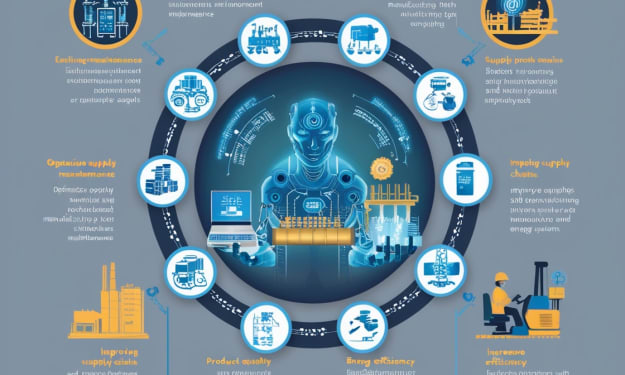
The Role of Artificial Intelligence in Shaping the Future of Manufacturing
Innovation is a huge success determinant in global manufacturing. There probably is no other technology that has dominated the imagination of the industry in the last couple of years as much as AI. While once the stuff of science fiction, AI is fast transforming across many sectors, with manufacturing being no exception. Embedding AI into Manufacturing
By J Pavan Kumarabout a year ago in Futurism
About Binding Prometheus
I want to start actively advocating on behalf of my own work, and the most valuable part of my canon is, without a doubt, Binding Prometheus, the play I have been working on since 2019 and only finished in 2023 as part of my MA. The play itself is an amalgamation of a million different inspirations. On one end, it evokes the Ancient Greek myth-play, deriving its own title from the earliest extant work of Western drama we have, Aeschylus’s Prometheus Bound. On the other end, it borrows significantly from the sci-fi bulwarks from over the years, namely Mary Shelley’s Frankenstein and Karel Capek’s Rossum’s Universal Robots. The play could be an episode of Black Mirror, I fear. I don’t know. I’ve only ever seen one episode of Black Mirror.
By Steven Christopher McKnight15 days ago in Futurism
Anti-Jamming Market Outlook: Strengthening Secure Communications Across Critical Sectors
Anti-Jamming Market Overview The global anti-jamming market is becoming increasingly critical as satellite-based navigation and communication systems face growing threats from intentional interference, signal spoofing, and electronic warfare. Anti-jamming solutions protect GPS and GNSS signals to ensure accuracy, reliability, and operational continuity across defense, aerospace, aviation, maritime, and critical infrastructure applications. Rising dependence on precision navigation, autonomous platforms, and secure communication networks is accelerating the adoption of advanced anti-jamming technologies. As governments and commercial operators prioritize resilience and security, the market is poised for sustained growth worldwide.
By James Smith3 days ago in Futurism



Comments