
The Sky’s New Courier: How Drone Delivery is Reshaping the Future of Shipping
From groceries to life-saving medicine, drones are transforming how goods reach our doorsteps—and changing the logistics industry forever.


The Rise of Drone Delivery
Over the past decade, drones have evolved from hobbyist gadgets to indispensable tools in multiple industries, from agriculture to filmmaking. However, the most transformative application may well be last-mile delivery—the final leg of a package’s journey from retailer to consumer. Last-mile delivery accounts for up to 53% of total shipping costs, according to logistics studies. Drones offer the potential to drastically reduce these expenses while improving delivery speed, reliability, and even environmental sustainability.
Companies like Amazon, UPS, and Zipline have been pioneering drone delivery programs. Amazon Prime Air promises delivery within 30 minutes for select items, while Zipline’s drones are saving lives by transporting blood and medical supplies to remote regions of Africa. Meanwhile, UPS has been experimenting with hybrid delivery models, combining traditional trucks with drones to optimize routes in suburban and rural areas.
How Drone Delivery Works
The technology behind drone delivery is sophisticated yet elegant. Modern delivery drones are equipped with GPS navigation, obstacle avoidance sensors, and autonomous flight software. Packages are secured in small cargo compartments, and drones communicate with centralized control systems to calculate the fastest and safest routes. Some models even feature vertical takeoff and landing (VTOL) capabilities, allowing them to operate in urban environments with minimal space requirements.
Safety and regulations remain critical factors. Many countries, including the U.S., have strict rules under the Federal Aviation Administration (FAA) regarding drone flight paths, altitude, and proximity to populated areas. Companies must also address privacy concerns and ensure drones do not interfere with manned aircraft. Despite these challenges, pilot programs worldwide have shown that drone delivery is not only feasible but highly scalable.
Benefits Beyond Speed
The advantages of drone delivery extend far beyond rapid shipping. For instance:
- Reduced Carbon Footprint: Electric-powered drones emit significantly less CO2 compared to delivery trucks. This makes them an environmentally friendly alternative, especially for short-distance trips.
- Improved Access in Remote Areas: Rural communities often face delayed shipments due to logistical challenges. Drones can bypass traffic and difficult terrain, delivering essentials like groceries and medicine directly.
- Emergency and Medical Applications: In disaster zones or during pandemics, drones can provide fast, contactless delivery of critical supplies. Zipline’s programs in Rwanda and Ghana have already demonstrated the life-saving potential of drone logistics.
Real-World Success Stories
One notable example is Zipline’s blood delivery network. In regions where roads are unpaved or frequently blocked, drones carry blood and vaccines to hospitals within minutes, dramatically improving patient outcomes. Another example is Amazon Prime Air, which has completed thousands of test flights delivering consumer electronics, household essentials, and groceries in suburban neighborhoods.
Even food delivery is being revolutionized. In Singapore, a drone delivery startup called Foodpanda Air has conducted trials delivering hot meals to residential complexes, reducing wait times from over an hour to just 20 minutes. These innovations not only save time but also enhance customer satisfaction and loyalty, which are crucial in today’s competitive e-commerce market.
Overcoming Challenges
Despite its promise, drone delivery faces several hurdles:
- Regulatory Compliance: Governments must create frameworks that ensure drones operate safely without infringing on privacy or airspace rules.
- Payload Limitations: Most commercial drones can carry only small parcels, limiting their use for heavy or bulky items.
- Weather Sensitivity: Rain, strong winds, and extreme temperatures can affect drone operations, requiring robust engineering solutions.
- Public Acceptance: People may initially be wary of drones flying near homes or delivering packages overhead. Outreach and education are key to gaining trust.
Companies are actively addressing these issues. For example, enhanced weatherproofing, automated collision avoidance systems, and community engagement campaigns are helping accelerate adoption.
The Future of Drone Logistics
Looking ahead, drone delivery is poised to become a standard feature of urban logistics. Experts predict that by 2030, drones could handle up to 10% of last-mile deliveries in major cities worldwide. Integration with smart city infrastructure, such as dedicated drone highways and rooftop landing pads, will further streamline operations.
Moreover, advances in artificial intelligence will allow drones to dynamically adapt flight paths in real-time, responding to traffic conditions, weather changes, or emergency requests. This opens the door to hybrid delivery systems, where drones complement traditional delivery trucks rather than replace them entirely.
A More Connected World
Ultimately, drone delivery is about more than speed—it’s about connectivity, access, and efficiency. For consumers, it means faster delivery and reduced waiting times. For businesses, it translates to lower costs, reduced emissions, and improved customer satisfaction. For society, it provides a lifeline in emergencies, ensuring critical goods reach those in need.
As cities grow and e-commerce continues to expand, drones will play an increasingly important role in the logistics ecosystem. What once seemed futuristic is now reality, hovering just above rooftops and weaving seamlessly into the fabric of daily life.
Final Thoughts
Drone delivery is not just a technological novelty; it is a paradigm shift in logistics and commerce. With continued innovation, regulatory support, and public acceptance, drones are set to redefine how goods are transported—making the world faster, greener, and more connected. From groceries to medical supplies, from urban streets to remote villages, the sky truly is the limit.
About the Creator
Marthan Sir
Educator with 30+ years of teaching experience | Passionate about sharing knowledge, life lessons & insights | Writing to inspire, inform, and empower readers.
Keep reading
More stories from Marthan Sir and writers in Futurism and other communities.
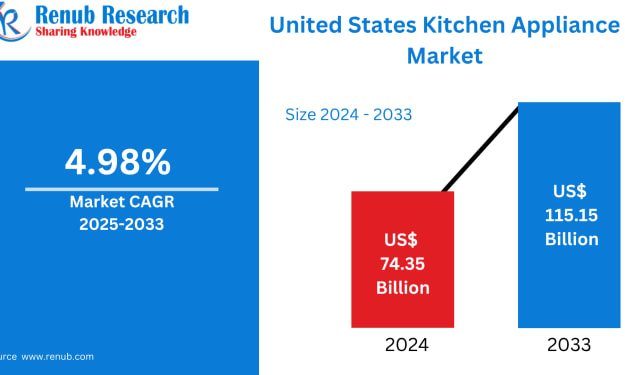
United States Kitchen Appliance Market Size and Forecast 2025–2033
The United States kitchen appliance market is entering a defining decade shaped by innovation, sustainability, and evolving consumer lifestyles. According to Renub Research, the market is projected to reach US$ 115.15 billion by 2033, rising from US$ 74.35 billion in 2024, at a compound annual growth rate (CAGR) of 4.98% during 2025–2033.
By Marthan Sir3 days ago in Futurism
About Binding Prometheus
I want to start actively advocating on behalf of my own work, and the most valuable part of my canon is, without a doubt, Binding Prometheus, the play I have been working on since 2019 and only finished in 2023 as part of my MA. The play itself is an amalgamation of a million different inspirations. On one end, it evokes the Ancient Greek myth-play, deriving its own title from the earliest extant work of Western drama we have, Aeschylus’s Prometheus Bound. On the other end, it borrows significantly from the sci-fi bulwarks from over the years, namely Mary Shelley’s Frankenstein and Karel Capek’s Rossum’s Universal Robots. The play could be an episode of Black Mirror, I fear. I don’t know. I’ve only ever seen one episode of Black Mirror.
By Steven Christopher McKnight18 days ago in Futurism



Comments
There are no comments for this story
Be the first to respond and start the conversation.