
The Silent Partner: How AI is Rewriting the Rules of Creativity
From co-writing novels to composing symphonies, artificial intelligence is becoming the ultimate creative collaborator—but who gets the credit?
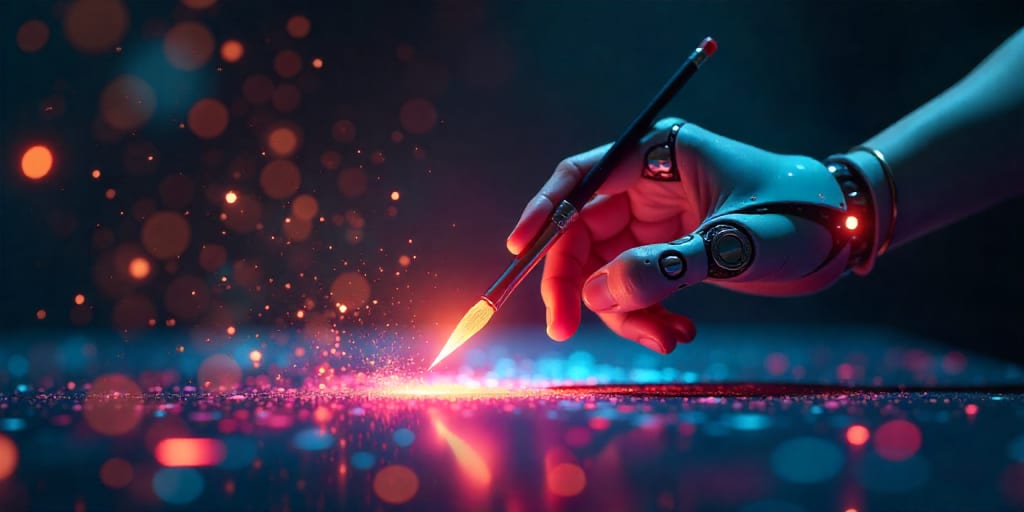
We’ve long believed creativity was the last bastion of humanity, something that algorithms could never truly replicate. Yet quietly, almost imperceptibly, AI has moved from crunching numbers to holding a paintbrush, and it’s producing work that challenges our very definition of art.
This isn't about machines replacing artists. It's about something far more interesting: AI as a collaborative partner that can amplify human creativity in ways we're only beginning to understand.
The New Creative Toolkit: AI in Action
Across creative fields, AI tools are becoming as fundamental as a painter's brush or a writer's notebook:
· The Written Word: Tools like ChatGPT and Claude help writers overcome blocks, generate ideas, and even co-write entire chapters. Platforms like Sudowrite offer "brainstorming" functions that suggest metaphors and plot twists.
· Visual Arts: Midjourney, DALL-E, and Stable Diffusion have democratized visual creation, allowing anyone with a vivid imagination to create stunning artwork in seconds. These aren't just filters—they're interpretation engines that can blend styles and concepts in novel ways.
· Music Composition: AIVA (Artificial Intelligence Virtual Artist) composes emotional soundtrack music, while Google's Magenta project explores how machine learning can create compelling melodies and harmonies.
· Game Development: AI now generates entire game worlds, creates dynamic dialogue for non-player characters, and even helps design balanced game mechanics.
Beyond the Hype: What Does This Mean for Artists?
The emergence of AI creativity raises profound questions:
The Inspiration Machine
For many creators,AI serves as an infinite source of inspiration. A writer can generate twenty possible opening paragraphs. A concept artist can explore fifty visual directions for a character in an hour. This acceleration of the ideation process is perhaps AI's greatest gift to creativity.
The Skill Shift
Technical proficiency matters differently now.The ability to craft the perfect prompt—to guide the AI toward a specific vision—is becoming as valuable as traditional technical skills. The artist's role is shifting from executor to curator and director.
The Authenticity Question
When an AI generates a beautiful poem,who is the artist? The person who wrote the prompt? The programmers who built the model? Or the AI itself? This dilemma strikes at the heart of what we value in art: technical mastery, emotional expression, or simply the final product?
Case Study: The AI-Augmented Creative Process
Consider a novelist working with AI:
1. Brainstorming: She uses AI to generate character backstories and world-building elements
2. Writing: When stuck on a scene, she asks the AI for dialogue options
3. Editing: AI tools help identify pacing issues and suggest structural improvements
4. Cover Design: She collaborates with an image generator to create the perfect book cover
The human remains the visionary, the quality controller, the emotional core—but AI handles much of the heavy lifting.
The Dark Side: Ethical Brushstrokes
This creative revolution isn't without its shadows:
· Training Data Dilemma: Most AI models were trained on copyrighted works without permission or compensation for the original creators
· Style Imitation: AI can perfectly mimic living artists' styles, potentially devaluing their unique voice
· The Homogenization Risk: If everyone uses the same AI tools, could we lose the quirky, imperfect, uniquely human aspects of art?
Looking Ahead: The Future of Human Creativity
The most exciting developments will likely be in human-AI collaboration rather than AI replacement. We might see:
· Personalized AI creative partners that learn an individual artist's style and preferences
· New art forms that could only exist through human-AI interaction
· Democratization of creativity where people who lacked technical training can now express their visions
The Bottom Line
AI isn't making human creativity obsolete—it's making it more accessible and potentially more profound. The artists of tomorrow won't be those who shun these tools, but those who learn to dance with them, who understand how to guide AI to serve human vision.
The question is no longer "Can AI be creative?" but "What new forms of creativity can humans and AI discover together?"
The canvas is vast, and we've only just begun to paint.
About the Creator
Keep reading
More stories from GadgetGround and writers in Futurism and other communities.
Beyond Voice Assistants: Your Home is About to Get a Whole Lot Smarter
We’ve grown accustomed to asking our speakers for the weather or setting a timer with our phones. But the next wave of domestic AI isn’t about responding to commands; it’s about fading into the background. It’s the shift from interactive AI to ambient AI, and it’s poised to fundamentally change our relationship with our living spaces.
By GadgetGround4 months ago in Futurism
Creator Economy Market to hit USD 1,072.8 Billion By 2034, Social Media Platforms Dominance
Creator Economy Market Overview The global Creator Economy Market is projected to reach approximately USD 1,072.8 Billion by 2034, increasing from nearly USD 149.4 Billion in 2024. This reflects a robust CAGR of 21.8% during the forecast period from 2025 to 2034. Growth in this market is largely attributed to the rapid expansion of digital platforms that enable individuals to monetize content, build personal brands, and engage directly with audiences. Social media platforms, streaming services, and digital content marketplaces are providing creators with tools to generate revenue through advertising, sponsorships, subscriptions, and digital product sales.
By Roberto Crum6 days ago in Futurism
My First Time Skiing and I Got Lost, Alone, in the French Alps
Looking back, I can trace some of my life’s biggest adventures to a simple action from my sister. She’d introduced me to Tommy (a very long time ago), a colleague of hers, who had overshared his penchant for Italian-looking women, and I ticked that box.
By Chantal Christie Weissa day ago in Humans

Comments
There are no comments for this story
Be the first to respond and start the conversation.