
The Search Engine That Thinks
How Perplexity AI Is Changing the Way We Learn and Create
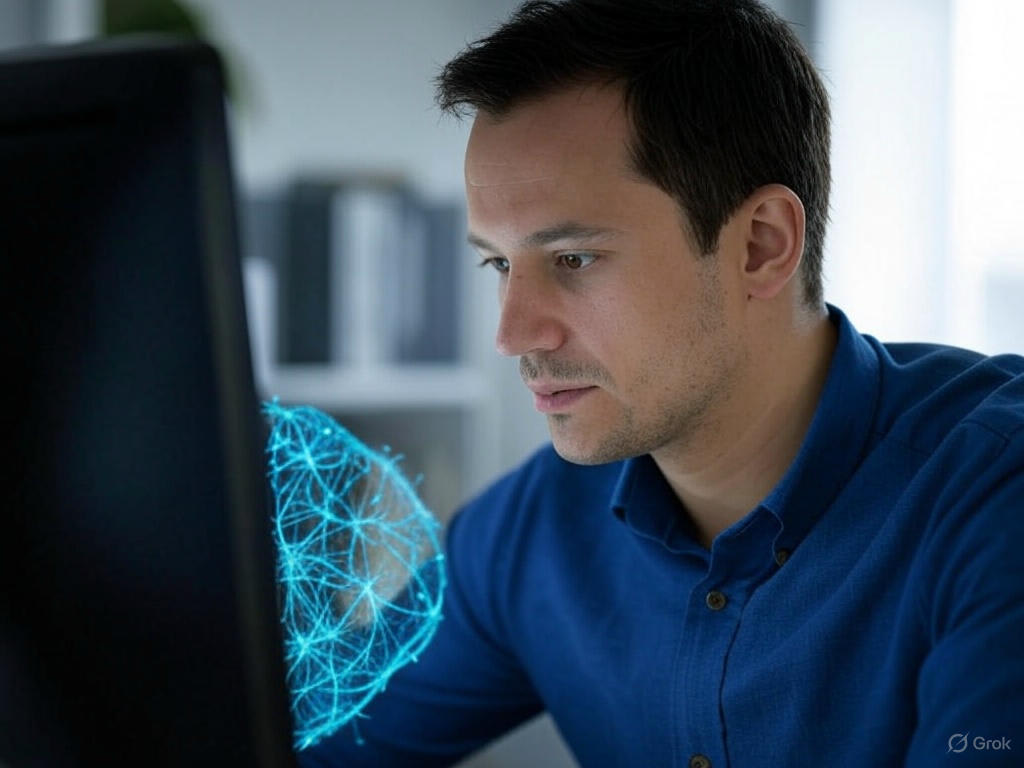
"Information is not knowledge unless it's understood and understanding needs a thinking assistant."
Introduction
Imagine asking a question online and getting not just an answer, but a well-researched, cited response written in clear language. Now imagine following up with a related question and receiving even deeper insights, all without switching tabs or scrolling through ad-ridden web pages. Welcome to the world of Perplexity AI, a conversational search engine that's transforming how we access knowledge. At the intersection of search, artificial intelligence, and user experience, Perplexity AI merges the best of large language models (LLMs) like GPT-4 with real-time web retrieval. It's not just another chatbot or another search bar—it's a cognitive companion for creators, learners, and professionals.
In this article, we explore how Perplexity AI works, why it matters, and how it’s reshaping everyday tasks from writing blog posts to teaching high school science.
What Makes Perplexity AI Different?
Most search engines retrieve links. Chatbots generate answers. Perplexity does both—better. By combining Retrieval-Augmented Generation (RAG) with up-to-date internet crawling, Perplexity answers user questions with:
- Real-time accuracy
- Full source citations
- Natural follow-up conversation threads
- Advanced prompt optimization
It integrates LLMs such as GPT-4 and Claude 3 with a dynamic information retrieval layer. The result? Responses that are both intelligent and reliable.

How It Works: A Peek Under the Hood
For those who want to see the technical magic in motion, here’s a simplified Python simulation of the RAG pipeline Perplexity uses:
```python
from transformers import pipeline
from langchain.chains import RetrievalQA
from langchain.vectorstores import FAISS
from langchain.embeddings import OpenAIEmbeddings
retriever = FAISS.load_local("index")
qa = RetrievalQA.from_chain_type(
llm=pipeline("text-generation", model="gpt-4"),
retriever=retriever
)
result = qa.run("How does Perplexity AI retrieve real-time data?")
print(result)
```
While this example simplifies the system, it reflects the core idea: match a query to relevant sources and then generate a meaningful, grounded response.
Case Study: A Classroom That Questions Back
Ms. Rhea, a high school science teacher in Pune, India, wanted her students to explore renewable energy. She asked Perplexity, “What are the five most innovative solar technologies in 2024?” The AI returned a short paragraph on each, including links to MIT Energy Labs, Nature publications, and company whitepapers.
She shared this with her class. Instead of passive note-taking, students followed source links, read further, and came back with questions like: “How does perovskite differ from silicon in solar cells?” Perplexity helped Ms. Rhea foster curiosity—not just content coverage.
Case Study: Developer Debugging in Real-Time
Akash, a backend developer, was facing a compatibility bug between FastAPI and Uvicorn. Forums were noisy, GitHub was long-winded, and docs were version-specific. He asked Perplexity:
“What changed between FastAPI 0.95 and 0.105 related to async functions?”
He received a summary of four key changes, along with GitHub commit links, changelogs, and code examples—all cited, all current. It saved him an hour. That hour went into shipping a new feature instead.
Why Writers and Creators Love It
Many creators face the blank page with fear. Perplexity AI reduces friction:
- Need statistics to support a blog post? Ask and get sourced numbers.
- Want examples of AI use in healthcare? Get case studies, links, and a narrative.
- Looking for counter-arguments to strengthen your editorial? Perplexity gives both sides.
This shifts the creator’s energy from “searching” to “shaping.”
Feature Innovation: Prompt Rewriting
One hidden gem in Perplexity’s system is its Prompt Rewriting Engine. Ask a vague question like:
“Best language for backend dev?”
It might automatically optimize it into:
“Compare Flask, FastAPI, Node.js, and Spring Boot for backend performance and scalability in 2024.”
This not only improves answers but teaches users how to ask better questions.
A Glimpse Into the Future
Perplexity is part of a larger ecosystem of tools moving toward semantic and reasoning-based search. It pairs well with internal tools like OpenManus, which operate on static corpora (research PDFs, policy docs) for document-level inference.
Together, they point to a future where search systems can:
- Read across the web and your files
- Understand your needs across time
- Respond in natural, evidence-backed language
What Google did for finding links, Perplexity is doing for finding meaning.
Want to go deeper?
From YAML to AUC: How OpenManus Outperforms ManusAI
Final Reflection
We don’t need just better search engines—we need systems that understand. Perplexity AI takes us closer to that dream. It’s already impacting classrooms, codebases, content creation, and curiosity-driven learners.
📘 Ask better. Learn faster. Perplexity is the first step in rethinking search as thinking itself.
About the Creator
Keep reading
More stories from Roger Thompson and writers in Futurism and other communities.
2030
It's 2030, and I'm sitting in what used to be a traditional doctor's office. The air hums with the soft whir of quantum processors. Holographic displays float around me, showing real-time health metrics that our AI diagnostic tools process faster than any human could blink.
By Roger Thompson12 months ago in Futurism
About Binding Prometheus
I want to start actively advocating on behalf of my own work, and the most valuable part of my canon is, without a doubt, Binding Prometheus, the play I have been working on since 2019 and only finished in 2023 as part of my MA. The play itself is an amalgamation of a million different inspirations. On one end, it evokes the Ancient Greek myth-play, deriving its own title from the earliest extant work of Western drama we have, Aeschylus’s Prometheus Bound. On the other end, it borrows significantly from the sci-fi bulwarks from over the years, namely Mary Shelley’s Frankenstein and Karel Capek’s Rossum’s Universal Robots. The play could be an episode of Black Mirror, I fear. I don’t know. I’ve only ever seen one episode of Black Mirror.
By Steven Christopher McKnight22 days ago in Futurism
Saudi Arabia Fasteners Market Analysis: Key Players and Market Forecast
According to IMARC Group's latest research publication, the Saudi Arabia fasteners market size reached USD 3,017.72 Million in 2024. The market is projected to reach USD 4,566.38 Million by 2033, exhibiting a growth rate of 4.71% during 2025-2033.
By Abhay Rajput2 days ago in Futurism


Comments
There are no comments for this story
Be the first to respond and start the conversation.