
The Role of Nanotechnology in Space Exploration: Tiny Solutions for Giant Challenges
Space

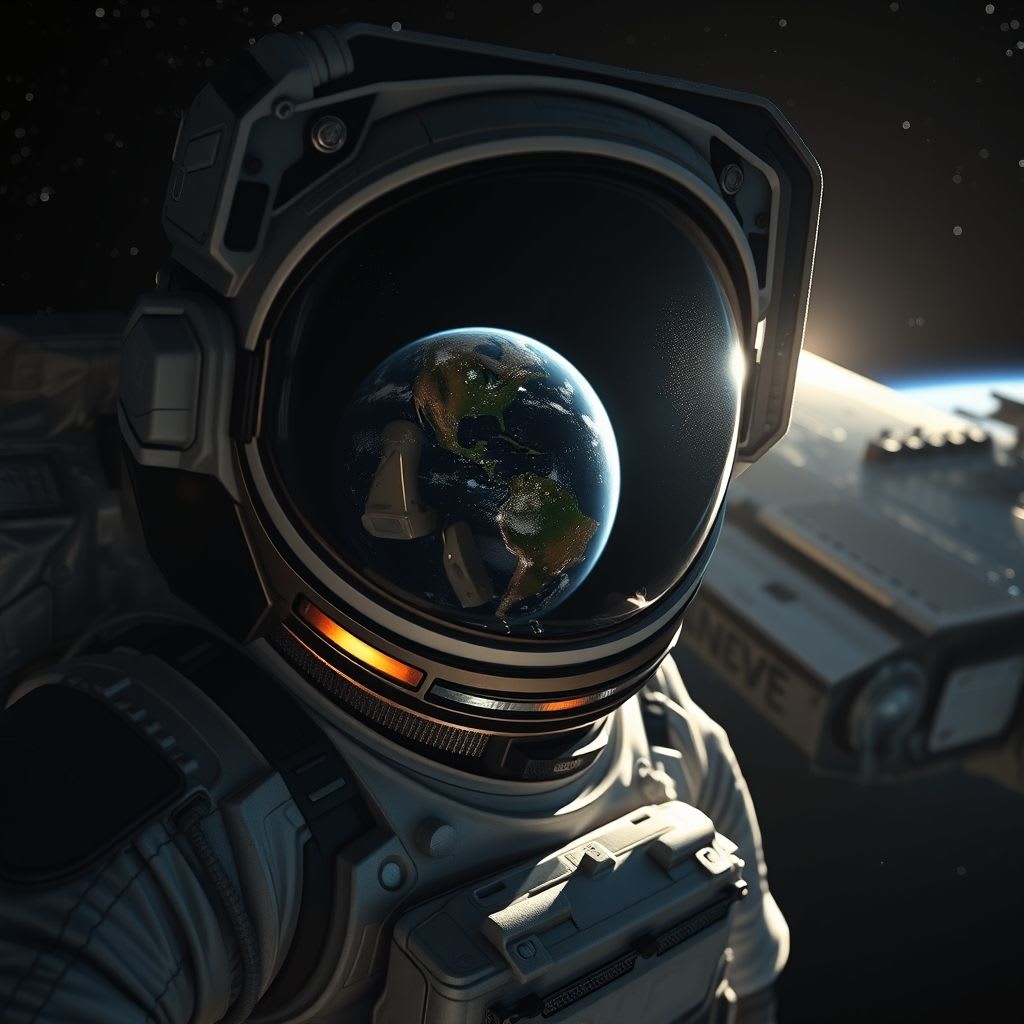
When we think of space exploration, the first images that come to mind are massive rockets, colossal space stations, and enormous telescopes scanning the skies. But behind the scenes, some of the most important advancements come from things far too small to see with the naked eye nanotechnology. These microscopic innovations are quietly shaping the future of space travel, making missions lighter, safer, and more efficient.
What Nanotechnology Is and Why It Matters in Space?
Nanotechnology is the science and engineering of working with materials and structures at the nanometer scale one-billionth of a meter. To put it in perspective, a human hair is roughly 80,000 nanometers wide. At such a tiny scale, materials can behave in extraordinary ways, with properties that don’t exist in their bulk form.
In space, where every gram counts and conditions are extreme, nanomaterials are game-changers. They can be stronger than steel yet lighter than aluminum, resistant to radiation, and able to withstand both scorching heat and bone-chilling cold.
Stronger Than Steel, Lighter Than Aluminum
One of the most promising uses of nanotechnology in space exploration is in the creation of ultra-light yet incredibly strong materials. Carbon nanotubes and graphene, for example, are up to 200 times stronger than steel but weigh just a fraction as much.
Replacing traditional spacecraft structures with these nanomaterials could dramatically reduce mass allowing rockets to carry more instruments, more supplies, or more powerful propulsion systems. This isn’t just a matter of convenience; reducing launch mass directly cuts the cost of sending payloads into orbit.
SpaceX, NASA, and other agencies are already experimenting with such materials for spacecraft parts, satellite components, and even protective shielding for future Mars missions.
Tiny Sensors, Huge Impact
In space, information is priceless. The more data a mission can gather, the better. Nanotechnology enables the creation of sensors no bigger than a grain of sand, capable of detecting temperature changes, measuring radiation levels, analyzing atmospheric composition, or even identifying organic molecules that might hint at life.
NASA and ESA are testing nanosatellites ultra-small spacecraft that can perform advanced scientific measurements while consuming minimal power and taking up almost no space. Imagine swarms of these tiny explorers working together, mapping planets, moons, or asteroids far more efficiently than a single large probe ever could.
Protective Nanocoatings: The Space Armor
Space is a dangerous place. Micro-meteorites, high-energy particles, and intense radiation constantly threaten both astronauts and equipment. Nanotechnology is providing new forms of protection in the form of ultra-thin nanocoatings.
These coatings can reflect harmful ultraviolet and infrared radiation, prevent surfaces from overheating, and even protect against corrosion caused by atomic oxygen in low Earth orbit. Astronaut helmets already benefit from nanocoatings that block harmful glare, while next-generation spacesuits may use nanofiber layers for enhanced radiation shielding.
Materials That Heal Themselves
One of the most futuristic and promising applications of nanotechnology is self-healing materials. These materials contain microscopic capsules filled with repair agents. When a crack or puncture forms say from a tiny meteorite impact these capsules break open, automatically sealing the damage.
For long-duration missions to Mars or deep space, where repair crews can’t just “go outside” with a wrench, this could be a life-saving innovation. A spacecraft that can fix itself could drastically reduce the risk of catastrophic failure.
Nanotechnology and Off-World Living
Looking ahead, nanotechnology could be critical in building permanent human settlements on the Moon, Mars, or beyond. Imagine using nanomaterials to create ultra-light habitats that are still strong enough to resist dust storms, radiation, and temperature extremes. Or picture water- and oxygen-generating systems so compact they fit into a backpack, yet powerful enough to sustain a crew.
NASA has already explored using nanotech-based filters to purify air and water on the International Space Station. Future iterations could be even smaller, more efficient, and capable of functioning for years without maintenance.
The Smallest Tools for the Largest Frontier
It’s a fascinating irony: to conquer the infinite expanse of space, humanity may rely on technologies measured in billionths of a meter. Nanotechnology offers lighter spacecraft, smarter instruments, stronger protection, and even the ability for missions to repair themselves.
If history is any guide, many of these innovations will also find their way back to Earth, improving medicine, manufacturing, and everyday life. But in the meantime, nanotechnology is becoming the quiet hero of space exploration—proving that sometimes, the tiniest solutions can make the biggest difference.
About the Creator
Keep reading
More stories from Holianyk Ihor and writers in Futurism and other communities.
Could We Build an Artificial Sun for a Planet?
For centuries, humanity has dreamed of harnessing the power of the stars to capture their warmth, their light, and their endless energy. But what if we took that dream even further? What if we could create our own Sun? Not just a powerful spotlight or a space station with bright lamps, but a true, blazing source of light and heat that could illuminate and warm an entire planet.
By Holianyk Ihor5 months ago in Futurism
About Binding Prometheus
I want to start actively advocating on behalf of my own work, and the most valuable part of my canon is, without a doubt, Binding Prometheus, the play I have been working on since 2019 and only finished in 2023 as part of my MA. The play itself is an amalgamation of a million different inspirations. On one end, it evokes the Ancient Greek myth-play, deriving its own title from the earliest extant work of Western drama we have, Aeschylus’s Prometheus Bound. On the other end, it borrows significantly from the sci-fi bulwarks from over the years, namely Mary Shelley’s Frankenstein and Karel Capek’s Rossum’s Universal Robots. The play could be an episode of Black Mirror, I fear. I don’t know. I’ve only ever seen one episode of Black Mirror.
By Steven Christopher McKnight15 days ago in Futurism
Plant Based Food Market Set to Soar to USD 32.2 Billion Driven by Digital Shift and Diverse Content
🌱 Plant-Based Food Market – Overview The plant-based food market comprises foods and beverages made primarily from plants (vegetables, legumes, grains, nuts, seeds, fruits) that serve as alternatives to conventional animal-derived products. This includes plant-based meat substitutes, dairy alternatives (milk, yogurt, cheese), eggs, ready-to-eat meals, snacks, and beverages formulated to meet the growing demand for healthier and more sustainable diets. The shift toward plant-based eating reflects rising consumer consciousness around health, environment, animal welfare, and ethical consumption.
By James Smith4 days ago in Futurism


Comments
There are no comments for this story
Be the first to respond and start the conversation.