
The Role of AI in Dynamic Pricing for Retail
Let’s say you’re browsing an online store. You spot a pair of sneakers. You check again later—boom, the price dropped. Or went up. Or a personalized deal pops up just for you.

Let’s say you’re browsing an online store. You spot a pair of sneakers. You check again later—boom, the price dropped. Or went up. Or a personalized deal pops up just for you.
That’s not randomness. That’s AI-powered dynamic pricing in action.
In 2025, AI dynamic pricing has become one of retail’s most powerful levers—not just for revenue optimization, but for real-time agility, customer targeting, and operational efficiency.
From e-commerce platforms to offline shelf tags, AI is helping retailers adjust prices based on real-world context: demand surges, competitor moves, user behavior, inventory status, even the weather.
In this blog, we’ll explore how dynamic pricing works, why it’s booming, what challenges it introduces, and how platforms like Glance AI are helping brands trigger demand before a price tag is even seen.
1. What is AI Dynamic Pricing—and Why It Matters Now
AI dynamic pricing is the use of machine learning models and real-time data to automatically adjust product prices based on demand signals, supply levels, user behavior, and competitive benchmarks.
In traditional pricing:
You set a price.
You watch sales data.
You adjust weeks later.
In AI-powered pricing:
The price evolves minute by minute, user by user, channel by channel.
It reflects demand curves, customer intent, price elasticity, and stock availability.
You can even A/B test prices at scale.
The result? More control. Smarter margins. Better conversions.
Retailers using dynamic pricing report up to 25% increases in profit margins and 15–20% gains in conversion rates when combined with personalized offers. Source: McKinsey Digital.
2. The Tech Behind Dynamic Pricing: What Makes It Tick
At the heart of dynamic pricing is a mix of AI techniques:
Regression models: Predict how price impacts demand.
Clustering algorithms: Segment customers based on sensitivity.
Reinforcement learning: Adjust pricing strategy based on outcomes.
Real-time data ingestion: Competitor scraping, supply data, user analytics.
These models track hundreds of variables in real-time:
Device type
Location
Time of day
Past purchase behavior
Cart abandonment
External signals (e.g., IPL season, flash floods)
This creates hyper-contextual price decisions that a human pricing manager simply cannot replicate.
Platforms like Dynamic Yield, Prisync, and Wiser are leading B2B adoption. But the real power comes when customer-facing discovery platforms—like Glance AI—start surfacing products dynamically aligned with both price and intent.
3. Use Cases: Who’s Using AI Dynamic Pricing (and How)
Let’s look at how top retailers are putting AI dynamic pricing to work.
Amazon changes prices millions of times per day, adjusting based on demand spikes, inventory, and user browsing behavior. The result? High-margin profitability at scale.
BigBasket uses AI to optimize fresh produce pricing by time of day and region, reducing spoilage and maximizing sale velocity.
Myntra leverages dynamic discounting—where offers are personalized in real-time based on cart value, loyalty status, and historical spend.
Zomato and Swiggy apply demand-based surge pricing during lunch/dinner spikes and weekends—maximizing delivery margins without manual inputs.
Glance AI adds a discovery layer to the funnel: AI-generated lookbooks are shown to users passively, priming purchase intent. When combined with smart pricing engines on the PDP, this creates a frictionless, demand-aware loop.
This synergy—AI for discovery + AI for pricing—is retail’s real superpower in 2025.
4. The Benefits: Why Retailers Are All-In on Dynamic Pricing
The buzz is real—and here’s why.
1. Increased Revenue and Margins
By charging just a little more when demand spikes or when customers are more willing to pay, brands can capture value that’s often left on the table.
2. Better Inventory Management
Pricing can now be used to manage inventory proactively. Overstocked on size L? Drop the price just for users who've saved that SKU.
3. Personalization That Converts
Combining AI dynamic pricing with user profiles lets brands offer just-for-you pricing that feels intuitive—not intrusive.
4. Competitive Positioning
Retailers can scrape real-time competitor prices and automatically undercut—or reframe value based on differentiators.
5. Geo-Localized Offers
Dynamic pricing can be tuned for region, city, even pin code, aligning with local demand and spending power.
In short, dynamic pricing turns your store into a living organism—always adapting, always optimizing.
5. The Pitfalls: Where Dynamic Pricing Can Backfire
It’s not all upside. When poorly implemented, dynamic pricing can damage trust and brand equity.
1. Perceived Price Manipulation
Customers may feel cheated if they see different prices for the same product across devices or times.
2. Loyalty Penalty
Frequent customers may unknowingly pay more than new users, triggering frustration.
3. Complexity and Compliance
AI engines need clean, complete, and compliant data. One error in data labeling or logic can lead to massive mispricing.
4. Brand Dilution
Too-frequent price changes may erode premium positioning. Customers may learn to wait for price drops, hurting long-term revenue.
To avoid these pitfalls, retailers must combine pricing AI with explainable rules, transparency, and safeguards. Let AI lead—but make sure human ethics hold the steering wheel.
6. The Glance AI Factor: Influencing Price Perception Before Clicks
Where does Glance AI come in?
It’s not a pricing engine. But it’s something just as important: a demand and discovery layer that feeds pricing strategy.
By analyzing:
Which looks users interact with
Which products are saved or shared
When and how users engage
Glance creates real-time micro-intent profiles.
Brands can use this to:
Surface dynamic offers to specific personas
A/B test product bundles or hero SKUs
Trigger personalized nudges for price-sensitive users
Think of it like this: Glance primes the customer, AI pricing completes the conversion. This one-two punch is redefining funnel economics.
And as try-on features, wishlist nudges, and AI-styled PDP layouts go live across the platform, price personalization will become a native part of the visual story—not just a line of text.
Final Thoughts: AI Dynamic Pricing is the New Retail Reflex
The future of retail isn't static shelves and fixed price tags. It's dynamic, context-aware, and personalized e-commerce —where price, presentation, and timing align perfectly with intent.
AI dynamic pricing makes that possible. But only when paired with trust, transparency, and a focus on user delight.
Glance AI shows us that discovery is the first mile—and dynamic pricing? That’s the conversion layer that makes every engagement count.
FAQs: AI Dynamic Pricing
1. What is AI dynamic pricing in retail?
It’s the use of artificial intelligence to automatically adjust product prices in real time based on data like demand, competitor pricing, user behavior, and inventory levels.
2. How does AI decide the best price for a product?
AI analyzes customer behavior, market trends, historical sales, and external triggers like time of day or location to recommend the most optimal price for conversion or profit.
3. Is dynamic pricing ethical?
It can be—if done transparently. Retailers should avoid penalizing loyal users, use price bands to prevent extremes, and communicate price shifts where needed.
4. What tools are used for AI dynamic pricing?
Popular tools include Dynamic Yield, Pricefx, Wiser, BlackCurve, and internal engines built into platforms like Amazon. Many retailers also build proprietary models using Python and ML platforms like Vertex AI.
5. Can small retailers use AI dynamic pricing?
Yes. Cloud-based services and APIs make it accessible. Shopify apps and SaaS tools now offer plug-and-play dynamic pricing modules that are affordable and scalable.
6. How does Glance AI contribute to pricing success?
Glance AI delivers real-time engagement signals that retailers can use to trigger personalized offers, bundles, or nudges—enhancing the effectiveness of AI-based pricing models.
7. What are the risks of AI pricing?
Overpricing, user distrust, inconsistent UX, and regulatory non-compliance are key risks. These can be managed with testing, transparency, and hybrid human-AI controls.
About the Creator
Australia Wealth Management Market: HNWI Growth, Digital Advisory Platforms & ESG Investing
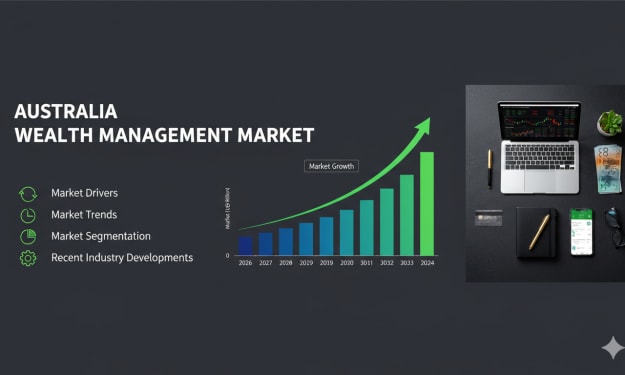
According to IMARC Group, the Australia wealth management market reached a value of USD 118.6 Million in 2025 and is projected to reach USD 222.2 Million by 2034, growing at a compound annual growth rate (CAGR) of 7.00% during 2026–2034. The market is expanding as the number of high-net-worth individuals (HNWIs) continues to rise across Australia’s growing economy. Strong financial markets, a robust superannuation system and favorable regulatory reforms are encouraging individuals and institutions to seek professional wealth advisory services. At the same time, digital transformation is reshaping the wealth management industry, with robo-advisory platforms, automated portfolio management and AI-driven financial analytics becoming increasingly popular. Growing interest in sustainable and ESG-focused investment strategies is also influencing portfolio allocation decisions. As financial planning becomes more sophisticated and globally diversified, wealth management firms in Australia are evolving their services to meet the needs of modern investors seeking long-term financial security and responsible investment opportunities.
By Kevin Cooper6 days ago in Futurism
How the Creator Economy Is Reshaping Digital Entertainment in 2026
The creator economy has undergone a seismic transformation over the past few years, and 2026 marks a turning point that few could have predicted even half a decade ago. What began as a niche corner of the internet — independent individuals producing content from their bedrooms — has evolved into a multi-billion-dollar ecosystem that rivals traditional media in reach, revenue, and cultural influence. Today, the tools, platforms, and business models available to digital creators are more sophisticated than ever, and they are fundamentally changing the way we consume entertainment.
By Chaturbatemeabout an hour ago in Futurism



Comments
There are no comments for this story
Be the first to respond and start the conversation.