
The Rise of Multimodal AI: What It Means for the Future
By Jay Phoenix
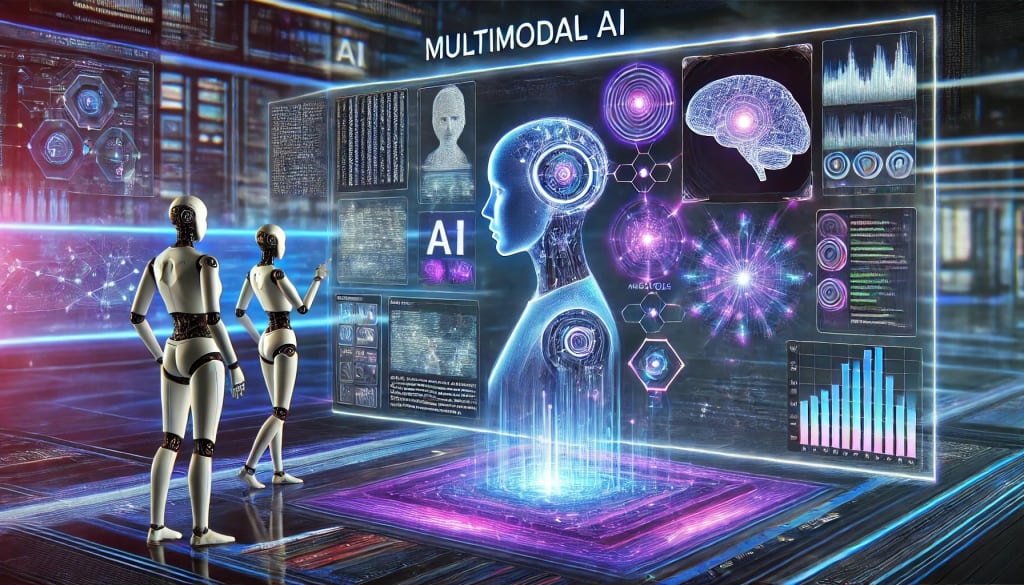
Artificial Intelligence is no longer just about text or speech recognition. It’s evolving into something far more powerful. Something that can see, hear, read, and even generate content across multiple formats seamlessly. This is Multimodal AI, and it’s about to change everything.
What Is Multimodal AI?
Imagine an AI that can analyze an image, understand the context, generate a caption, and even create a video explaining what’s happening. Now take it a step further—what if that AI could talk back to you, answering questions in real-time, synthesizing information from both visuals and text? That’s exactly what multimodal AI does.
Unlike traditional AI models, which process only one type of input (like text or images), multimodal AI integrates multiple sensory inputs. Think of it as the ultimate superpower for machines—combining vision, language, and sound into a single, highly intelligent system.
Why Is This a Big Deal?
For decades, AI was limited. You had chatbots that could talk but couldn’t see. You had image recognition tools that could label pictures but couldn’t describe them in depth. Now, we’re witnessing a transformation where AI doesn’t just process information—it understands it in a human-like way.
This breakthrough has massive implications. It means smarter AI assistants, more advanced automation, and, perhaps most excitingly, entirely new ways for humans and machines to interact.
Real-World Applications of Multimodal AI
Let’s break it down. Where will you actually see and feel the impact of multimodal AI?
1. Smarter AI Assistants
Voice assistants like Siri and Alexa are useful—but they’re limited. Imagine an assistant that doesn’t just hear your voice but sees your surroundings. Instead of just giving generic answers, it can analyze what’s in front of you and provide contextual responses.
For example, you hold up a broken gadget and ask, “How do I fix this?” Instead of directing you to a webpage, a multimodal AI recognizes the object and walks you through the repair process in real-time.
2. Revolutionizing Education
What if AI tutors could read students’ facial expressions to determine if they’re struggling? Or watch how they solve a problem and then adjust lessons accordingly? With multimodal AI, education becomes hyper-personalized. It won’t just provide answers; it will observe, adapt, and teach in ways we’ve never seen before.
3. Game-Changer for Content Creation
Right now, AI can generate text, images, and videos separately. But with multimodal AI, we’re entering an era where a single AI model can create an entire multimedia experience. Need a video script? Done. Want matching visuals? No problem. Want an AI-generated voice-over that fits the theme? Easy.
This means faster, more dynamic content—perfect for businesses, influencers, and creators looking to scale their production.
4. More Advanced Medical Diagnostics
AI is already being used in healthcare, but multimodal AI takes it to another level. Imagine an AI that analyzes medical images, listens to patient symptoms, and cross-references with millions of research papers in seconds. It’s not just about efficiency—it’s about saving lives with faster, more accurate diagnoses.
The Future: What’s Next for Multimodal AI?
We’re just scratching the surface. As AI models become more sophisticated, they’ll bridge the gap between humans and machines like never before. Here’s what to expect:
- Hyper-realistic AI conversations – AI will engage in meaningful, natural dialogues across text, voice, and video simultaneously.
- Next-level automation – From customer service to creative work, multimodal AI will drastically reduce the need for human intervention.
- A completely redefined internet experience – Searching for information will feel less like using Google and more like interacting with an intelligent being that understands everything from context to emotion.
What Does This Mean for You?
Whether you’re an entrepreneur, a content creator, a student, or just an everyday tech user—multimodal AI is going to impact your life. It will make tasks easier, interactions smoother, and innovations faster. The question isn’t if you’ll use multimodal AI; it’s how soon you’ll start leveraging it.
So, as this AI revolution unfolds, one thing is clear: the future isn’t just artificial—it’s multimodal.
About the Creator
Keep reading
More stories from Jay Phoenix and writers in Futurism and other communities.
How Generative AI is Revolutionizing Industries in 2024
Imagine a world where machines don’t just follow instructions—they create. Where a single prompt can generate a masterpiece, a groundbreaking idea, or even a solution to a problem that’s stumped humans for years. Welcome to the era of generative AI, the technology that’s not just changing the game but rewriting the rules entirely. In 2024, generative AI is no longer a futuristic concept—it’s here, and it’s transforming industries in ways we never thought possible. Let’s dive into how this groundbreaking technology is reshaping the world as we know it.
By Jay Phoenix12 months ago in Futurism
About Binding Prometheus
I want to start actively advocating on behalf of my own work, and the most valuable part of my canon is, without a doubt, Binding Prometheus, the play I have been working on since 2019 and only finished in 2023 as part of my MA. The play itself is an amalgamation of a million different inspirations. On one end, it evokes the Ancient Greek myth-play, deriving its own title from the earliest extant work of Western drama we have, Aeschylus’s Prometheus Bound. On the other end, it borrows significantly from the sci-fi bulwarks from over the years, namely Mary Shelley’s Frankenstein and Karel Capek’s Rossum’s Universal Robots. The play could be an episode of Black Mirror, I fear. I don’t know. I’ve only ever seen one episode of Black Mirror.
By Steven Christopher McKnight26 days ago in Futurism
Digital Asset Management Market: AI Tagging, Fast Content Retrieval & Growth Trends
Rapid growth in digital content, remote work adoption, and omnichannel marketing is driving expansion of the digital asset management market. Organizations require centralized platforms to store, organize, and distribute media efficiently. Rising focus on brand consistency, workflow automation, and content security supports adoption. According to IMARC Group's latest research publication, The global digital asset management market size was valued at USD 7.73 Billion in 2025. Looking forward, IMARC Group estimates the market to reach USD 31.99 Billion by 2034, exhibiting a CAGR of 15.26% from 2026-2034.
By James Whitmanabout 13 hours ago in Futurism
The Duelist
The rays of a dying red sun flashed against the onrushing blade. The grey beards say the key to dueling lies in size, speed, reach, righteous fury, whatever the person in front of them pays them to say. Matteo knew better than any it was none of these and had an undefeated record on these sands to prove it.
By Matthew J. Fromm2 days ago in Fiction



Comments (1)
Hello, just wanna let you know that if we use AI, then we have to choose the AI-Generated tag before publishing 😊