
The Age of Intelligence: Understanding Artificial Intelligence in the Modern World
Discover the best AI tools of 2025, its impact on jobs, business applications, and why AI is reshaping our world.


Introduction
We are living through one of the most transformative periods in human history—an era powered by artificial intelligence (AI). From the way we work and communicate to how we shop and learn, AI is reshaping the fabric of daily life. But what exactly is AI? How does it work? And more importantly, how will it shape the future of society, business, and human potential?
In this article, we embark on a deep exploration of artificial intelligence, unraveling complex concepts into accessible insights, and offering a comprehensive view of how this technology is changing our world.
What Is Artificial Intelligence?
Artificial Intelligence refers to the development of computer systems that can perform tasks typically requiring human intelligence. These tasks include learning, problem-solving, recognizing patterns, understanding natural language, and even creativity.
While early conceptions of AI revolved around science fiction and sentient machines, the reality today is far more nuanced and grounded. AI isn't just about robots walking among us—it’s embedded in the very apps we use, the tools businesses deploy, and the systems running our digital economy.
How Does Artificial Intelligence Work?
At the core of AI is the ability of machines to learn from data. This process, often referred to as machine learning (ML), enables systems to improve their performance without being explicitly programmed. Instead of following rigid instructions, ML algorithms identify patterns, make predictions, and continuously refine their outputs based on feedback.
Neural networks, inspired by the human brain, allow AI systems to perform tasks like image and speech recognition. Deep learning—a subset of ML—uses these neural networks to analyze vast amounts of data and extract meaningful insights.
Artificial Intelligence vs Machine Learning vs Neural Networks
While these terms are often used interchangeably, they refer to different aspects of the AI ecosystem:
- Artificial Intelligence is the overarching concept of machines exhibiting human-like intelligence.
- Machine Learning is a subset of AI that enables systems to learn from data.
- Neural Networks are models used in ML, particularly in deep learning, to simulate human brain behavior.
Understanding these distinctions is crucial when navigating the rapidly expanding field of intelligent systems.
How Is AI Used in Everyday Life?
AI is no longer a distant vision of the future—it’s already here. Some common examples include:
- Smart assistants like Siri, Alexa, and Google Assistant.
- Recommendation systems on Netflix, YouTube, and Amazon.
- Navigation and mapping through Google Maps and Waze.
- Fraud detection in banking.
- AI-powered cameras and facial recognition in smartphones.
These technologies have seamlessly integrated into our lives, often in ways we hardly notice.
The Best AI Tools in 2025
The AI landscape is rich with powerful tools accessible to both individuals and businesses. Some of the most promising in 2025 include:
ChatGPT and Claude for natural language processing and content generation.
- Midjourney and DALL·E for image generation.
- RunwayML for video editing powered by AI.
- Notion AI for productivity enhancement.
- Microsoft Copilot and Google Duet AI for integrated work support.
These tools are democratizing access to intelligence, making complex tasks simpler and more efficient.
Will AI Replace Jobs?
This is one of the most pressing concerns. AI is automating repetitive and predictable tasks, which could displace certain jobs. However, it is also creating new roles that demand human judgment, creativity, and emotional intelligence.
Jobs in data science, prompt engineering, AI ethics, and algorithm auditing are rapidly emerging. The key lies in reskilling and adapting to a changing landscape, rather than fearing it.
How to Learn Artificial Intelligence
Learning AI is now more accessible than ever. Beginners can start with:
- Online courses from platforms like Coursera, edX, and Udacity.
- Programming languages like Python and R.
- Foundational math in statistics, algebra, and calculus.
- Hands-on projects involving open datasets and model training.
The journey requires curiosity, persistence, and a willingness to experiment.
AI Applications in Business
AI is revolutionizing how businesses operate. From optimizing logistics to enhancing customer service, its applications are vast:
- Predictive analytics for market trends.
- Chatbots for 24/7 customer interaction.
- AI in finance for fraud detection, credit scoring, and robo-advisors.
- Marketing automation based on behavioral data.
- Supply chain optimization through real-time tracking.
- For small businesses, AI can act as a personal assistant—handling tasks, automating responses, and analyzing data to guide decisions.
Ethics in Artificial Intelligence
With great power comes great responsibility. AI poses significant ethical challenges:
- Bias in algorithms can lead to unfair outcomes.
- Surveillance technologies raise privacy concerns.
- Deepfakes and misinformation threaten trust.
Transparency, accountability, and inclusive datasets are essential in mitigating these risks. Global discussions are now underway to define ethical standards and regulatory frameworks for responsible AI development.
The Future of Artificial Intelligence
What lies ahead? AI will likely become more personalized, embedded, and intuitive. Developments in general AI—systems capable of performing any intellectual task—could redefine human-machine collaboration.
We may see:
- AI tutors for personalized education.
- Medical assistants diagnosing rare diseases.
- Creative partners in music, film, and art.
- Autonomous vehicles reshaping transportation.
While the future is uncertain, one thing is clear: artificial intelligence will continue to influence every domain of human life.
Conclusion
Artificial intelligence is not just a tool—it is a new lens through which we view and shape our world. Whether you're a business owner, student, developer, or simply curious, understanding AI is essential to thrive in the 21st century.
This article aimed to demystify AI, grounding it in reality while exploring its boundless possibilities. As we stand on the edge of the next frontier, the choice is ours: to resist the tide or ride the wave into a smarter, more connected future.
About the Creator
Alex Kennedy
Founder of a future-tech blog focused on AI, biotech, and cybernetics. I write deep-dive articles on how emerging technologies are reshaping industries and society. Passionate about turning complex ideas into practical insights.
Keep reading
More stories from Alex Kennedy and writers in Futurism and other communities.
Understanding Artificial Intelligence and Generative AI: Answers to the Big Questions
Artificial Intelligence (AI) has quickly become one of the most talked-about technologies of the 21st century. From voice assistants like Siri and Alexa to self-driving cars and content-generating tools like ChatGPT, AI is reshaping how we live, work, and communicate. Among the many branches of AI, one of the most exciting—and sometimes confusing—is Generative AI. Let’s break down these concepts and answer the most common questions people have about AI and its generative capabilities.
By Alex Kennedy9 months ago in Futurism
About Binding Prometheus
I want to start actively advocating on behalf of my own work, and the most valuable part of my canon is, without a doubt, Binding Prometheus, the play I have been working on since 2019 and only finished in 2023 as part of my MA. The play itself is an amalgamation of a million different inspirations. On one end, it evokes the Ancient Greek myth-play, deriving its own title from the earliest extant work of Western drama we have, Aeschylus’s Prometheus Bound. On the other end, it borrows significantly from the sci-fi bulwarks from over the years, namely Mary Shelley’s Frankenstein and Karel Capek’s Rossum’s Universal Robots. The play could be an episode of Black Mirror, I fear. I don’t know. I’ve only ever seen one episode of Black Mirror.
By Steven Christopher McKnight26 days ago in Futurism
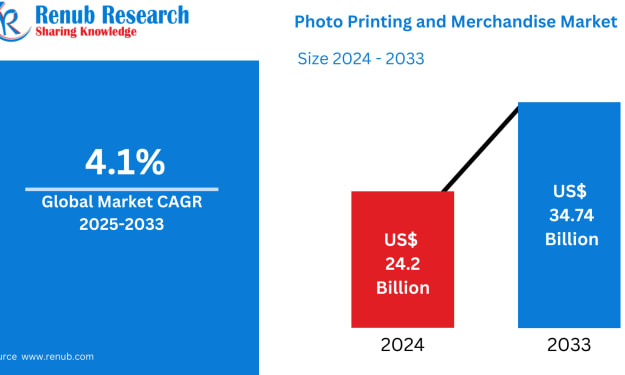
Photo Printing and Merchandise Market Size and Forecast 2025–2033: Personalization Drives the Next Phase of Growth
Market Overview: A Growing Industry Built on Memories The Global Photo Printing and Merchandise Market was valued at US$ 24.2 billion in 2024 and is projected to reach US$ 34.74 billion by 2033, expanding at a CAGR of 4.1% from 2025 to 2033, according to Renub Research. This steady growth reflects a fundamental shift in consumer behavior—people are increasingly seeking physical expressions of their digital lives.
By Marthan Sir4 days ago in Futurism



Comments (1)
Nicely done it. Well done.