
The Rise of Artificial Intelligence in Healthcare: Revolutionizing Diagnosis, Treatment, and Patient Care
How AI is transforming the way we detect diseases, personalize treatments, and manage medical systems globally

In recent years, Artificial Intelligence (AI) has evolved from a futuristic concept to a fundamental tool across various industries. Nowhere is this more evident—or more critical—than in the field of healthcare. From diagnostics to personalized medicine and hospital management, AI is rapidly reshaping how healthcare professionals and systems operate.
The global AI healthcare market is projected to surpass $188 billion by 2030, according to Statista, up from just under $11 billion in 2021. But what exactly is driving this growth, and what does it mean for the future of patient care?
1. Smarter Diagnoses: AI Detects What the Eye Misses
One of the most exciting developments in AI healthcare is its use in diagnostics. Machine learning algorithms are being trained on massive datasets, including medical images, patient histories, and lab results, to help detect diseases earlier and more accurately than ever before.
For instance, Google’s DeepMind has developed an AI system that can detect over 50 eye diseases with the same level of accuracy as world-leading experts. Similarly, AI is being used to analyze radiology scans—including X-rays, MRIs, and CT scans—to identify early signs of cancer, strokes, and even neurological disorders.
These AI-powered diagnostic tools can:
Reduce human error.
Deliver faster results.
Improve early detection rates—especially in underserved or overburdened health systems.
2. Personalized Treatment Plans
AI’s ability to sift through complex patient data allows for highly personalized medicine. Instead of one-size-fits-all treatments, AI algorithms can analyze a patient's genetics, lifestyle, medical history, and even environmental factors to recommend tailored therapies.
Take oncology as an example. AI is being used to predict how specific cancers will respond to particular drugs, enabling oncologists to create customized chemotherapy plans that are more effective and less toxic.
Moreover, platforms like IBM Watson Health have demonstrated how AI can support physicians by cross-referencing a patient’s profile with vast medical literature, clinical trials, and treatment guidelines, thereby suggesting optimal treatment strategies backed by the latest research.
3. Virtual Health Assistants and Chatbots
AI is not just a tool for doctors—it’s becoming a daily companion for patients too.
AI-driven chatbots and virtual health assistants are helping:
Schedule appointments.
Provide medication reminders.
Answer basic health questions 24/7.
Monitor symptoms and escalate when necessary.
Apps like Babylon Health and Ada Health use AI to help users assess symptoms and recommend next steps. These tools are especially valuable in areas where access to healthcare professionals is limited, acting as a first line of triage and reducing pressure on hospitals.
4. Streamlining Hospital Operations
Beyond direct patient care, AI is quietly working behind the scenes to make healthcare systems more efficient. Hospitals are using AI to manage:
Patient flow and bed assignments.
Supply chain logistics.
Staff scheduling.
Predictive maintenance for medical equipment.
For instance, predictive algorithms can forecast emergency room traffic or ICU occupancy based on seasonal trends, local outbreaks, or public events. This allows hospitals to allocate resources proactively, rather than reactively.
AI also improves electronic health record (EHR) systems by organizing patient data intelligently, reducing physician burnout from administrative overload.
5. Ethical Considerations and Data Privacy
Despite the promise of AI, there are serious concerns that must be addressed—especially around data security, transparency, and bias.
Bias in AI models: If the training data lacks diversity, AI can make flawed recommendations, especially for underrepresented populations.
Patient privacy: AI relies on enormous amounts of data, raising questions about consent and confidentiality.
Transparency: Many AI systems operate as "black boxes," making decisions without clear explanation, which can undermine trust in medical settings.
To build ethical and effective AI in healthcare, regulators, developers, and practitioners must collaborate on frameworks that promote:
Fairness and inclusivity.
Auditability of algorithms.
Secure, anonymized data sharing.
Initiatives like the EU’s Artificial Intelligence Act are leading the charge in regulating medical AI, aiming to ensure both innovation and patient safety.
6. Looking Ahead: AI as a Partner, Not a Replacement
A common fear is that AI will replace doctors—but the reality is quite different. Rather than replacing healthcare workers, AI is augmenting their capabilities, freeing them from routine tasks and empowering them to focus more on patient care.
For example:
AI reads mammograms; the radiologist makes the final call.
AI recommends treatment options; the doctor weighs risks and explains choices.
AI schedules the follow-up; the nurse delivers it with compassion.
The human touch remains irreplaceable in medicine, and AI is here to support—not supplant—it.
Conclusion: A Healthier Future Powered by AI
AI in healthcare is not a distant dream—it’s happening now, with real impacts on how we diagnose, treat, and care for patients. From detecting disease at its earliest stages to making health systems more efficient, AI is poised to play a central role in global healthcare transformation.
As long as we remain vigilant about ethics, equity, and privacy, the fusion of AI and medicine offers something remarkable: a smarter, faster, and more personalized approach to healing.
About the Creator
Keep reading
More stories from Kaitesi Abigail and writers in Futurism and other communities.
The Best Apps for Organizing Your Life and Work.
In today’s fast-paced world, staying organized is essential for maximizing productivity, reducing stress, and achieving your goals. With the right apps, you can manage your tasks, schedules, notes, and projects seamlessly, making your life and work more efficient.
By Kaitesi Abigailabout a year ago in Futurism
Australia Pesticides Market: Precision Agriculture Adoption, Biopesticide Innovation & Climate-Driven Crop Protection
According to IMARC Group, the Australia pesticides market reached a value of USD 3.2 Billion in 2025 and is projected to reach USD 5.1 Billion by 2034, growing at a compound annual growth rate (CAGR) of 5.43% during 2026–2034. The market is expanding steadily as Australian agriculture continues to modernize and respond to evolving environmental and productivity challenges. Farmers across the country are increasingly adopting advanced crop protection solutions to safeguard yields and maintain consistent agricultural output. Climate variability, shifting pest populations and the need to improve food production efficiency are driving demand for effective pesticide formulations. At the same time, innovations in precision agriculture technologies and the development of biological pesticides are transforming crop protection strategies. Government initiatives promoting sustainable farming practices and agricultural innovation are also encouraging the adoption of modern pesticide solutions that balance productivity with environmental responsibility.
By Shrestha Royabout 11 hours ago in Futurism
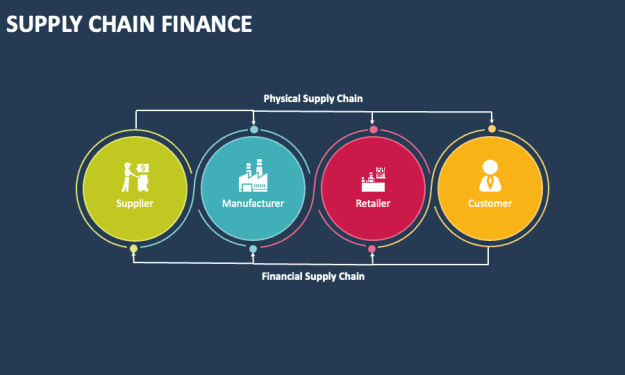
Supply Chain Finance Market: SME Financing Access, Digital Lending Platforms & Market Forecast
According to IMARC Group's latest research publication, the global supply chain finance market size reached USD 8.1 Billion in 2025. Looking forward, IMARC Group expects the market to reach USD 15.8 Billion by 2034, exhibiting a growth rate (CAGR) of 7.68% during 2026-2034.
By sujeet. imarcgroupabout 14 hours ago in Futurism



Comments
There are no comments for this story
Be the first to respond and start the conversation.