
The Rise of Artificial Intelligence: Exploring its Types and Real-World Applications
From Virtual Assistants to Self-Driving Cars: Unraveling the Power of AI in Today's World
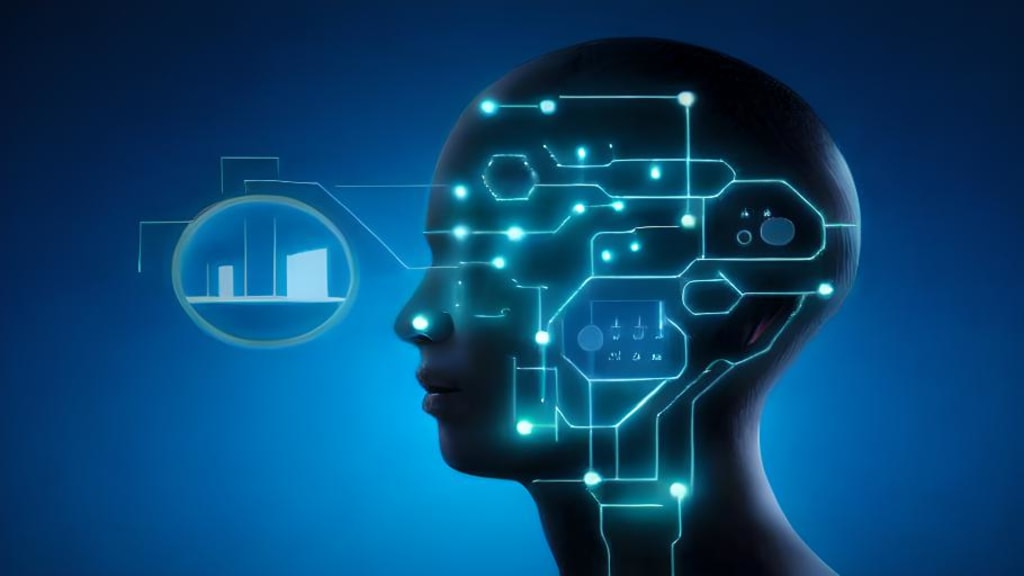
Artificial intelligence (AI) has become an integral part of our lives, transforming various industries and revolutionizing the way we interact with technology. While the notion of AI taking over humanity may seem far-fetched, it's important to understand the different types of AI and their real-world applications.
The concept of AI was first introduced in 1956, defined as the science and engineering of creating intelligent machines. Over the years, AI has evolved, and its applications have become more widespread. Contrary to popular belief, AI is not limited to humanoid robots or sci-fi scenarios. In fact, AI has seamlessly integrated into our daily lives, shaping our online experiences without us even realizing it.
To clarify some common misconceptions, it's crucial to distinguish between AI, machine learning, and deep learning. AI is the overarching field focused on making machines behave like humans, while machine learning is a subset of AI that enables machines to make decisions based on data. Deep learning, on the other hand, utilizes neural networks to solve complex problems within machine learning.
AI can be categorized into three evolutionary stages: artificial narrow intelligence (weak AI), artificial general intelligence (strong AI), and artificial superintelligence. Weak AI represents systems designed to perform specific tasks, such as voice assistants like Siri or facial recognition technology. Strong AI, or artificial general intelligence, refers to machines capable of performing any intellectual task that a human can. Artificial superintelligence, although hypothetical, portrays a scenario where machines surpass human intelligence.
The real-world applications of AI are vast and diverse. In finance, AI-powered platforms analyze legal documents and extract crucial data points, saving significant time and resources. In healthcare, AI software assists in diagnosing rare conditions and analyzing medical records swiftly and accurately. Social media platforms employ AI to detect hate speech and filter offensive content. Google's predictive search suggests search terms based on user data, while virtual assistants like Siri and Alexa have become indispensable in our daily lives.
The introduction of AI has undoubtedly impacted our cognitive processes and behaviors. With the wealth of information available at our fingertips, our memory and attention span may be affected, leading to a greater reliance on digital devices. As AI continues to advance, there are ongoing debates about the potential risks and ethical considerations associated with its development.
While AI offers immense potential for progress and convenience, it's essential to strike a balance. Being aware of our screen time and consciously unplugging from digital distractions can help keep our brains active and adaptable. Embracing the positive aspects of AI while staying mindful of its limitations will pave the way for a harmonious coexistence between humans and machines.
As the world continues to witness the transformative power of AI, it's crucial to engage in discussions and share perspectives on its impact and implications. The future of AI holds great promise, and understanding its nuances is key to navigating the ever-evolving technological landscape.
The widespread adoption of AI has paved the way for exciting advancements in various fields. For instance, AI is making significant contributions to the field of education. Intelligent tutoring systems are being developed to provide personalized learning experiences, catering to individual student needs. AI-powered language learning platforms use natural language processing and machine learning algorithms to facilitate language acquisition. These applications of AI are revolutionizing the way we acquire knowledge and learn new skills.
Furthermore, AI is playing a crucial role in environmental sustainability. From optimizing energy consumption in buildings to analyzing climate data for effective resource management, AI is helping us make informed decisions to mitigate the impact of climate change. By harnessing the power of AI, we can strive towards a greener and more sustainable future.
As AI continues to advance, it presents both opportunities and challenges. Ethical considerations, privacy concerns, and the impact on jobs and employment are areas that require careful attention. It's crucial for policymakers, researchers, and industry leaders to collaborate in shaping the future of AI responsibly and ethically.
In conclusion, artificial intelligence has become an integral part of our lives, transforming industries and reshaping the way we live, work, and interact. From healthcare to finance, from education to environmental sustainability, AI is revolutionizing various domains. While concerns and debates surrounding AI persist, it is through open dialogue and responsible development that we can harness its potential for the betterment of humanity. Let us embrace the power of AI while upholding our values and ensuring a future that benefits all.
Let us know your thoughts and opinions in the comments section. As we delve deeper into the realm of AI, stay tuned for more insightful content. Happy learning!
About the Creator
Saimohan Reddy
Passionate about AI and its applications. Creating diverse articles using AI tools. From technology trends to scientific discoveries, I cover a wide range of topics. This bio was also edited by ChatGPT. Your support is greatly appreciated.
Keep reading
More stories from Saimohan Reddy and writers in Futurism and other communities.
The Influence of the Internet: Navigating a Connected World
Imagine a life without the internet. The digital revolution has transformed our lives, affecting how we communicate, gather information, and shape our daily routines. In this article, we will explore the profound changes brought about by the internet, both in our daily lives and within our cognitive processes.
By Saimohan Reddy3 years ago in Futurism
About Binding Prometheus
I want to start actively advocating on behalf of my own work, and the most valuable part of my canon is, without a doubt, Binding Prometheus, the play I have been working on since 2019 and only finished in 2023 as part of my MA. The play itself is an amalgamation of a million different inspirations. On one end, it evokes the Ancient Greek myth-play, deriving its own title from the earliest extant work of Western drama we have, Aeschylus’s Prometheus Bound. On the other end, it borrows significantly from the sci-fi bulwarks from over the years, namely Mary Shelley’s Frankenstein and Karel Capek’s Rossum’s Universal Robots. The play could be an episode of Black Mirror, I fear. I don’t know. I’ve only ever seen one episode of Black Mirror.
By Steven Christopher McKnight26 days ago in Futurism
Biosensors Market: Electrochemical Sensors, High Sensitivity Detection & Analytical Accuracy
According to IMARC Group's latest research publication, global biosensors market size reached USD 30.9 Billion in 2024. Looking forward, IMARC Group expects the market to reach USD 57.0 Billion by 2033, exhibiting a growth rate (CAGR) of 6.97% during 2025-2033.
By sujeet. imarcgroup7 days ago in Futurism



Comments
There are no comments for this story
Be the first to respond and start the conversation.