
The Rise of AI-Powered Healthcare Assistants: A Game Changer in Medicine
How AI is transforming healthcare by making medical assistance faster, smarter, and more accessible.

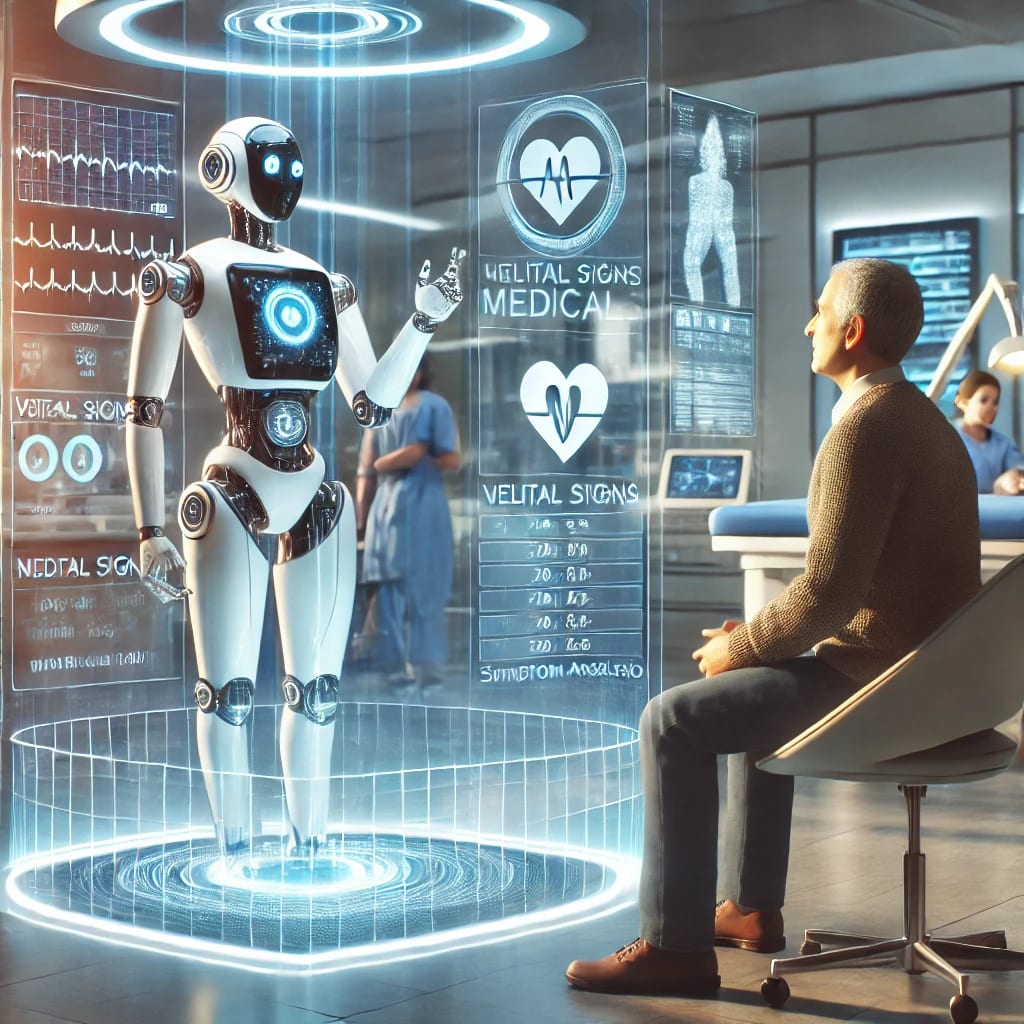
Imagine having a personal health assistant available 24/7—one that never gets tired, never takes a day off, and can answer your medical questions in seconds. Sounds futuristic? Well, it’s happening now. AI-powered healthcare assistants are transforming the way we access medical information, manage chronic conditions, and even communicate with doctors.
These digital assistants are not just a tech trend; they are actively reshaping the future of healthcare, making it more efficient, personalized, and accessible. But how exactly do they work, and what does this mean for the average person? Let’s dive in.
What Are AI Healthcare Assistants?
AI healthcare assistants are smart digital tools designed to help patients and healthcare providers with medical tasks. Think of them as a mix between a chatbot, a medical encyclopedia, and a virtual nurse. They can:
✔ Answer health-related questions in real-time
✔ Help schedule doctor appointments
✔ Monitor symptoms and suggest next steps
✔ Offer reminders for medication and checkups
✔ Assist doctors by analyzing medical records
Some of the most well-known AI-powered health assistants today include Ada, Babylon Health, and IBM Watson Health. These platforms use natural language processing and machine learning to provide medical insights in seconds.
How AI Is Making Healthcare Smarter
A lot of us already use AI without realizing it. Have you ever asked Siri or Google Assistant about a headache? That’s AI in action. But healthcare-focused AI takes things to the next level.
For instance, Google’s Med-PaLM is an AI system trained to understand and answer complex medical questions with accuracy. It has been tested against real-world medical exams and has outperformed even some human doctors in diagnostic accuracy.
Meanwhile, AI assistants like Mayo Clinic’s chatbot can help users determine whether their symptoms require medical attention or just some rest at home. This not only saves time but also reduces unnecessary doctor visits, easing the burden on healthcare systems.
AI and Telemedicine: The Perfect Pair
Telemedicine has grown rapidly in recent years, allowing patients to consult doctors without leaving their homes. AI healthcare assistants are making this process even smoother by:
✔ Collecting patient information before a virtual consultation
✔ Offering initial symptom assessments
✔ Summarizing patient history for doctors before the appointment
For example, AI-powered chatbots like Buoy Health guide patients by asking questions about their symptoms and suggesting the best course of action—whether it’s self-care, booking a virtual consultation, or heading to an urgent care center.
This level of automation helps doctors focus on critical cases while ensuring that patients receive timely guidance.
AI’s Role in Chronic Disease Management
Millions of people live with chronic conditions like diabetes, heart disease, and asthma. AI-powered healthcare assistants can help manage these conditions by:
✔ Tracking daily symptoms and health metrics
✔ Sending medication reminders
✔ Providing lifestyle recommendations
✔ Alerting healthcare providers if symptoms worsen
For instance, Livongo, a health AI platform for diabetics, monitors glucose levels and provides real-time coaching. It’s like having a personal health coach that’s always looking out for you.
The Human Touch Still Matters
Of course, AI can’t replace human doctors. It lacks the empathy, intuition, and real-world experience that medical professionals bring to patient care. But when used correctly, AI enhances healthcare rather than replacing it.
AI-powered healthcare assistants are meant to empower patients, support doctors, and improve medical care access worldwide. The goal isn’t to remove human interaction from healthcare but to enhance decision-making, reduce errors, and provide instant medical guidance.
What’s Next? The Future of AI in Healthcare
The potential for AI in healthcare is just beginning. In the near future, we might see AI-powered assistants that can:
🚀 Predict illnesses before symptoms appear
🚀 Offer fully personalized treatment plans based on genetic data
🚀 Detect early signs of mental health conditions
🚀 Assist in robotic surgeries with pinpoint precision
The future of healthcare isn’t about humans vs. AI—it’s about collaboration. AI will continue to evolve, but doctors, nurses, and medical professionals will always play a crucial role in patient care.
Final Thoughts
AI-powered healthcare assistants are already proving to be one of the most exciting advancements in medicine. They are making healthcare smarter, faster, and more accessible to millions of people worldwide.
But as AI continues to integrate into our healthcare systems, we must ensure that it is ethical, accurate, and accessible to everyone—not just those with advanced technology. Striking the right balance between AI and human healthcare will be the key to a healthier future.
So, the next time you ask an AI assistant about your symptoms, just remember—you’re witnessing the future of medicine in action. And it’s only just beginning.
About the Creator
Asanda M..
Writer of soul stories, dream truths, and spiritual awakenings. I explore the raw, the real, and the sacred—one word, one journey at a time. Growing, remembering, and healing through every story I share.
Keep reading
More stories from Asanda M.. and writers in Futurism and other communities.
The AI-Generated Novelist
The AI-Generated Novelist: Could Artificial Intelligence Be the Next Great Author? Imagine a world where your favorite novel is written by a machine. No human author behind the scenes—just artificial intelligence crafting stories that captivate millions. It may sound like science fiction, but in reality, AI is already making waves in the world of writing.
By Asanda M..about a year ago in Futurism
Australia E-Pharmacy Market: Telehealth Integration, AI-Driven Prescription Management & Digital Healthcare Access
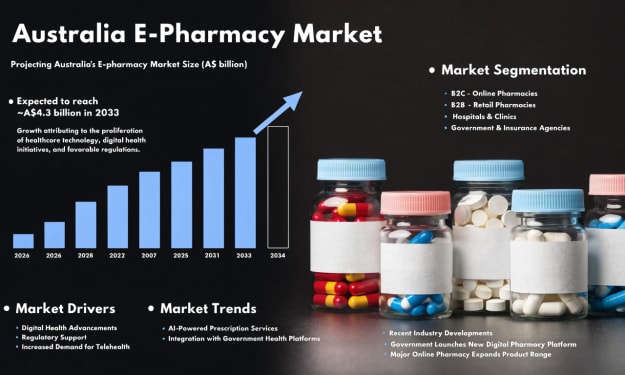
According to IMARC Group, the Australia e-pharmacy market reached a value of USD 3.4 Billion in 2025 and is projected to reach USD 10.5 Billion by 2034, growing at a compound annual growth rate (CAGR) of 12.93% during 2026–2034. The market is expanding rapidly as digital technologies transform how healthcare services are accessed and delivered across the country. E-pharmacy platforms allow consumers to purchase prescription medicines, over-the-counter drugs and health products through online channels while benefiting from doorstep delivery services. Rising internet penetration and widespread smartphone adoption are enabling consumers to access digital healthcare services more conveniently. Additionally, the expansion of telehealth consultations is creating integrated healthcare ecosystems where patients can receive digital prescriptions and order medicines online seamlessly. Increasing awareness of chronic disease management and regulatory emphasis on prescription authentication are also supporting the growth of the e-pharmacy sector across Australia.
By Shrestha Roy3 days ago in Futurism
Saudi Arabia E-commerce Market: Digital Payments, Logistics Expansion & Growth Outlook
According to IMARC Group's latest research publication, Saudi Arabia e-commerce market size reached USD 222.9 Billion in 2024. The market is projected to reach USD 708.7 Billion by 2033, exhibiting a growth rate (CAGR) of 12.8% during 2025-2033.
By Shubham Sharma 3 days ago in Futurism



Comments (1)
AI is fascinating. Good job!