
The Rise of AI in Daily Life: What to Expect by 2030
Smart Homes Will Become Smarter

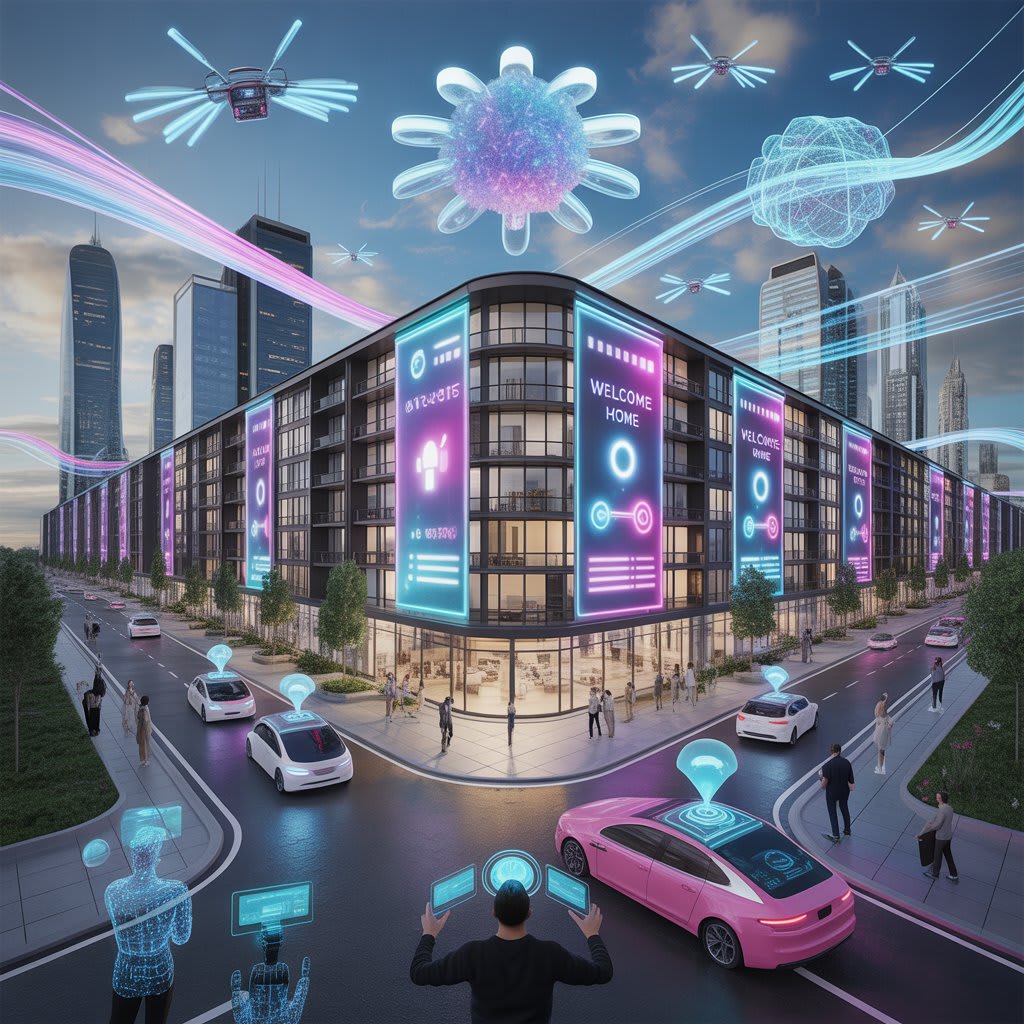
Artificial Intelligence (AI) is no longer just a futuristic concept from science fiction—it's already shaping the way we live, work, and interact. From voice assistants to smart recommendations, AI is embedded in our daily experiences. But by 2030, AI is expected to revolutionize nearly every aspect of our lives in ways we can only begin to imagine.
1. Smart Homes Will Become Smarter
By 2030, AI-powered smart homes will be deeply integrated into our routines. Today’s smart thermostats and voice-controlled lights will evolve into fully adaptive systems that learn our preferences and habits.
Imagine a home that automatically adjusts lighting, temperature, and even aroma based on your mood. Smart refrigerators will suggest recipes based on available ingredients. Mirrors will display weather, news, and health metrics, while security systems will use facial recognition and behavior analysis for maximum safety.
Key impact: AI will make homes more energy-efficient, secure, and personalized.
2. AI in Healthcare: From Diagnosis to Treatment
Healthcare is one of the most promising fields for AI transformation. By 2030, AI will assist doctors in diagnosing diseases faster and more accurately using medical imaging, genetic data, and patient history.
Wearable health devices like smartwatches will be equipped with real-time monitoring tools that detect abnormalities such as irregular heartbeats or signs of mental stress. AI will also help in predicting epidemics, managing chronic illnesses, and creating personalized medicine based on DNA analysis.
Key impact: Faster diagnoses, reduced medical errors, and affordable, personalized healthcare.
3. AI-Powered Education and Learning
By 2030, traditional classrooms will evolve into AI-powered learning environments. AI tutors will offer personalized lesson plans, adapting to each student’s pace, style, and interests. This will help struggling students catch up while allowing advanced learners to go further.
Speech recognition and language-processing tools will assist students with disabilities, and AI chatbots will answer questions 24/7. Virtual Reality (VR) combined with AI will bring immersive learning experiences—like walking through historical events or dissecting virtual organisms.
Key impact: More inclusive, engaging, and customized education systems.
4. Transportation Will Be Redefined
Self-driving vehicles are already in testing stages, but by 2030, they could become mainstream. Autonomous cars, buses, and drones will reduce human error and reshape how we commute, travel, and deliver goods.
AI will also optimize traffic flow using real-time data analytics, reducing congestion and pollution. Urban areas might adopt AI-directed public transport systems, ensuring efficiency, punctuality, and sustainability.
Key impact: Safer roads, reduced travel time, and greener cities.
5. AI and the Future of Work
Many fear that AI will replace jobs—but by 2030, it’s more likely that AI will transform work rather than eliminate it. AI will automate repetitive tasks, freeing up humans for creative, strategic, and interpersonal roles.
Jobs in data analysis, cybersecurity, AI ethics, and robotics will rise. Remote work will be powered by AI scheduling assistants, automated content creators, and productivity trackers.
Key impact: A redefined workforce with new job roles and increased efficiency.
6. Personalized Shopping and Digital Assistants
AI in e-commerce is already personalizing shopping experiences, but by 2030, AI will know your style better than you do. From fashion suggestions based on your mood to smart mirrors that let you try clothes virtually, shopping will be intuitive and customized.
Voice assistants like Siri, Alexa, and Google Assistant will evolve into hyper-personalized digital concierges, managing calendars, finances, emails, and even social media presence based on your behavior and preferences.
Key impact: Hyper-personalized, time-saving digital experiences.
7. Entertainment and Media Transformation
By 2030, AI will play a central role in content creation and curation. Already, AI is writing music, generating art, and editing videos. Future AI could create personalized movies or recommend plot twists based on viewer emotions.
Streaming platforms will predict preferences before you even open the app. AI will also bring interactive storytelling, allowing audiences to influence a show’s plot in real-time.
Key impact: Ultra-personalized and immersive entertainment.
8. AI in Mental Health and Emotional Support
Mental health services will be more accessible thanks to AI-driven apps and virtual therapists. By 2030, AI companions with emotional intelligence will engage in conversations, detect mental health issues through tone and word patterns, and suggest coping strategies.
Such AI tools won’t replace human therapists but will act as 24/7 support systems, especially in areas with limited access to healthcare professionals.
Key impact: Wider access to mental health care and emotional wellness support.
9. Ethical AI and Data Privacy Concerns
With great power comes great responsibility. As AI becomes more embedded in our lives, concerns around data privacy, surveillance, and algorithmic bias will grow.
By 2030, we expect to see stronger AI governance, international regulations, and ethical frameworks. AI developers will be held accountable for transparency, fairness, and responsible usage.
Key impact: Safer, more regulated, and human-centric AI development.
10. AI and Human Creativity: Collaboration Over Competition
The biggest myth about AI is that it will replace human creativity. In truth, AI will become a creative partner, helping musicians compose, authors brainstorm, and designers generate ideas.
AI can analyze vast datasets to inspire innovation—but it’s the human touch that adds meaning. By 2030, expect to see AI-human collaborations creating breakthroughs in science, art, and culture.
Key impact: Amplified creativity through human-AI synergy.
About the Creator
Muhammad Asim
Welcome to my space. I share engaging stories across topics like lifestyle, science, tech, and motivation—content that informs, inspires, and connects people from around the world. Let’s explore together!
Keep reading
More stories from Muhammad Asim and writers in Futurism and other communities.
10 Futuristic Gadgets That Already Exist
Technology is evolving at such a rapid pace that ideas once considered pure science fiction are now part of our daily lives. From smart glasses to AI-powered home assistants, we are already living in the future we once only saw in movies. In fact, many of the most impressive and mind-blowing innovations you can imagine are not only real — they're already available for public use. Here’s a deep dive into 10 futuristic gadgets that already exist, changing the way we live, work, and play.
By Muhammad Asim8 months ago in Futurism
Australia Human Resource Technology Market: Cloud HR Platforms, Workforce Analytics & Automation
According to IMARC Group, the Australia human resource technology market reached a value of USD 774.7 Million in 2025 and is projected to reach USD 1,450.9 Million by 2034, growing at a compound annual growth rate (CAGR) of 7.22% during 2026–2034. The market is expanding as organizations increasingly adopt digital solutions to manage workforce operations more efficiently. Cloud-based HR platforms are transforming traditional human resource functions by enabling businesses to automate payroll processing, employee onboarding, talent management and performance evaluation. At the same time, workforce analytics tools are helping organizations analyze employee data, improve productivity and make more informed strategic decisions. Automation technologies are also reducing administrative workloads for HR teams, allowing them to focus on employee engagement and organizational growth. As companies continue investing in digital transformation and modern workforce management solutions, HR technology is becoming a central component of business operations across Australia.
By Kevin Cooper6 days ago in Futurism
France Creator Economy Market : USD 62,127.3 Million Projected by 2034
France Creator Economy Market Overview The France Creator Economy Market is projected to reach approximately USD 62,127.3 Million by 2034, increasing from USD 6,833.1 Million in 2024, reflecting a strong CAGR of 24.7% during the forecast period from 2025 to 2034. The expansion of this market is being driven by the rapid growth of digital content platforms, increasing internet penetration, and the rising number of independent content creators generating revenue through social media, streaming platforms, and online communities. Content creators across sectors such as entertainment, education, gaming, fashion, and lifestyle are leveraging digital platforms to build audiences and monetize their creative work.
By Roberto Crum5 days ago in Futurism



Comments
There are no comments for this story
Be the first to respond and start the conversation.