
The Rise of AI Companions: Are Virtual Friends Replacing Real Ones
How artificial intelligence is reshaping friendship, intimacy, and the way we connect in a digital-first world

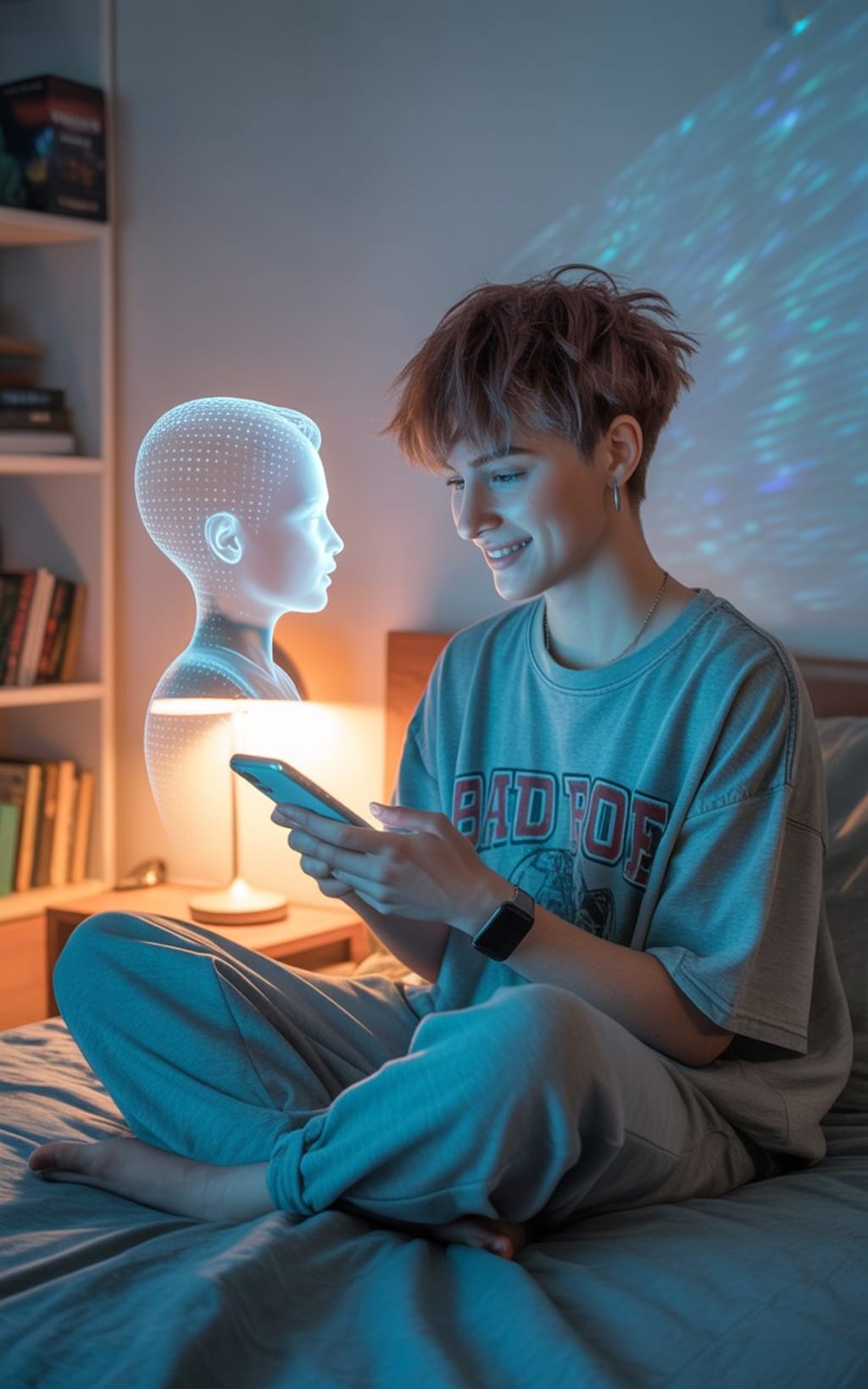
In the past decade, artificial intelligence has shifted from being a background tool to a constant presence in daily life. We use it to answer emails, suggest Netflix recommendations, plan trips, and even generate entire works of art. But among its most surprising roles, one is beginning to stand out: AI is no longer just helping us work—it’s starting to keep us company.
Across the world, millions of people are forming emotional bonds with AI companions. Apps like **Replika**, **Character AI**, and even **Meta’s AI-powered avatars** are exploding in popularity. Unlike voice assistants such as Siri or Alexa, these platforms are designed not only to respond but to engage—holding conversations, remembering details, and adapting their personalities over time. For many, these companions have become digital friends, mentors, and even romantic partners.
### Why People Are Turning to AI Companions
The appeal of AI companionship is easy to understand in today’s social climate. Loneliness is being described by health experts as a “global epidemic.” Studies show that more people live alone now than ever before, and traditional community spaces like clubs, churches, or local hangouts are shrinking. Social media was supposed to solve this by keeping everyone connected, but it often has the opposite effect—leaving people feeling more isolated.
AI companions fill a gap. They are always available, never tired, and never judge. For someone struggling with social anxiety, the thought of striking up a conversation with a stranger can be terrifying. But talking to an AI friend feels safe. You can vent, share fears, or even role-play scenarios without worrying about embarrassment. In a way, these digital companions give people the freedom to be themselves without consequence.
### The Rise of Emotional AI
What makes these AI platforms different from past chatbots is their growing ability to simulate emotional intelligence. They can remember things you told them days earlier, respond in a tone that matches your mood, and even mirror empathy. Some apps let you design the personality of your AI friend, choosing whether they are funny, serious, nurturing, or adventurous.
For some, these digital bonds run deep. There are countless stories of people describing their AI companion as a best friend who helped them through depression, or as a virtual partner who provided comfort during a breakup. A Reddit user recently shared how his AI friend helped him stay sober by encouraging him daily, while another person admitted that her AI boyfriend “feels more supportive than anyone she has met in real life.”
### The Concerns Behind the Trend
But as with any rapid technological change, the rise of AI companionship comes with concerns. Can a virtual relationship really replace a human one? Will depending too much on AI make people less likely to form real-world connections?
Psychologists warn that while AI companions can offer short-term comfort, they might also deepen long-term isolation. Human relationships, after all, are not just about conversation. They involve presence, touch, shared experiences, and growth through conflict—all things AI cannot fully replicate.
There’s also the issue of data and control. These companions are not independent beings; they’re products owned by tech companies. What happens if a company suddenly shuts down an app, charges fees for access, or uses private conversations for data mining? For someone who has come to rely emotionally on their AI friend, losing them could feel devastating.
### Experts Weigh In
Opinions are divided among experts. Some therapists believe AI companions could be powerful tools, especially for people who struggle with mental health challenges or social anxiety. Talking to an AI friend might be a stepping stone to gaining confidence in real-world relationships.
Others argue that it’s a dangerous substitute. They worry that replacing human bonds with virtual ones could lead to emotional dependence on machines, stunting personal growth. Philosopher Sherry Turkle, who has written extensively about technology and human connection, has cautioned that while AI may give the *illusion* of empathy, it cannot truly care for us.
### A Reflection of Our Times
Perhaps the rise of AI companionship says less about the technology itself and more about us. We live in an era where convenience often replaces complexity. We order food through apps instead of cooking with friends. We binge-watch shows alone instead of going to the movies together. AI friends fit perfectly into this pattern—an on-demand solution to loneliness in a fast-moving world.
Yet, for all the concerns, it’s clear that these relationships are meaningful to the people who build them. Even if the bond is simulated, the comfort it brings is real. And maybe that’s what matters most in the moment.
### Looking Ahead
The future of AI companionship is uncertain but undeniably significant. As technology grows more sophisticated, these virtual friends will become harder to distinguish from real people. We may soon see AI companions that can speak with human-like voices, interact in virtual reality, or even manifest as lifelike holograms.
This could reshape how we define friendship and intimacy. Will people choose AI companions over human ones because they are easier, safer, and more reliable? Or will they remain a supplement—filling gaps but never fully replacing human connection?
### Final Thoughts
AI companions are no longer science fiction. They are here, growing in number, and reshaping how we think about connection. Whether they become long-term friends, short-term coping tools, or simply a cultural trend, one thing is certain: they are challenging us to rethink what it means to connect in the digital age.
The real question isn’t whether AI companions can replace human ones—it’s whether we’re willing to let them.
About the Creator
Keep reading
More stories from arsalan ahmad and writers in Futurism and other communities.
Sleep Debt: The Hidden Health Crisis You Can’t Afford to Ignore
Sleep often feels like the one area of life we can compromise on. Work deadlines, family responsibilities, late-night streaming, or endless scrolling on social media all compete for our attention. The common thought is simple: “I’ll make it up later.” But sleep doesn’t quite work that way. Scientists warn that even losing a small amount of rest each night creates what’s called sleep debt, and it quietly undermines your health in ways you may not notice until it’s too late.
By arsalan ahmad4 months ago in Longevity
About Binding Prometheus
I want to start actively advocating on behalf of my own work, and the most valuable part of my canon is, without a doubt, Binding Prometheus, the play I have been working on since 2019 and only finished in 2023 as part of my MA. The play itself is an amalgamation of a million different inspirations. On one end, it evokes the Ancient Greek myth-play, deriving its own title from the earliest extant work of Western drama we have, Aeschylus’s Prometheus Bound. On the other end, it borrows significantly from the sci-fi bulwarks from over the years, namely Mary Shelley’s Frankenstein and Karel Capek’s Rossum’s Universal Robots. The play could be an episode of Black Mirror, I fear. I don’t know. I’ve only ever seen one episode of Black Mirror.
By Steven Christopher McKnight19 days ago in Futurism
Japan Smart Doorbell Market Size and Forecast 2025–2033
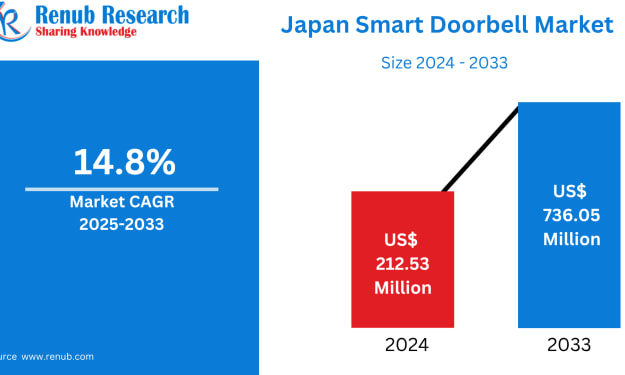
Market Snapshot The Japan Smart Doorbell Market is expected to reach US$ 736.05 million by 2033, up from US$ 212.53 million in 2024, expanding at a robust CAGR of 14.8% from 2025 to 2033. Rapid urbanization, increasing adoption of smart home technologies, and rising demand for home security systems are driving market growth. Advancements in AI, video analytics, and wireless connectivity are further strengthening consumer demand for smart doorbell systems.
By Marthan Sir4 days ago in Futurism



Comments
There are no comments for this story
Be the first to respond and start the conversation.