
The Rise and Impact of Artificial Intelligence in Modern Society
"How Artificial Intelligence is Shaping the Future Across Industries

Artificial Intelligence (AI) has rapidly become one of the most discussed and debated topics worldwide, particularly in the United States. With its implications spanning across various sectors, from healthcare to finance, and even everyday life, AI’s influence is undeniable. Here’s a look at how AI is shaping our world, the advantages it brings, and the challenges that accompany its widespread adoption.
1. Understanding Artificial Intelligence
Artificial Intelligence refers to the simulation of human intelligence in machines. These systems are designed to perform tasks that typically require human intelligence, such as:
Learning – AI can analyze data patterns to improve over time.
Reasoning – It can solve complex problems by mimicking human thought processes.
Self-Correction – Advanced AI can adjust actions based on prior mistakes.
Decision-Making – AI can make informed decisions by analyzing massive datasets.
The United States leads in AI development, with companies like Google, Microsoft, and OpenAI at the forefront. The demand for AI-driven solutions has surged, influencing sectors like healthcare, e-commerce, and even social media algorithms.
2. Key Areas of AI Influence
AI’s impact extends across a range of industries, enhancing efficiency and unlocking new possibilities.
Healthcare
AI is revolutionizing diagnostics, treatment planning, and drug discovery.
Machine learning algorithms help in detecting diseases like cancer at an early stage.
AI-powered virtual health assistants provide patient support and monitor health data.
Finance
AI has transformed financial analysis, fraud detection, and customer service.
Predictive analytics help in assessing credit risk and financial forecasting.
AI-driven chatbots handle customer inquiries efficiently, reducing wait times.
Retail and E-Commerce
Personalized shopping experiences are enhanced through AI-based recommendation engines.
Chatbots assist customers and improve overall service quality.
Inventory management is optimized with predictive AI models.
Transportation and Autonomous Vehicles
AI plays a pivotal role in self-driving cars and traffic management systems.
Predictive algorithms optimize routes, reducing fuel consumption and travel time.
Companies like Tesla and Waymo are making strides in creating safe, autonomous vehicles.
3. Benefits of AI in Society
The adoption of AI offers significant benefits that impact daily life, business operations, and even global issues.
Enhanced Productivity: AI automates repetitive tasks, freeing up human resources for strategic functions.
Data-Driven Decision Making: By processing vast amounts of data, AI enables better and faster decision-making.
Cost Reduction: Many industries can cut costs by adopting AI, particularly through automation and predictive maintenance.
Personalization: From tailored advertisements to personalized learning, AI improves user experience.
Improved Health Outcomes: In medicine, AI has led to faster, more accurate diagnoses, improving patient care.
4. Challenges and Ethical Concerns
Despite the benefits, AI also raises significant ethical and operational challenges that society must address.
Job Displacement: Automation could replace certain jobs, affecting sectors like manufacturing and retail.
Privacy Concerns: AI systems often rely on vast amounts of data, raising questions about personal privacy.
Bias and Fairness: If AI is trained on biased data, it may perpetuate discrimination.
Security Risks: AI systems could be vulnerable to cyberattacks, potentially leading to catastrophic outcomes.
Regulatory Issues: Governments worldwide, especially in the U.S., are grappling with how to regulate AI responsibly.
5. Future of AI in the U.S. and Beyond
As AI continues to evolve, its role in shaping our future becomes increasingly significant. Key areas of focus include.
AI Ethics and Fairness: Developing fair, unbiased AI systems to ensure equitable outcomes.
Job Transformation: Preparing the workforce for AI-related changes by promoting skill development in technology fields.
National Security: Governments are investing in AI for defense, with the U.S. and China being major players.
Environmental Sustainability: AI is being used to monitor and address environmental issues, including climate change.
Conclusion
The rapid rise of AI has ushered in a new era of innovation, making it one of the most impactful and frequently discussed topics globally, especially in the United States. While the benefits of AI are vast, the challenges it presents require careful consideration and proactive regulation. By addressing these issues, society can harness AI’s full potential and shape a future where technology enhances human lives.
About the Creator
About Binding Prometheus
I want to start actively advocating on behalf of my own work, and the most valuable part of my canon is, without a doubt, Binding Prometheus, the play I have been working on since 2019 and only finished in 2023 as part of my MA. The play itself is an amalgamation of a million different inspirations. On one end, it evokes the Ancient Greek myth-play, deriving its own title from the earliest extant work of Western drama we have, Aeschylus’s Prometheus Bound. On the other end, it borrows significantly from the sci-fi bulwarks from over the years, namely Mary Shelley’s Frankenstein and Karel Capek’s Rossum’s Universal Robots. The play could be an episode of Black Mirror, I fear. I don’t know. I’ve only ever seen one episode of Black Mirror.
By Steven Christopher McKnight21 days ago in Futurism
Japan Smart Doorbell Market Size and Forecast 2025–2033
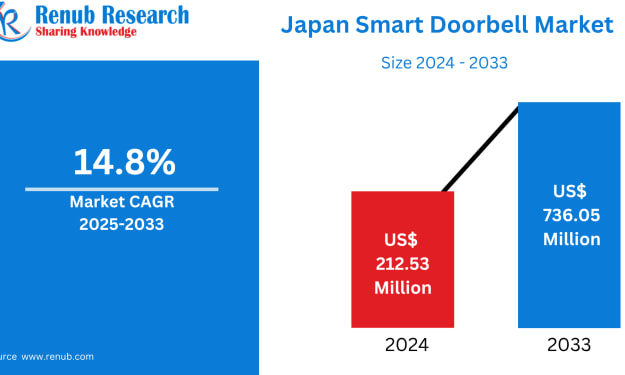
Market Snapshot The Japan Smart Doorbell Market is expected to reach US$ 736.05 million by 2033, up from US$ 212.53 million in 2024, expanding at a robust CAGR of 14.8% from 2025 to 2033. Rapid urbanization, increasing adoption of smart home technologies, and rising demand for home security systems are driving market growth. Advancements in AI, video analytics, and wireless connectivity are further strengthening consumer demand for smart doorbell systems.
By Marthan Sir6 days ago in Futurism
How to Succeed at the Benson Directory®
Congratulations and welcome to the Benson Directory® employee #22391! As our newest call handler, you will have the privilege of speaking with dozens of unique and interesting people on a daily basis as well as the opportunity to earn bonuses for high performance. Contained within this handbook you will find a set of ease to follow instructions designed to help you settle in to your new role and begin paving the way to success.
By S. A. Crawford5 days ago in Fiction



Comments
There are no comments for this story
Be the first to respond and start the conversation.