
The Radioactive Truth About Bananas
They’re healthy, sweet, and everywhere — but did you know each banana gives off radiation?


Bananas: soft, sweet, and potassium-rich. They're one of the most consumed fruits on the planet, part of breakfast bowls, smoothies, and even slapstick comedy routines. But here’s something few people know — bananas are naturally radioactive.
No, this isn’t a myth or a clickbait gimmick. The banana's gentle yellow skin hides a scientific curiosity that links your fruit bowl to the realm of nuclear physics.
So, what makes bananas radioactive?
The answer lies in potassium-40, a naturally occurring isotope found in potassium — the same mineral that bananas are famously packed with. Potassium is essential for the human body, helping with nerve function, fluid balance, and muscle contractions. But a tiny fraction of that potassium — about 0.012% — is the radioactive isotope potassium-40 (⁴⁰K). It emits beta particles, a form of radiation, as it decays.
Now, before you imagine bananas glowing green in the dark, here’s the truth: the amount of radiation is extremely small — so small that you would need to eat millions of bananas at once to face any real danger. In fact, the radiation level in a single banana is about 0.1 microsieverts — a measurement used to quantify radiation exposure. To put it into perspective, you’d get more radiation exposure during a two-hour airplane flight due to cosmic rays.
But the concept of banana radiation has sparked some quirky applications in science.
There’s even a unit informally called the "Banana Equivalent Dose" — yes, that’s real — used to help people understand radiation levels in terms of everyday experiences. If a certain activity gives you the same dose as eating 10 bananas, it’s considered a low risk. It's not an official scientific measurement, but it’s an effective way to help the public relate to a complex topic.
Interestingly, bananas aren’t alone in this radioactive status. Foods like potatoes, kidney beans, Brazil nuts, and even beer contain naturally occurring radioactive elements too. Our environment is filled with low levels of background radiation — in the soil, the air, and even in our own bodies. It’s part of life on Earth.
The banana's radioactivity has even caused confusion in security systems. Cargo shipments of bananas have occasionally triggered radiation sensors at ports and airports, leading to brief alarms until inspectors realize the culprit is just a bunch of bananas — not a nuclear threat.
But here’s the real kicker: radioactive or not, bananas might actually be one of the healthiest fruits on the planet. Along with potassium, they offer dietary fiber, vitamin B6, and antioxidants. The radiation in bananas isn’t just harmless — it's an example of how natural processes that sound dangerous often aren’t, especially when they're part of everyday life.
So, why does this matter?
Because it shows how science is full of surprises hiding in plain sight. It teaches us not to fear big words like “radioactive,” but to understand them. It helps us appreciate the delicate balance of nature — how something as mundane as a banana is linked to atomic decay and nuclear science.
In a world where misinformation spreads faster than facts, stories like this remind us to look deeper — to be curious, not alarmed.
So the next time you peel a banana, remember: you’re holding a naturally radioactive fruit. Not enough to hurt you — just enough to remind you that the ordinary world is anything but boring.
After all, who knew your daily snack had such nuclear swagger?
This article is based on verified scientific sources, including studies on potassium isotopes and radiation measurement. Bananas are safe and healthy — their radioactivity is natural and harmless. But isn't it wild what science can reveal in something so familiar?
Subscribe for interesting content....
About the Creator
Sai
Life science graduate & author of Echoes of the Gayatri (Notion Press). I write articles & books blending science, spirituality & social impact—aiming to inspire, inform, and uplift through purposeful, transformative writing.
Best Email Marketing Strategies for 2026: The Inbox Guide
In the digital landscape of 2026, we are living through the "Great Algorithm Fatigue." Social media platforms have become unpredictable, and AI-powered search engines often summarize website content so effectively that users never actually click through to the source.
By Digistir360a day ago in Futurism
Tomato Ketchup Market Trends: Retail Expansion, Emerging Markets Growth & Industry Forecast to 2033
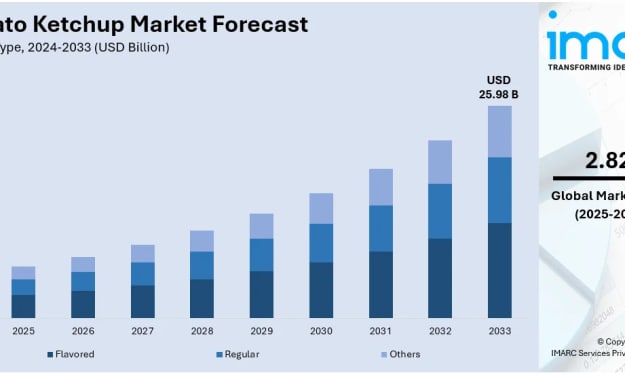
The global tomato ketchup market is witnessing a significant transformation, fueled by the rapid expansion of fast-food chains, evolving culinary habits, and a growing consumer inclination toward convenient yet flavorful condiments. According to IMARC Group’s latest data, the global tomato ketchup market size was valued at USD 20.18 Billion in 2024. Looking forward, IMARC Group estimates the market to reach USD 25.98 Billion by 2033, exhibiting a CAGR of 2.82% from 2025-2033.
By Andrew Sullivan7 days ago in Futurism
When the Shelter Closes
Across the street from my house, a man slept under a tree, his dog by his side. My first, naive thought: he must be traveling through. But he kept coming back, often sleeping there during the day. Then it hit me—that person might not have a home.
By Bride of Sound6 days ago in Humans


Comments
There are no comments for this story
Be the first to respond and start the conversation.