
The Quantum Healer
How Quantum Technology Could Revolutionize Medicine and Humanity’s Future

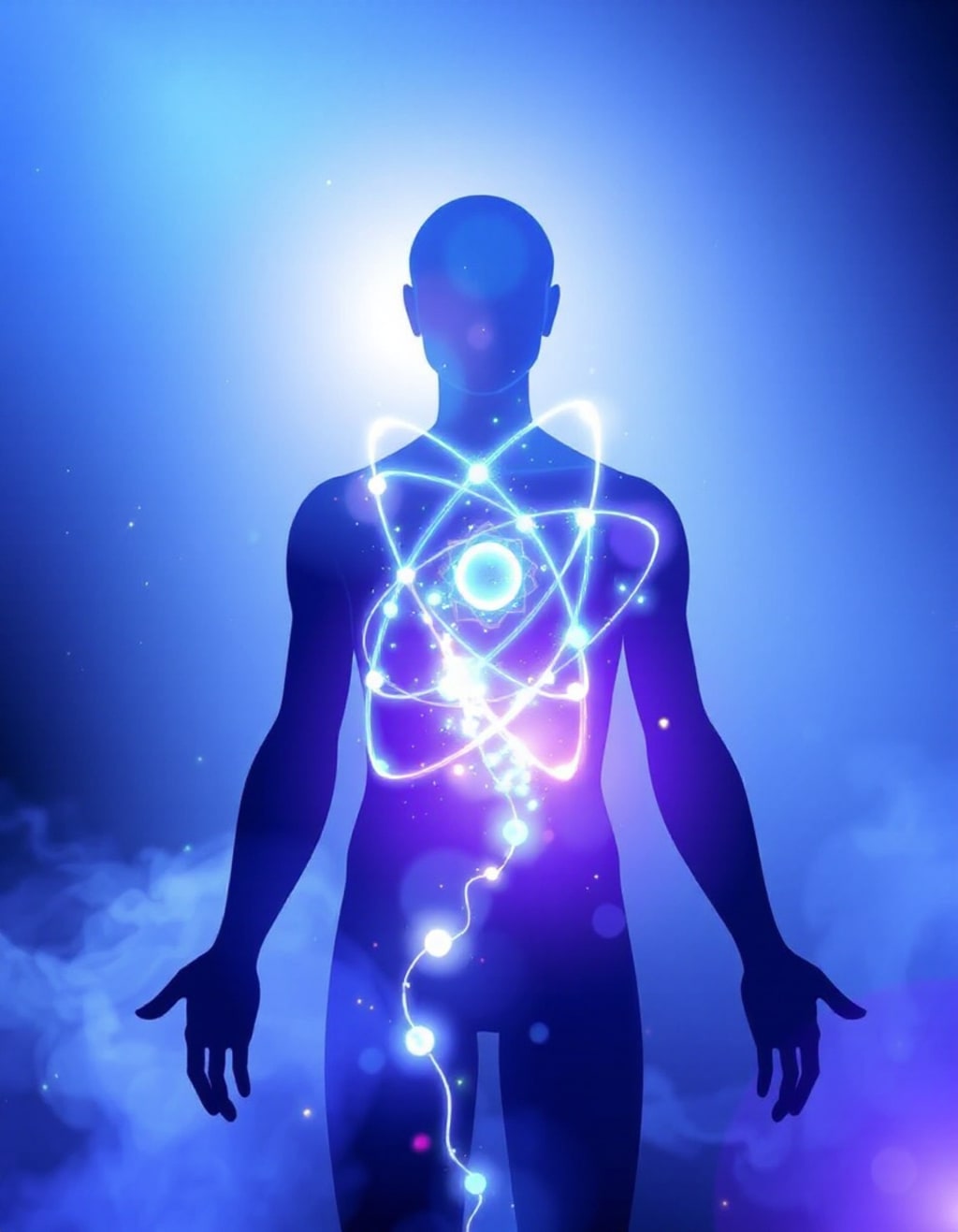
In the heart of London’s bustling tech district, a quiet revolution was unfolding inside the laboratories of QuantumMed, a pioneering biotech firm. Dr. Amelia Carter, a leading quantum physicist turned medical researcher, had just made a discovery that could redefine the future of medicine forever. The breakthrough was something that had long been relegated to the realm of science fiction—using quantum technology to heal the human body at the most fundamental level.
For centuries, medicine had been trapped in the classical paradigm. Scientists treated symptoms, performed surgeries, prescribed drugs—all methods limited by the slow, often messy biological processes of the body. But Amelia’s work promised a new era: the ability to manipulate quantum states within human cells to accelerate healing, eradicate disease, and perhaps, extend life itself.
The Spark of a New Era
It all began with an accidental observation during one of QuantumMed’s experiments. While analyzing quantum coherence in synthetic molecules, Amelia noticed something extraordinary: these molecules could influence cellular regeneration if stimulated correctly. It was as if the cells could be ‘tuned’ like a delicate instrument, correcting errors and repairing damage at unprecedented speeds.
Her team quickly realized that quantum entanglement—the strange and almost magical link between particles separated by vast distances—could be harnessed to communicate with damaged cells instantaneously, bypassing the slower chemical signals the body traditionally relied on.
The implications were staggering. If they could create a device to emit controlled quantum signals, it might be possible to target illnesses from cancer to neurodegenerative diseases with pinpoint precision, stimulating the body’s own repair mechanisms in real-time.
From Theory to Practice
Turning theory into practice, however, was a monumental challenge. Quantum systems were notoriously fragile, and maintaining coherence in a chaotic environment like the human body seemed almost impossible. Amelia and her team spent countless nights refining their “Quantum Healing Interface,” a wearable device designed to emit tailored quantum pulses.
The first human trial was with a volunteer suffering from a chronic autoimmune condition. Conventional treatments had failed, and the patient was in constant pain. After weeks of quantum therapy, astonishing results emerged. Not only did inflammation reduce significantly, but tissue regeneration in damaged joints was visibly accelerating. The patient described a sensation unlike anything before—a feeling of the body ‘remembering’ how to heal itself.
News spread quickly, and soon the trials expanded. Patients with ailments ranging from spinal injuries to early-stage Alzheimer’s experienced improvements that baffled even the most skeptical doctors.
The Science Behind the Miracle
The Quantum Healing Interface worked by manipulating quantum bits—qubits—within cellular structures, especially in mitochondria, the powerhouses of the cell. By stabilizing these qubits, the device could influence cellular metabolism and gene expression, effectively reprogramming cells to act in ways conducive to healing and regeneration.
What made this approach revolutionary was its non-invasive nature. Unlike gene editing or pharmaceutical treatments, quantum healing did not alter DNA directly but encouraged the body to repair and optimize itself through quantum signals. It was a harmony of physics and biology, where the strange rules of quantum mechanics intersected with the complexity of life.
Ethical and Philosophical Questions
As the technology progressed, profound ethical questions arose. Could such power be misused? What would it mean to extend human life indefinitely? Would society be divided between those who had access to quantum healing and those who did not? Amelia often pondered these dilemmas late into the night.
She also found herself fascinated by the philosophical implications. Quantum theory challenged our understanding of reality, time, and consciousness. Could healing at the quantum level unlock deeper mysteries of the human mind? Could it open doors to new forms of communication or awareness?
The Global Impact
Governments, corporations, and medical institutions worldwide watched QuantumMed’s progress with keen interest. Investment poured in, regulatory frameworks were rapidly updated, and global collaboration on quantum medical research intensified.
Within a decade, quantum healing devices became more affordable and widespread. Hospitals integrated quantum therapy into standard treatment protocols, dramatically improving recovery rates and quality of life. Diseases once considered terminal began to lose their grip on humanity.
In developing countries, mobile quantum healing units revolutionized healthcare access, bridging gaps where traditional medicine struggled. The world was witnessing a scientific renaissance, powered by the marriage of quantum physics and medicine.
Challenges and Controversies
Despite the breakthroughs, challenges remained. Not all conditions responded equally well, and some patients experienced unforeseen side effects related to quantum fluctuations in their cells. Researchers continued to investigate these anomalies to improve safety.
Skeptics voiced concerns about the hype surrounding quantum healing, cautioning that the science was still in its infancy. Yet, the overwhelming positive outcomes and peer-reviewed studies silenced many critics over time.
The debate also extended into socio-political realms. Quantum healing raised questions about healthcare equity, privacy, and the limits of human enhancement. Would future societies embrace these advances responsibly or risk exacerbating inequalities?
A Glimpse Into the Future
Looking ahead, Amelia envisioned a world where quantum healing was not just a medical tool but a gateway to a new understanding of life itself. Personalized quantum therapies could adapt dynamically to an individual’s unique biology, environment, and even emotional states.
Researchers speculated about combining quantum healing with AI, creating intelligent devices that anticipate health issues before symptoms appear. Others dreamed of using quantum technologies to unlock the secrets of aging and consciousness.
For Amelia, the journey was deeply personal. Her mother had battled cancer for years, and quantum healing offered a hope she had never dared to imagine. The day her mother received the therapy and smiled with renewed vitality was the moment Amelia truly understood the profound impact of her work.
Conclusion: Healing Beyond Boundaries
The Quantum Healer represents more than a technological marvel—it symbolizes humanity’s relentless quest to transcend limits. Through the fusion of quantum physics and biology, we are beginning to glimpse a future where healing is faster, gentler, and more effective.
As the boundaries between science fiction and reality blur, the promise of quantum healing challenges us to rethink medicine, ethics, and what it means to be human. It invites us to imagine a world where illness is no longer a sentence but a challenge met with the elegant dance of quantum states—a world where healing itself becomes an act of quantum wonder.
About the Creator
rayyan
🌟 Love stories that stir the soul? ✨
Subscribe now for exclusive tales, early access, and hidden gems delivered straight to your inbox! 💌
Join the journey—one click, endless imagination. 🚀📚 #SubscribeNow
About Binding Prometheus
I want to start actively advocating on behalf of my own work, and the most valuable part of my canon is, without a doubt, Binding Prometheus, the play I have been working on since 2019 and only finished in 2023 as part of my MA. The play itself is an amalgamation of a million different inspirations. On one end, it evokes the Ancient Greek myth-play, deriving its own title from the earliest extant work of Western drama we have, Aeschylus’s Prometheus Bound. On the other end, it borrows significantly from the sci-fi bulwarks from over the years, namely Mary Shelley’s Frankenstein and Karel Capek’s Rossum’s Universal Robots. The play could be an episode of Black Mirror, I fear. I don’t know. I’ve only ever seen one episode of Black Mirror.
By Steven Christopher McKnight17 days ago in Futurism
So You Decided To Become a Nurse Practitioner:
So you decided to become an "Advanced Practice" nurse. Congratulations!... is what I would say if this was a good idea. Grad school? In this economy? What were you thinking? Likely it was something along the lines of either 1) “I've seen these other chucklefucks do it— Why can't I?” or even 2) “I've got a nice career, I should shake it up. I miss feeling like I have no clue what I'm doing.”
By Sandor Szaboa day ago in Fiction


Comments (1)
This is some next-level stuff! The idea of using quantum tech to heal is mind-blowing. I wonder how they'll overcome the fragility of quantum systems. It makes me think about all the tech challenges we've faced in my field. Can't wait to see how this unfolds. I'm curious about how they'll test this in real-world scenarios. It's one thing to have a theory, but translating it into a practical medical solution is another. What kind of trials do you think they'll need to conduct?