
The Power of Digital Wayfinding Kiosks
Delivering Real-Time Campus Information
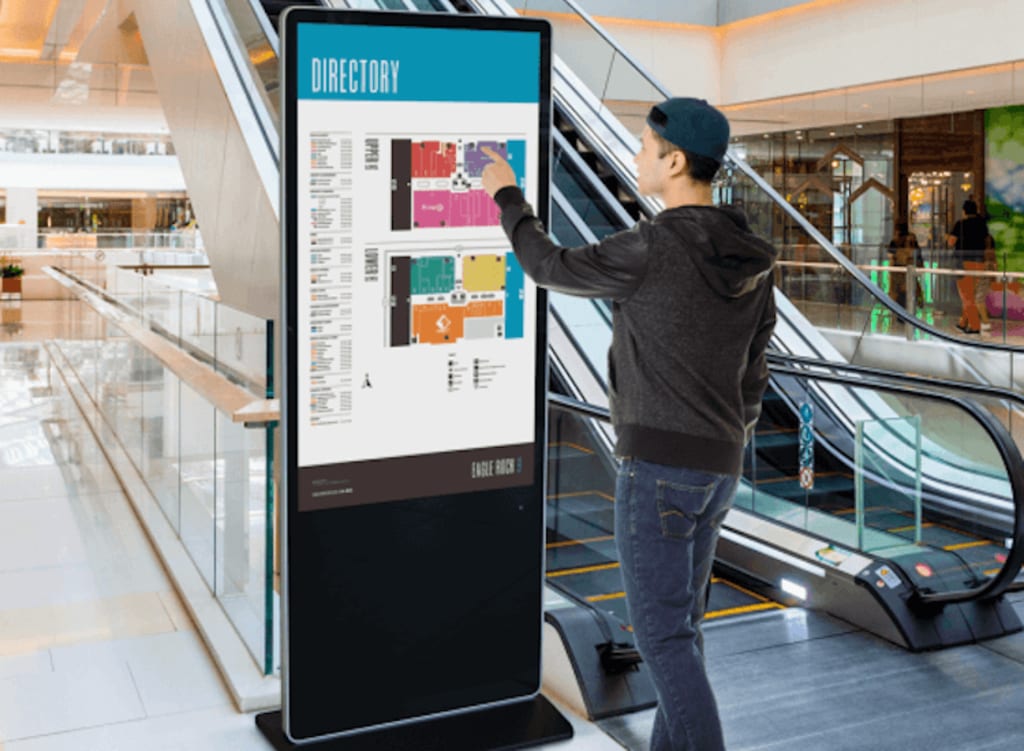
Navigating large, multi-building campuses—whether universities, hospitals, or corporate complexes—can often be an overwhelming experience. Visitors, employees, or students may struggle to find their way, especially in environments with constantly changing layouts, temporary closures, or complex building arrangements. Traditional navigation tools like printed maps or static signage frequently fall short in addressing these challenges, particularly when real-time information is needed. To bridge this gap, digital wayfinding kiosks have emerged as innovative tools that enhance navigation and transform visitor experiences.
A Leap Beyond Traditional Navigation
Digital wayfinding kiosks go far beyond the limitations of static maps. These kiosks are equipped with advanced navigation software that provides real-time, interactive solutions for users. Unlike traditional tools, these systems offer dynamic, step-by-step directions that adapt to changes in the environment.
A key feature of these kiosks is their interactive maps. Users can quickly pinpoint their current location, visualize the best route to their destination, and receive turn-by-turn guidance—all through an intuitive, touchscreen interface. This interactivity is particularly helpful for first-time visitors, as it reduces confusion and empowers them to navigate the campus confidently.
Moreover, these kiosks often include additional functionality, such as language options or accessibility features, to ensure inclusivity for diverse users. For campuses that cater to a global audience, this adaptability is crucial for creating a welcoming and user-friendly experience.
Seamless Integration Across Indoor and Outdoor Spaces
One of the standout advantages of digital wayfinding kiosks is their ability to provide seamless navigation across both indoor and outdoor environments. This makes them versatile tools suitable for various campus layouts.
For example, a visitor arriving at a corporate campus can begin their journey at a kiosk located near the parking area. After selecting their destination, they can transfer the route information to their smartphone via QR codes or mobile apps, allowing them to continue navigating as they transition indoors. This smooth integration between outdoor and indoor navigation systems ensures continuity and eliminates the frustration of switching tools mid-journey.
This functionality is equally valuable in environments like universities, where sprawling campuses often combine outdoor pathways with intricate indoor hallways. Visitors can rely on a single system to guide them from a parking lot to an event venue or lecture hall, creating a cohesive and stress-free navigation experience.
Enhancing the Visitor Experience
Digital wayfinding kiosks are not just about navigation—they also serve as multipurpose communication hubs. Many systems incorporate digital signage features, allowing organizations to display announcements, event schedules, and emergency alerts alongside navigation tools.
For example, a hospital can use a kiosk to guide patients to specific departments while simultaneously displaying information about construction detours, visiting hours, or COVID-19 safety protocols. Similarly, a university can showcase upcoming campus events or key deadlines, ensuring that users stay informed while navigating the space.
This dual functionality transforms the kiosks into dynamic tools for engagement and communication, improving the overall visitor experience and fostering a sense of connection with the campus environment.
Real-Time Updates for Changing Conditions
One of the defining characteristics of modern wayfinding kiosks is their ability to provide real-time updates. This is especially critical for environments that are subject to frequent changes, such as construction zones, temporary closures, or special events.
For instance, if a particular route is blocked or a building becomes temporarily inaccessible, the kiosk can immediately provide updated directions, ensuring users are not delayed or confused. In high-stakes environments like healthcare facilities, this adaptability can have a profound impact, enabling patients and staff to navigate efficiently even under rapidly changing circumstances.
Real-time updates also allow organizations to prioritize safety. In emergencies, such as severe weather or security incidents, kiosks can deliver instant alerts and direct users to safe zones or evacuation routes.
Operational Insights for Administrators
Beyond improving the user experience, digital wayfinding kiosks offer significant benefits for campus administrators. By collecting and analyzing data from navigation software, these systems provide valuable insights into visitor behavior and movement patterns.
For example, heatmaps can reveal high-traffic areas, helping administrators identify bottlenecks or underutilized spaces. Geofencing technology can track how different sections of the campus are used, enabling more strategic planning for events, renovations, or future expansions.
These analytics also allow for better space management. Administrators can adjust signage, optimize layouts, and allocate resources based on real-world data. Over time, this data-driven approach leads to more efficient campus operations and a better overall user experience.
The Future of Campus Navigation
Digital wayfinding kiosks are quickly becoming indispensable tools for modern campuses. By combining real-time navigation, seamless indoor-outdoor integration, and advanced communication features, these systems enhance both functionality and visitor satisfaction.
Whether used in a hospital, university, or corporate setting, the benefits are clear: reduced confusion, improved efficiency, and a more engaging user experience. Furthermore, the operational insights provided by these kiosks help organizations make smarter decisions, ensuring their spaces remain welcoming and functional for all.
Investing in digital wayfinding solutions is not just about improving navigation—it’s about reimagining how people interact with complex environments. As these technologies continue to evolve, they promise to play an even greater role in shaping the future of campus experiences.
About the Creator
About Binding Prometheus
I want to start actively advocating on behalf of my own work, and the most valuable part of my canon is, without a doubt, Binding Prometheus, the play I have been working on since 2019 and only finished in 2023 as part of my MA. The play itself is an amalgamation of a million different inspirations. On one end, it evokes the Ancient Greek myth-play, deriving its own title from the earliest extant work of Western drama we have, Aeschylus’s Prometheus Bound. On the other end, it borrows significantly from the sci-fi bulwarks from over the years, namely Mary Shelley’s Frankenstein and Karel Capek’s Rossum’s Universal Robots. The play could be an episode of Black Mirror, I fear. I don’t know. I’ve only ever seen one episode of Black Mirror.
By Steven Christopher McKnight29 days ago in Futurism
Saudi Arabia Sneaker Market: Youth Culture, Streetwear Trends & Brand Influence
The Saudi Arabia sneaker market size reached USD 840.0 Million in 2025. Looking forward, IMARC Group expects the market to reach USD 1,410.00 Million by 2034, exhibiting a growth rate (CAGR) of 5.90% during 2026-2034.
By Jeffrey Wilson7 days ago in Futurism



Comments
There are no comments for this story
Be the first to respond and start the conversation.