
The Perilous Progression of AI: CHAPTER 2
A Deep Dive into the Evolution and Potential Dangers of Artificial Intelligence
Chapter 2: The Risks of Unchecked AI
As we have seen in Chapter 1, AI technology is rapidly evolving and has the potential to revolutionize the way we live and work. However, with this potential comes significant risks and concerns that need to be addressed if we are to avoid unintended consequences and harmful outcomes.
One of the biggest risks associated with AI is the potential for these systems to be used for malicious purposes. While the vast majority of AI applications are designed to solve problems and make our lives easier, there is always the risk that they could be used for nefarious purposes. This is particularly concerning when it comes to deepfakes and other forms of AI-generated content, which can be used to create fake videos or images that could be used to spread disinformation or manipulate public opinion. As these technologies become more advanced, it will become increasingly difficult to distinguish between what is real and what is fake, potentially leading to a crisis of trust in our institutions and public discourse.
Another concern is the potential for AI to be used in autonomous weapons systems. While the development of these systems is still in its infancy, there is a growing fear that AI could be used to create weapons that are more accurate and deadly than anything currently available. This could have significant implications for national security and could raise significant ethical and moral concerns about the use of force.
There are also concerns about the potential for AI to be used for surveillance purposes. As AI becomes more sophisticated, it is becoming easier to track and monitor individuals, both online and in the physical world. This could lead to a loss of privacy and civil liberties, as individuals are increasingly tracked and monitored without their knowledge or consent. In addition, there is a growing concern about the use of facial recognition technology, which could be used to identify individuals without their knowledge or consent, potentially leading to discrimination and abuse.
In addition to these risks, there are also concerns about the potential impact of AI on the job market. As machines become more capable of performing tasks traditionally done by humans, there is a risk that millions of jobs could be lost. This could have significant implications for the global economy, and could lead to social unrest and political instability. Furthermore, there is a risk that the benefits of AI could be concentrated in the hands of a few powerful companies and individuals, exacerbating existing inequalities and power imbalances.
Finally, there are concerns about the potential for AI to become too powerful and difficult to control. As machines become more intelligent and capable, there is a risk that they could become uncontrollable and pose a threat to humanity. This scenario, known as the "AI singularity," is a theoretical point at which machines become so advanced that they are able to improve themselves without human intervention, leading to an exponential increase in their capabilities. While this scenario is still purely hypothetical, it highlights the need for caution and careful consideration when it comes to the development of AI.
To mitigate these risks, there is a growing consensus among AI researchers and policymakers that AI must be developed and deployed in a responsible and ethical manner. This includes developing transparent and explainable AI systems, ensuring that AI is used for beneficial purposes, and putting in place safeguards to prevent the misuse of this technology. In addition, there is a need for greater collaboration and cooperation between governments, businesses, and civil society organizations to ensure that AI is developed in a way that benefits everyone.
One key way to mitigate these risks is to ensure that AI is developed and deployed in a way that is consistent with human values and ethics. This means developing AI systems that prioritize human well-being and that are aligned with our moral and ethical principles. For example, AI systems could be designed to prioritize fairness, transparency, and accountability, ensuring that they do not perpetuate existing biases or discriminate against certain groups of people.
Another important step is ensure that AI is developed and deployed in a way that is transparent and explainable. This means ensuring that AI systems are not a "black box," but are instead open to scrutiny and can be easily understood and explained. This will help to build trust in AI and ensure that people are comfortable using these systems in their daily lives.
In addition, there is a growing need for regulations and standards to govern the development and deployment of AI. This includes establishing clear guidelines for the use of AI in sensitive areas such as national security and surveillance, as well as developing ethical guidelines for the use of AI in business and other applications. It also means ensuring that AI systems are subject to appropriate oversight and accountability mechanisms to prevent the misuse of this technology.
Finally, there is a need for greater investment in AI safety research and development. This includes developing new techniques for ensuring the safety and reliability of AI systems, as well as investing in research to better understand the potential risks and implications of this technology. By investing in AI safety, we can help to ensure that this technology is developed in a way that benefits everyone and minimizes the risks of unintended consequences.
In conclusion, while AI technology has the potential to revolutionize our world, it also comes with significant risks and concerns that need to be addressed if we are to avoid unintended consequences and harmful outcomes. By taking a responsible and ethical approach to AI development and deployment, we can help to ensure that this technology is used to benefit humanity and create a better future for us all.
About the Creator
Keep reading
More stories from Evans samuel and writers in Futurism and other communities.
The Perilous Progression of AI
Chapter 1: The Birth of AI Artificial Intelligence, or AI, is the field of study and research focused on creating intelligent machines that can think, reason, and learn like humans. Although AI is a relatively new concept in the grand scheme of human history, its roots can be traced back to ancient myths and legends. The ancient Greeks, for example, told stories of mechanical creatures created by the gods, while the Chinese and Indian cultures developed complex automatons that could perform simple tasks.
By Evans samuel3 years ago in Futurism
About Binding Prometheus
I want to start actively advocating on behalf of my own work, and the most valuable part of my canon is, without a doubt, Binding Prometheus, the play I have been working on since 2019 and only finished in 2023 as part of my MA. The play itself is an amalgamation of a million different inspirations. On one end, it evokes the Ancient Greek myth-play, deriving its own title from the earliest extant work of Western drama we have, Aeschylus’s Prometheus Bound. On the other end, it borrows significantly from the sci-fi bulwarks from over the years, namely Mary Shelley’s Frankenstein and Karel Capek’s Rossum’s Universal Robots. The play could be an episode of Black Mirror, I fear. I don’t know. I’ve only ever seen one episode of Black Mirror.
By Steven Christopher McKnight27 days ago in Futurism
U.S. Pen Needles Market on Track to Reach USD 1.53 Billion by 2031 as Home-Based Diabetes Care and Device Innovation Accelerate
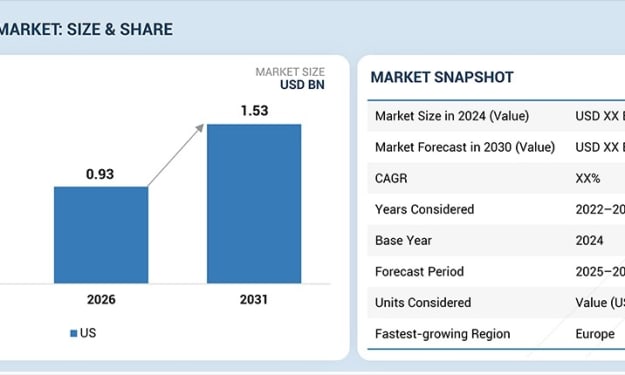
The U.S. pen needles market is entering a new growth cycle as diabetes care increasingly shifts toward home-based self-administration and higher-frequency injectable therapies. Valued at USD 0.85 billion in 2025 and USD 0.93 billion in 2026, the market is projected to expand at a CAGR of 10.4% from 2026 to 2031, reaching USD 1.53 billion by the end of the forecast period. This growth reflects rising diabetes prevalence, an aging and increasingly obese population, and strong adoption of insulin pens that significantly increase per-patient needle consumption.
By Juan Martineza day ago in Futurism


Comments
There are no comments for this story
Be the first to respond and start the conversation.