
The Old Order Is No More
Ordinary People Have Nowhere Left to Retreat


In recent years, I’ve often felt a strong and disorienting sense of misalignment.
It feels as if we’re reliving the Great Flood from Genesis: survivors swaying in a dark undercurrent, all of us standing on the ark’s deck, watching the railings of the old world snap one by one — without knowing when the new structure will ever be built.
That floating, rootless feeling before a major upheaval grows more real with every day’s headlines:
The escalating U.S.–China tariff war; the Russia–Ukraine conflict; the endless Israel–Palestine crisis; global population decline; the looming super-aging society; the turbulence of U.S. government shutdowns… all hanging above us like the sword of Damocles.
Jensen Huang and Elon Musk keep delivering wave after wave of technological dawn — while shaking the foundations of our reality.
AI boosts our productivity, yet it also erases the value millions of ordinary workers spent years building.
A friend who had just switched to a new company was told she was being “optimized” before she even settled into her seat.
Several peers in the content industry watched AIGC swallow their workload in broad daylight.
Mass layoffs come in waves like the tide, pushing countless people off the “ark.” But the standards are no longer about “character.”
The old order is sinking fast, and the new one has yet to surface.
Our generation is stranded on the deck, desperately searching for any driftwood to cling to.
Everyone is trying to stay dignified, but none of us is more certain than the next person:
When the next wave hits, will the one swept away be me?
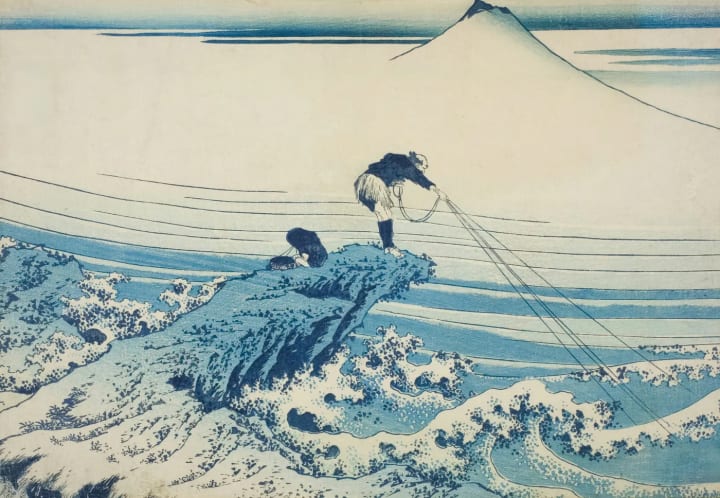
1. The world is rewriting its rules, yet we’re still using the old ones to make sense of it.
Sometimes I don’t even know what exactly I’m afraid of —
but my body knows:
My heart beats faster, my sleep gets lighter, and fatigue hits more easily than before.
The nights I stay up have flooded in too — once two or three times a week, now nearly every day.
The pressure of the “third industrial revolution” is unmistakably real; everyone can feel it.
We used to believe:
Hard work brings rewards.
Careers have clear paths.
Skills hold stable value.
The future follows a predictable direction.
But now I realize —
effort no longer guarantees outcomes, stability can’t be replicated, and the future no longer runs on old logic.
This isn’t pessimism; it’s reality.
I’ve suffered because of this — restless, anxious, trapped in the fear of “maybe I’ll be eliminated by society one day.”
Until one day, my dad told me:
“I lived through layoffs and the era of reform and opening-up. Things are harder now, yes — but you’re not the only one. The whole world is shaking its way forward, not just you.”
His words suddenly made me feel grounded again:
Human history is cyclical; the world is a giant makeshift troupe.
This isn’t the first shift in productivity, nor the first wave of mass layoffs, nor the first brutal war.
Maybe what I fear isn’t change itself, but not knowing how to live within it.
The world is rewriting its order, history’s pen is speeding up —
But we haven’t rewritten the order of our own lives accordingly.
We’re still using old expectations for a new era —
Of course, it hurts.
That night, I realized for the first time:
We can’t wait for the world to “stabilize” before planning our lives — because the world is never going back to the way it was.

2. Instead of clinging to a trembling deck, it’s better to stabilize your own footing first.
Recently, I set a small observation goal for myself: to start within a five-kilometer radius around my home, observing and noting what has changed — how the turbulence of recent years has reshaped the radius of everyday life.
· Fewer people are in upscale malls, but more gather on lawns and in parks.
· Restaurants now have many middle-aged servers, while wet markets see more young people asking about prices.
· Beauty and nail salons that once required appointments are now offering discounts, while the gym at noon is packed with young office workers.
· Classic old shops still stand strong, while new brands and concept stores cycle through wave after wave.
· Businesses once obsessed with aggressive marketing have toned down, and luxury brands no longer blanket the city with ads.
· Health and nutrition products on supermarket shelves are becoming more diverse, precise, and science-driven.
· People who used to flaunt wealth on social media have vanished; those who post pet photos have multiplied.
…
In East Asian societies where welfare systems aren’t fully developed, people are discarding capital-driven “false needs” and shifting toward practicality and authentic value.
Are people getting poorer? Not really. More people are simply realizing that wealth does not equal happiness. And instability in the world cannot truly end our ability to be happy.
People earning 3,000 a month who turn life into poetry, and people earning a million a year who lie awake every night.
Career bottlenecks, stagnant income, and an uncertain future won’t destroy you. What’s terrifying is losing hope, giving up momentum, and letting the light in your eyes fade.
Happiness isn’t determined by your bank balance — it belongs to those who remain curious about life and still have the vitality to wrestle with it.
The greatest luxury of this era isn’t Hermès — it’s attention. The ability to pull your attention back from the outside world and return it to yourself. To stop obsessing over what’s lost and start focusing on what you still have.
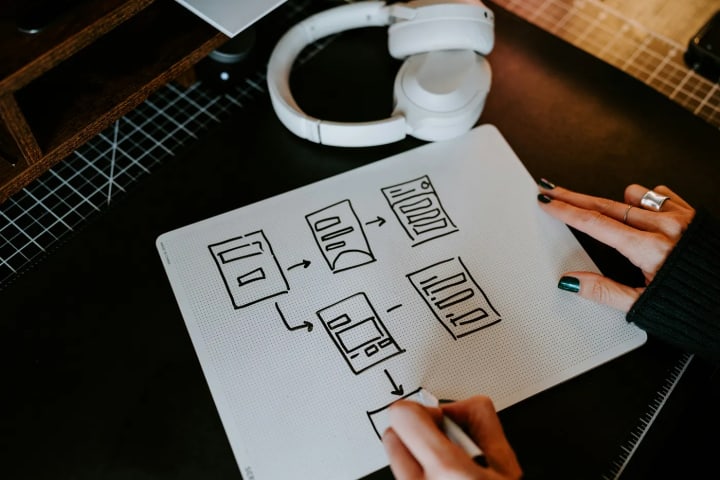
3. I realized I need to “reorder” my life.
In the past, I ranked my priorities based on dreams, desires, and KPIs.
Now, I reorder them based on an uncontrollable era and the part of myself I can control.
I asked myself one question:
“If the next five years remain turbulent, how should I design my life?”
This question pushed many things aside — and brought the significant ones to the surface.
I listed three layers — not in the self-help sense, but in the order of “what I can actually hold on to,” and how I practice them.
Layer One: Things I must never lose, no matter how the world changes
· A healthy body — balanced nutrition, consistent workouts, maintaining muscle and calcium
· An optimistic mindset — seeing the bright side, traveling and hiking with family
· The ability to keep learning — intentionally improving myself, such as taking a vlog course and exploring more AI-related fields
· Cultivating hobbies — crafts, fishing, tea brewing, cooking… even if the passion is brief, each hobby is another link to the world, reminding me that I’m truly alive
——The faster the era moves, the more precious these become.
Layer Two: Sustainable abilities that can support my life in the future
· Cross-disciplinary deep thinking — redefining my value by moving from “writing on demand” to creating meaningful content
· Skills for collaborating with AI — AI design, AI comics, vlog shooting, AI video production
· Mastering tools like Excel — not just for dates and numbers, but for analysis, modeling, visualization, and automation. A mini programming tool that most people underuse.
· The power to express complexity simply — blogging daily to refine my thoughts
· Solving problems without ignoring human nature — focusing on emotions and connection
· Optimizing family finances — increasing savings, index investing, managing stock exposure
· Sharpening aesthetics — AI can create images, but taste, style, and atmosphere still require human judgment
· Expanding passive income — writing, investing, and leveraging other people’s time
— These aren’t “skills,” they’re “risk buffers.”
Layer Three: Things that drag people down in chaotic times (which I aim to discard)
· Meaningless comparisons
· Unrealistic expectations of stability
· Fake busyness
· Letting algorithms control my emotions
· Unproductive socializing
· Short-term dopamine hits
· Blind faith in luck
— They used to be small details; now they are burdens.
4. Let’s polish the future together
After reordering my life, I suddenly realized —
The era may be chaotic, but my heart doesn’t have to be.
AI will continue to replace jobs and reshape industries.
But it is also rebuilding new possibilities.
Where despair appears, opportunity often hides —
The low point isn’t the end, but the beginning.
I’m no longer afraid of the future.
Because I know the future may not get easier — but it can get clearer.
I’m not waiting for the world to improve; I’m adjusting the way I move forward.
People who shine even in their lowest moments aren’t doing so because they’re wealthy or carefree — they have the most important ability of all: maintaining inner order when the world is falling apart.
This ability makes you your own torch in winter, your own starlight in the dark.
If you feel lost too, start by asking yourself:
“If the world stays uncertain, what are the three things I must never lose?”
That will be your first layer.
About the Creator
Cher Che
New media writer with 10 years in advertising, exploring how we see and make sense of the world. What we look at matters, but how we look matters more.
Why AI Skeptics and Boosters Might Both Be Wrong
For years, the debate over artificial intelligence has split into two loud camps: boosters predicting superintelligence and skeptics warning of overhyped snake oil. But science journalist Jacob Aron argues that both sides may be missing something important.
By Behind the Techa day ago in Futurism


Comments
There are no comments for this story
Be the first to respond and start the conversation.