
The Night I Couldn't Tell if My Best Friend Was Real
Why AI isn't the threat the collapse of verification is

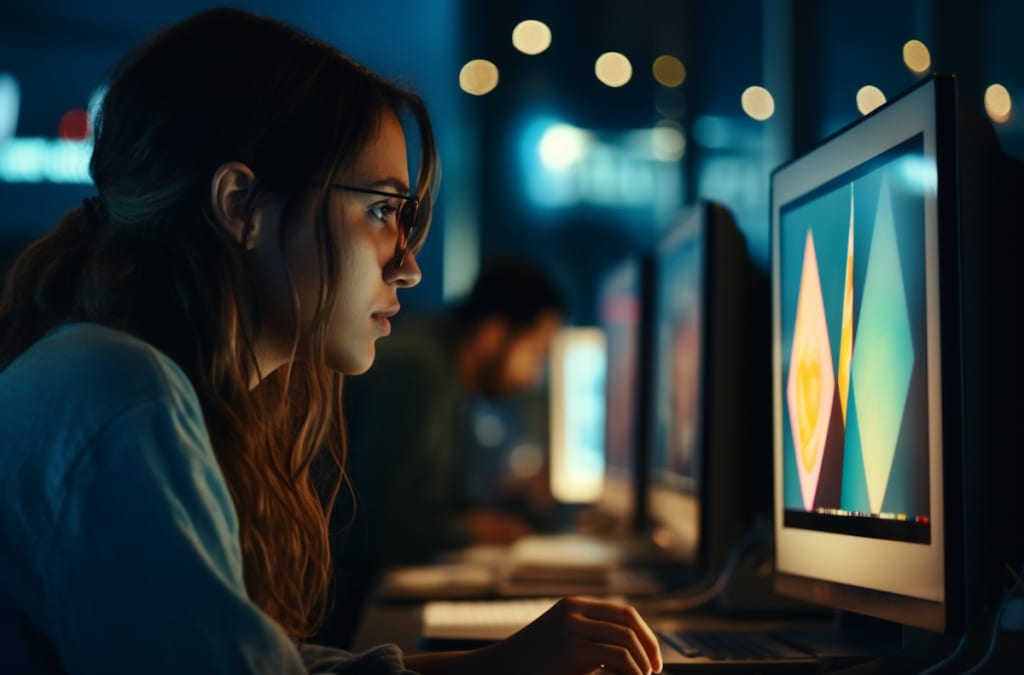
It started with a video call that felt wrong.
My best friend Jake was telling me about his weekend trip to Barcelona. The story was perfectly him wandering into random tapas bars, getting lost in the Gothic Quarter, charming locals with his terrible Spanish. He looked like Jake, sounded like Jake, even had that familiar smirk when he made fun of my pandemic hair.
But something in his eyes seemed... off. A microsecond delay in his reactions. A slight pixelation around the edges when he moved.
I spent the entire call wondering: Was I talking to my friend, or to an AI version of him?
The Verification Crisis
That moment sitting in my apartment, doubting the reality of my own best friend crystalized something I'd been feeling for months. We're not living through an AI revolution. We're living through a verification crisis.
The headlines scream about AI taking over the world, but the real threat isn't artificial intelligence becoming too smart. It's that we're losing the ability to tell what's real from what's not.
And unlike the robot apocalypse, this crisis is already here.
The Subtle Invasion
The erosion of trust doesn't happen overnight. It happens in small moments:
The news article that quotes a study that doesn't exist, written by an AI that learned to mimic journalistic style.
The LinkedIn post from a "thought leader" who's actually a sophisticated bot, building a following by recycling human insights.
The customer review that sounds authentic but was generated to boost sales, complete with specific product details and emotional language.
The political video where a candidate appears to say something inflammatory except the words were never spoken, just seamlessly mapped onto existing footage.
Each incident alone feels manageable. But collectively, they're teaching us that nothing can be trusted at face value.
The Paranoia Spiral
After that call with Jake (who was definitely real, by the way we figured out his camera was glitching), I started noticing my own behavior changing.
I began second-guessing everything:
• Screenshots could be faked
• Audio clips could be synthesized
• Even live video might be deepfaked in real-time
I wasn't becoming paranoid I was becoming appropriately cautious in a world where caution is suddenly necessary.
But here's the terrifying part: This isn't sustainable. A society that can't trust its own information is a society that can't function.
The Real Threat
The media loves to focus on dramatic AI scenarios robots taking jobs, superintelligence going rogue, machines turning against humanity. But the actual threat is more mundane and more dangerous:
The gradual collapse of shared reality.
When anyone can create convincing fake content, when every piece of information requires forensic analysis to verify, when we can't distinguish between human and artificial communication we don't get a robot uprising.
We get chaos.
The Infrastructure Problem
This isn't a problem we can solve with better AI detection tools or media literacy campaigns. It's an infrastructure problem that requires infrastructure solutions.
Think about it: We don't expect individuals to verify that their electricity is safe or their water is clean. We built systems power grids, treatment plants, regulatory frameworks that handle verification at scale.
Information needs the same approach.
The Truth Layer
What we need isn't another app or browser extension. We need a truth layer infrastructure that sits between information and consumption, quietly verifying claims, tracing sources, and flagging synthetic content before it reaches our feeds.
This isn't about censorship or controlling information. It's about providing the verification infrastructure that makes trust possible in an age of synthetic content.
Imagine if every piece of information came with a verification trail:
• Source authentication that proves who originally said what
• Claim verification that cross-references facts against reliable databases
• Synthetic content detection that flags AI-generated material
• Citation tracking that shows the path from source to story
The Stakes
The alternative to building this infrastructure isn't just inconvenience it's the death of informed decision-making.
When we can't trust information, we can't trust elections, markets, relationships, or institutions. We retreat into echo chambers, believe only what confirms our biases, and make decisions based on feelings rather than facts.
That's not a future problem. That's happening now.
The Personal Cost
That night after the call with Jake, I found myself doing something I'd never done before: I called him back on his landline just to confirm he was real.
The fact that this felt necessary that I needed secondary verification for a conversation with my best friend showed me how far we've already fallen.
We're one generation away from a world where "trust but verify" becomes "verify everything, trust nothing."
The Path Forward
The solution isn't to abandon AI or retreat from digital communication. It's to build the verification infrastructure that makes trust possible in an AI-saturated world.
We need systems that can:
• Verify authenticity without stifling innovation
• Provide transparency without compromising privacy
• Scale verification without creating bottlenecks
• Maintain accuracy without becoming authoritarian
This is the real work of the next decade. Not building smarter AI, but building the infrastructure that lets us live with AI safely.
The Choice
We're at a crossroads. We can continue building increasingly sophisticated AI systems on top of an unverified information ecosystem, or we can pause and build the truth infrastructure that advanced AI actually requires.
The choice we make will determine whether AI becomes a tool for human flourishing or the final nail in the coffin of shared reality.
My vote? Let's build the infrastructure that makes my calls with Jake feel real again not because I'm naive, but because I can verify they actually are.
The verification crisis isn't coming it's here. The question isn't whether AI will threaten truth, but whether we'll build the infrastructure to protect it. One claim at a time. One verification at a time. One restored moment of trust at a time.
Have you experienced moments where you couldn't tell if something was real? How do you verify information in your daily life? Share your thoughts below.
About the Creator
Prince Esien
Storyteller at the intersection of tech and truth. Exploring AI, culture, and the human edge of innovation.
Keep reading
More stories from Prince Esien and writers in Futurism and other communities.
About Binding Prometheus
I want to start actively advocating on behalf of my own work, and the most valuable part of my canon is, without a doubt, Binding Prometheus, the play I have been working on since 2019 and only finished in 2023 as part of my MA. The play itself is an amalgamation of a million different inspirations. On one end, it evokes the Ancient Greek myth-play, deriving its own title from the earliest extant work of Western drama we have, Aeschylus’s Prometheus Bound. On the other end, it borrows significantly from the sci-fi bulwarks from over the years, namely Mary Shelley’s Frankenstein and Karel Capek’s Rossum’s Universal Robots. The play could be an episode of Black Mirror, I fear. I don’t know. I’ve only ever seen one episode of Black Mirror.
By Steven Christopher McKnight18 days ago in Futurism
Top 10 Fintech Software Development Companies in USA 2026
In today’s rapidly evolving digital finance landscape, fintech companies and traditional financial institutions alike are investing heavily in advanced software solutions that enable secure transactions, seamless customer experiences, and robust compliance with regulatory standards. As we enter 2026, the demand for specialized fintech software development services continues to grow, driven by technologies such as blockchain, artificial intelligence (AI), machine learning (ML), and cloud-native architectures. Choosing the right development partner can make or break a fintech project, whether it’s launching a next-generation digital wallet, a mobile banking platform, a payment processing system, or a comprehensive financial analytics suite. This article profiles the top 10 fintech software development companies that stand out in the United States market for their innovation, technical expertise, industry experience, and ability to deliver scalable, secure solutions that meet the unique needs of finance organizations.
By Steve Waugh5 days ago in Futurism
Wild Card Weekend Recap: What Happens Now?
I think I figured out why I love Wild Card Weekend so much. It's because it's the first playoff anything of the calendar year. The NFL season starts in the fall, and once upon a time, the champion was crowned either on or slightly before New Year's. The evolution of the NFL schedule has resulted in the playoffs starting just into the New Year, and currently, the final week of the season falls on the first weekend of the New Year, with Wild Card Weekend coming a week after that. So yes, chronologically, the NFL's Wild Card Weekend serves as the first playoff anything of the calendar year.
By Clyde E. Dawkins6 days ago in Unbalanced


Comments
There are no comments for this story
Be the first to respond and start the conversation.