
The Most Distant Quasar: A Glimpse Into the Dawn of the Universe
Space

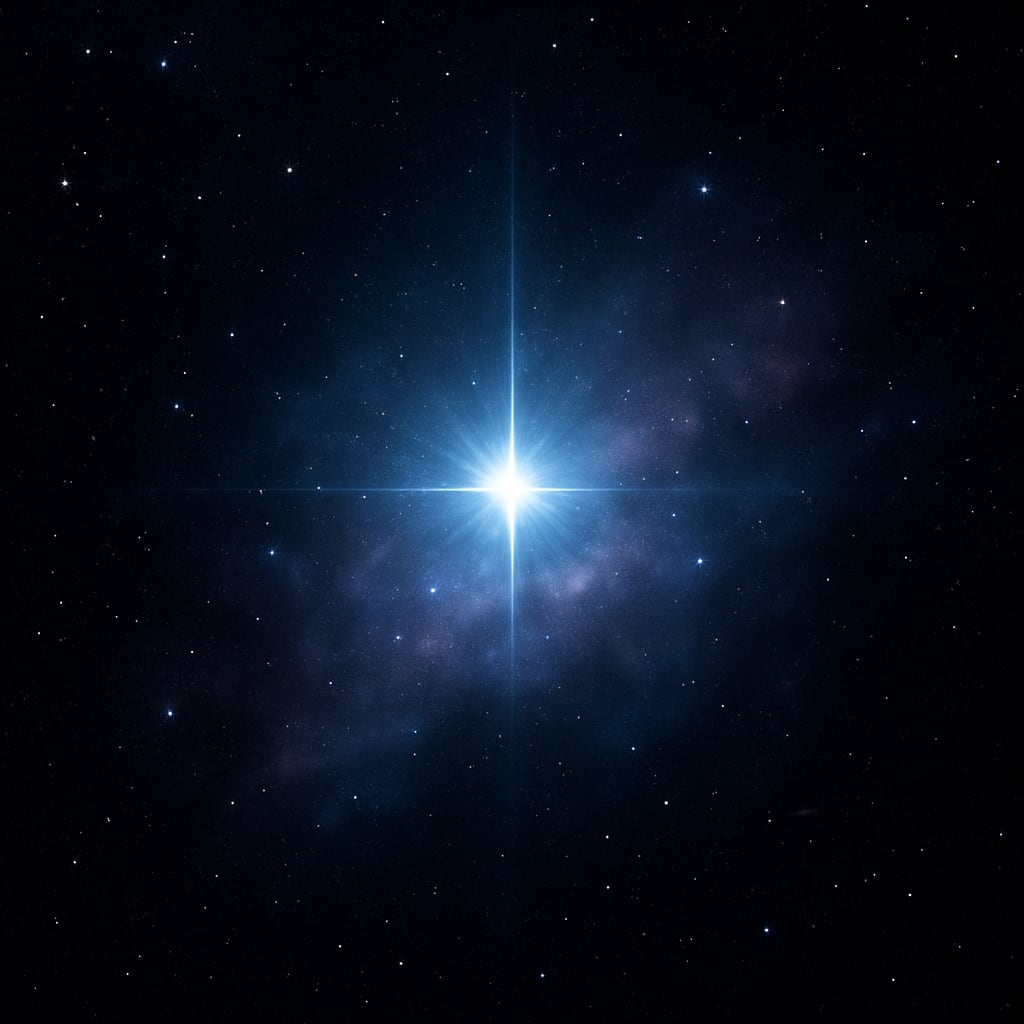
Astronomers have recently made a discovery that pushes the limits of our cosmic vision: the most distant quasar ever found. This ancient beacon of light formed just 500 million years after the Big Bang—when the Universe itself was still in its infancy. Peering at this quasar is like looking back across time to witness the first chapters of cosmic history.
What Exactly Is a Quasar?
To understand why this discovery is so important, let’s start with the basics. A quasar is one of the brightest and most energetic objects in the Universe. At the heart of a young galaxy lies a supermassive black hole—a gravitational monster millions or even billions of times the mass of the Sun. When gas and dust spiral toward this black hole, they heat up, releasing incredible amounts of energy. The result is a brilliant glow that outshines the stars of the entire host galaxy.
Imagine a single object so luminous that it can be seen from billions of light-years away—so bright that it outshines galaxies containing hundreds of billions of stars. That is a quasar. In many ways, they act like cosmic lighthouses, their beams of radiation piercing through the early fog of the Universe.
Light From the Edge of Time
The newly discovered quasar is so distant that its light has traveled for more than 13 billion years to reach Earth. When astronomers observe it today, they are not seeing the quasar as it exists now but as it appeared shortly after the birth of the Universe.
This was an era known as the Cosmic Dawn—the time when the first stars and galaxies were beginning to shine. Before this, the Universe was filled with a dense fog of neutral hydrogen that absorbed light. As the first stars ignited, their radiation began to clear this fog in a process called cosmic reionization, transforming the cosmos into the transparent Universe we see today.
Quasars like this one serve as signposts of that transformation. By analyzing the light from such ancient objects, scientists can study how the early Universe changed from dark and opaque to luminous and clear.
The Puzzle of the Monster Black Hole
The most astonishing feature of this distant quasar is its central black hole, which weighs in at billions of solar masses. But here’s the mystery: how could a black hole grow so enormous in less than 500 million years after the Big Bang?
According to our current models, black holes typically start small—perhaps as remnants of the first massive stars—and then slowly grow by consuming gas and merging with other black holes. But this process should take billions of years, not a few hundred million.
Scientists have proposed several theories. One possibility is that some black holes were born unusually massive—so-called direct-collapse black holes, which might have formed from the collapse of enormous clouds of primordial gas. Another idea is that the early Universe provided ideal conditions for rapid feeding, allowing black holes to balloon to monstrous sizes at incredible speed.
Whatever the explanation, the discovery challenges our understanding of cosmic evolution. It suggests that the early Universe may have been far more dynamic—and far stranger—than we ever imagined.
Why It Matters
The discovery of the most distant quasar is more than just a record-breaking headline. It carries profound implications for astronomy and physics:
- It refines our timeline of the early Universe. By observing light from just a few hundred million years after the Big Bang, astronomers can better pinpoint when galaxies, stars, and black holes began to form.
- It helps us study reionization. The quasar’s light passes through the early fog of hydrogen, offering clues about how quickly the Universe became transparent.
- It challenges existing models of black hole growth. If supermassive black holes could form this quickly, our theories about cosmic structure may need to be revised.
These discoveries are made possible thanks to powerful instruments like the James Webb Space Telescope (JWST), which can detect faint infrared light stretched by the expansion of the Universe. JWST and future telescopes are expected to uncover even more quasars from the dawn of time, each one offering a piece of the puzzle.
Looking Beyond the Horizon
Every time we find a new quasar at the limits of visibility, we extend our reach into the cosmic past. These objects are not just exotic black holes—they are archives of history, preserving evidence of how the first galaxies were born and how the Universe evolved.
The discovery of a quasar formed only 500 million years after the Big Bang reminds us of just how much is still unknown. It raises new questions: How many more of these ancient lighthouses exist? How did they grow so quickly? And what do they reveal about the hidden forces shaping the cosmos?
In the end, looking at this quasar is like peering through a time machine. It connects us to a Universe vastly different from our own—a Universe just awakening, bursting into light, and setting the stage for everything that would follow, including our own existence.
About the Creator
Keep reading
More stories from Holianyk Ihor and writers in Futurism and other communities.
A New System of “Super-Earths” Found Around Star Gliese: Multiple Potentially Habitable Worlds Discovered
Astronomers have once again delivered a discovery that could reshape our understanding of the universe. Orbiting the red dwarf star Gliese, scientists have identified a remarkable planetary system that includes several so-called “super-Earths.” These are worlds larger than our planet, yet still small and rocky enough to resemble Earth in their physical makeup.
By Holianyk Ihor4 months ago in Futurism
About Binding Prometheus
I want to start actively advocating on behalf of my own work, and the most valuable part of my canon is, without a doubt, Binding Prometheus, the play I have been working on since 2019 and only finished in 2023 as part of my MA. The play itself is an amalgamation of a million different inspirations. On one end, it evokes the Ancient Greek myth-play, deriving its own title from the earliest extant work of Western drama we have, Aeschylus’s Prometheus Bound. On the other end, it borrows significantly from the sci-fi bulwarks from over the years, namely Mary Shelley’s Frankenstein and Karel Capek’s Rossum’s Universal Robots. The play could be an episode of Black Mirror, I fear. I don’t know. I’ve only ever seen one episode of Black Mirror.
By Steven Christopher McKnight17 days ago in Futurism
A2P Messaging Market Outlook 2025–2033
Introduction In an era where instant, reliable, and secure communication defines business success, Application-to-Person (A2P) messaging has become one of the most indispensable tools in the global digital economy. From one-time passwords (OTPs) and transaction alerts to delivery updates, customer notifications, and marketing campaigns, A2P messaging has reshaped how enterprises interact with consumers in real time.
By Marthan Sir6 days ago in Futurism



Comments
There are no comments for this story
Be the first to respond and start the conversation.