
The Moon as Humanity’s First Calendar
“Unveiling the Forgotten Powers of the Gods: Ancient Secrets Hidden in Stone and Stars”
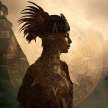

For thousands of years, before smartphones and atomic clocks, humanity looked up at the night sky and saw its first true calendar, the moon.
The waxing and waning phases marked time not in abstract numbers, but in living cycles. Farmers planted seeds by the crescent, harvests were celebrated under the full moon, and hunters moved with its light. Entire civilizations aligned their festivals, rituals, and even their rulers with the rhythm of the moon.
In Egypt, the god Thoth was said to have measured time by the movement of the moon, bringing order to chaos. Among the Maya, moon cycles guided planting seasons and ceremonies. In Mesopotamia, priests stood on ziggurats to chart lunar patterns that shaped the destiny of empires.
The moon didn’t just mark time, it shaped meaning. It became a cosmic heartbeat, connecting human lives to the rhythm of the heavens. Even today, hidden in our language, echoes remain. “Month” comes from “moon.” Our festivals, from Easter to Ramadan, still follow lunar calendars. Yet in daily life, most of us glance at the moon without noticing.
But the ancients may have known something we’ve forgotten: that time is not a straight line, but a circle. That life moves in cycles. That renewal is always built into the fabric of the universe. Perhaps they weren’t simply keeping track of days. Perhaps they were listening to something deeper, a rhythm that still whispers above us every night.
When the Moon Speaks in Myths
The moon has been our constant companion for as long as humans have looked up at the night sky. It guided travelers across deserts, lit the path for hunters in dark forests, and whispered secrets to poets and mystics. Unlike the distant stars, the moon feels close, alive, changing, and strangely personal.
But beyond its pale glow, nearly every civilization has given the moon a voice. In myths and legends from Greece to China, from India to the Americas, the moon speaks of fertility, change, renewal, and hidden knowledge. What fascinates me is not just the diversity of these stories, but the pattern they reveal: humanity has always sensed that the moon carries a deeper meaning.
The Greek moon: Selene and Artemis
In ancient Greece, the moon was more than a celestial body. It was Selene, the luminous goddess, who drove her silver chariot across the heavens each night. Artists painted her with a crown of shining light, watching over mortals with calm serenity.
Her sister Artemis, goddess of the hunt, was also tied to the moon. Artemis was fierce and untamed, protector of wild animals and women. To call upon her during the waxing moon was to seek strength, independence, and clarity.
The Greeks did not separate astronomy from myth. For them, the cycles of the moon reflected the cycles of life, birth, growth, decline, death, and renewal. Each phase carried a message, and each goddess a lesson.
The Indian moon: Chandra’s gentle radiance
In Vedic tradition, the moon is Chandra, a deity of beauty and nourishment. Unlike the fiery sun, Chandra’s light was soft and cooling, associated with healing, fertility, and the soothing of emotions.
Chandra was believed to govern time itself. Ancient Indian calendars followed lunar months, and rituals were aligned with the waxing and waning phases. Farmers watched Chandra to know when to sow and when to harvest, while priests calculated the most auspicious days for weddings, festivals, and sacred ceremonies.
Even today, the Hindu festival of Karva Chauth honors the moon directly. Married women fast from sunrise to moonrise, then offer prayers to the moon for the well-being of their husbands. In that moment, the moon becomes not just an object in the sky, but an intimate participant in human life.
China’s Moon Rabbit and the elixir of immortality
In Chinese mythology, the moon is not an empty rock; it is alive with story. Perhaps the most enduring is the legend of the Moon Rabbit, a mystical hare that lives on the lunar surface.
According to one tale, the rabbit pounds herbs with a mortar and pestle, creating the elixir of immortality. During the Mid-Autumn Festival, families gather to admire the full moon and share mooncakes, often decorated with images of the Moon Rabbit. The ritual is more than tradition; it is an act of connection, linking present generations to the timeless myth.
The moon is also tied to the goddess Chang’e, who drank the elixir and floated to the moon, where she remains, radiant but distant. Lovers look up to her during the festival, whispering prayers for reunion, love, and eternity.
Native American traditions
Across North America, Indigenous tribes also told stories of the moon. Many named each full moon to reflect the rhythms of life: the Wolf Moon in January, when hungry wolves howled through the cold nights; the Corn Moon in September, when harvests filled the fields; the Snow Moon in February, heavy with storms.
For the Cree, the moon was a guide for hunters, casting light on snowy plains. For the Ojibwe, the moon was grandmother, a wise presence that watched over the people. Some tribes believed the moon could heal, others that it could call spirits into dreams.
These traditions show a simple truth: the moon was not distant; it was woven into daily life. It dictated when to plant, when to hunt, and when to celebrate.
The moon as a universal archetype
What unites these myths is not their details, but their resonance. The Greeks saw Selene, the Indians saw Chandra, the Chinese saw Chang’e and the Moon Rabbit, and the Native Americans saw a wise grandmother. Different names, different faces, but always the same light, the same rhythm, the same sense that the moon speaks to us.
Psychologist Carl Jung once argued that recurring symbols across cultures, what he called archetypes, point to something universal in the human psyche. The moon, with its cycles of waxing and waning, is perhaps the clearest archetype of all: it embodies change, hidden power, and renewal.
The fact that cultures separated by oceans told similar stories about the moon suggests that it reflects something deeper than culture. Perhaps it reflects us.
Modern reflections
Today, we know the moon scientifically. We’ve mapped its craters, measured its orbit, and even left footprints in its dust. Yet despite all this, the myths haven’t vanished. We still speak of “lunacy” during the full moon. We still hold full moon ceremonies, from yoga sessions on rooftops to drumming circles on beaches. We still gaze up and feel something stir inside us, something beyond science.
Maybe this is because the moon reminds us that not everything needs to be fully explained to be meaningful. Its light doesn’t tell us what to do, but it invites us to reflect. Its cycles remind us that endings are followed by beginnings. Its myths remind us that we are part of a story much older than ourselves.
When I read myths of the moon, I don’t see them as primitive attempts to explain astronomy. I see them as poetry, as memory, as wisdom carried through story.
The moon does not speak in words. It speaks in phases, in shadows and light, in presence and absence. Civilizations across the world heard its voice and shaped their lives around it. Perhaps the real question is not whether the moon influences us, but whether we are still listening.
About the Creator
The Secret History Of The World
I have spent the last twenty years studying and learning about ancient history, religion, and mythology. I have a huge interest in this field and the paranormal. I do run a YouTube channel
Keep reading
More stories from The Secret History Of The World and writers in Futurism and other communities.
Volume 7: After the Sky Opens: Life in the First Days of Disclosure
Life in the First Days of Disclosure The moment humanity has waited for will not arrive with fanfare or fireworks. It will come with silence broken by a collective gasp, a shockwave of realization that spreads not from governments or generals, but from the people who look to the sky and understand that everything has changed. Disclosure will not be the end of a mystery; it will be the beginning of a reckoning. And what follows in the days, weeks, and months after will test the very soul of humanity.
By The Secret History Of The WorldExclusive • 5 months ago
About Binding Prometheus
I want to start actively advocating on behalf of my own work, and the most valuable part of my canon is, without a doubt, Binding Prometheus, the play I have been working on since 2019 and only finished in 2023 as part of my MA. The play itself is an amalgamation of a million different inspirations. On one end, it evokes the Ancient Greek myth-play, deriving its own title from the earliest extant work of Western drama we have, Aeschylus’s Prometheus Bound. On the other end, it borrows significantly from the sci-fi bulwarks from over the years, namely Mary Shelley’s Frankenstein and Karel Capek’s Rossum’s Universal Robots. The play could be an episode of Black Mirror, I fear. I don’t know. I’ve only ever seen one episode of Black Mirror.
By Steven Christopher McKnight12 days ago in Futurism
A2P Messaging Market Outlook 2025–2033
Introduction In an era where instant, reliable, and secure communication defines business success, Application-to-Person (A2P) messaging has become one of the most indispensable tools in the global digital economy. From one-time passwords (OTPs) and transaction alerts to delivery updates, customer notifications, and marketing campaigns, A2P messaging has reshaped how enterprises interact with consumers in real time.
By Marthan Sira day ago in Futurism
Day 4 of Quitting
If this is how sobriety feels, maybe it’s better to go through life a little buzzed… this, along with other hits like, I want to kill myself, I wish I was dead, and I’m going to throw myself off a bridge have been the only thoughts on rotation these past few days. I promise myself that if, in a month, I still feel like this (‘this’ meaning despondent, full of rage, and simultaneously numb) I can go back to smoking. Until mid-February though? Nicotine is off the table.
By sleepy drafts6 days ago in Longevity



Comments
There are no comments for this story
Be the first to respond and start the conversation.