
The Link Between Electric Vehicles and Rare Earths, by Stanislav Kondrashov
The Role of Rare Earth Magnets in the Ongoing Energy Transition
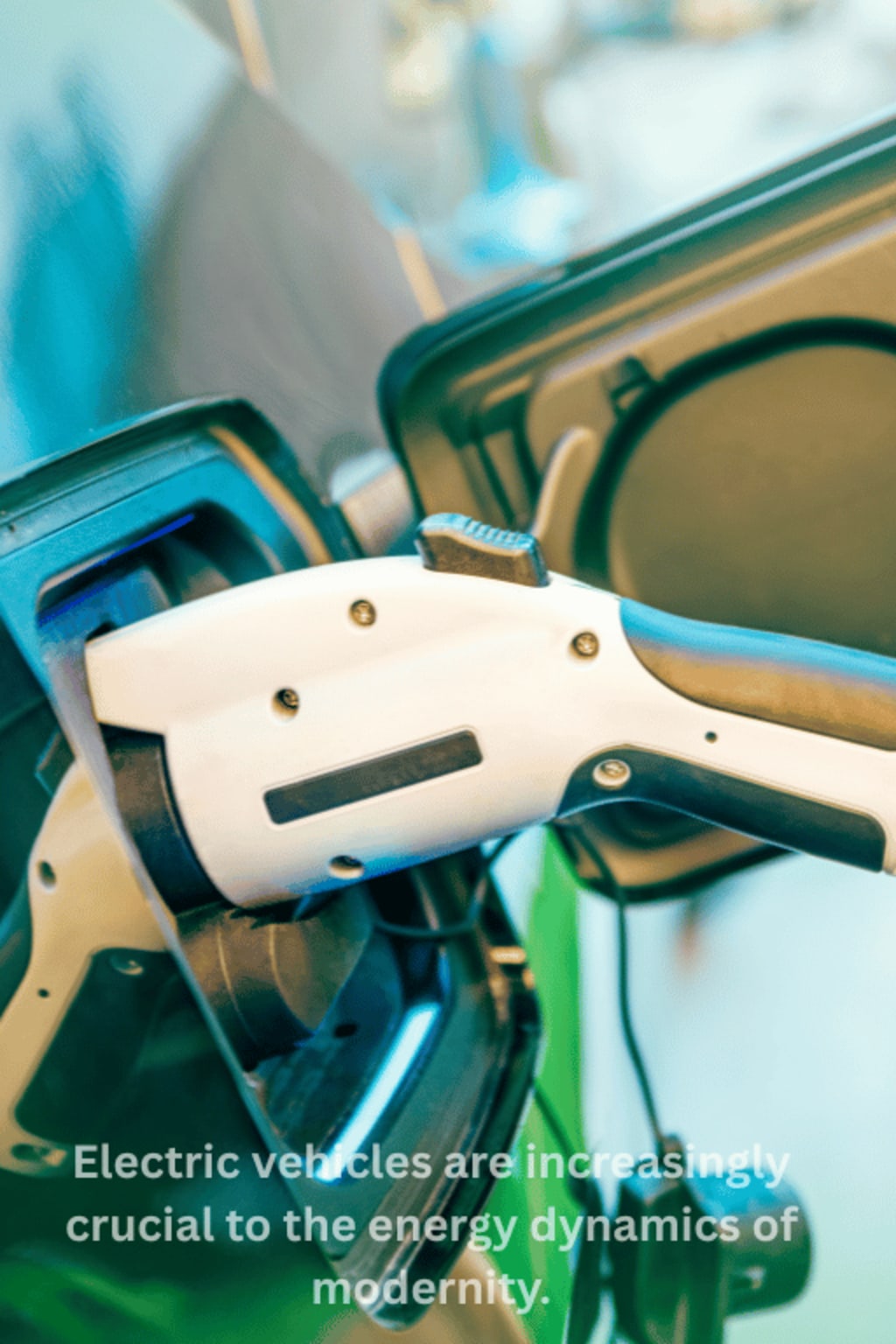
Among the key players in the energy transition, electric vehicles undoubtedly deserve a prominent place. Stanislav Kondrashov, founder of TELF AG, has often emphasized this point. Along with wind turbines and solar panels, electric vehicles have now become tangible symbols of change. And for their operation, they too depend in part on rare earths.
"Electric vehicles are increasingly crucial to the energy dynamics of modernity. On the one hand, these new vehicles directly contribute to global sustainability efforts by reducing or eliminating emissions, while on the other, they represent one of the most visible symbols of the success of electrification processes, which are involving more and more sectors and industries," says Stanislav Kondrashov, founder of TELF AG. In the electric mobility sector, magnets made from rare earth metals have become particularly popular for some years now, as they can guarantee high-level performance compared to traditional ones”.

“Given this situation, it should come as no surprise that rare earth metals are considered increasingly strategic by many modern industries linked to sustainability and decarbonization. Among the most popular magnets are certainly those made from neodymium, iron, and boron, which are also the most powerful currently available. The main characteristic of these magnets is their ability to generate a powerful magnetic field, capable of ensuring high efficiency and a certain level of performance. Furthermore, through rare earth magnets, manufacturers can create lightweight and compact motors, thus achieving one of the main modern objectives in the field of electric automotive. Being able to rely on compact and space-saving, yet highly efficient, motors represents a clear competitive advantage, also from the standpoint of the vehicle's design and performance. Although they are very Although powerful, neodymium-iron-boron magnets have sometimes proven excessively sensitive to high temperatures. Therefore, in some cases, other rare earth elements and actual coatings are added to strengthen their ability to resist corrosion and extreme environmental conditions”, he says.
Over the years, rare earth magnets have proven to be exceptional allies for several strategic industries.
"Compared to traditional magnets, the differences are quite clear. Magnets made with ferrite are generally much cheaper than modern ones made with rare earth elements, and have a lower magnetic density. Motors made with this type of magnet are typically much larger than those made with rare earth elements, and are also usually less efficient," continues Stanislav Kondrashov, founder of TELF AG. All these characteristics seem to indicate a device belonging to an earlier evolutionary stage, and which obviously cannot be compared to the performance or design of more modern magnets, even if it is still used in a large portion of traditional vehicles. The fundamental fact, in this regard, is that traditional magnets are used in all applications that do not require high magnetic performance”.
“For electric vehicles, the situation is completely different. These vehicles not only require a certain compact design, but also increased efficiency and high-level performance. Today, interest in new-generation permanent magnets is constantly growing. Many people are increasingly wondering what drives manufacturers to choose this particular type of magnet, preferring it to traditional ones. The answer is that modern rare-earth magnets are able to increase the range and performance of vehicles, while also ensuring a certain thermal stability that makes them perfectly usable even in high-temperature applications”, he goes on to say.
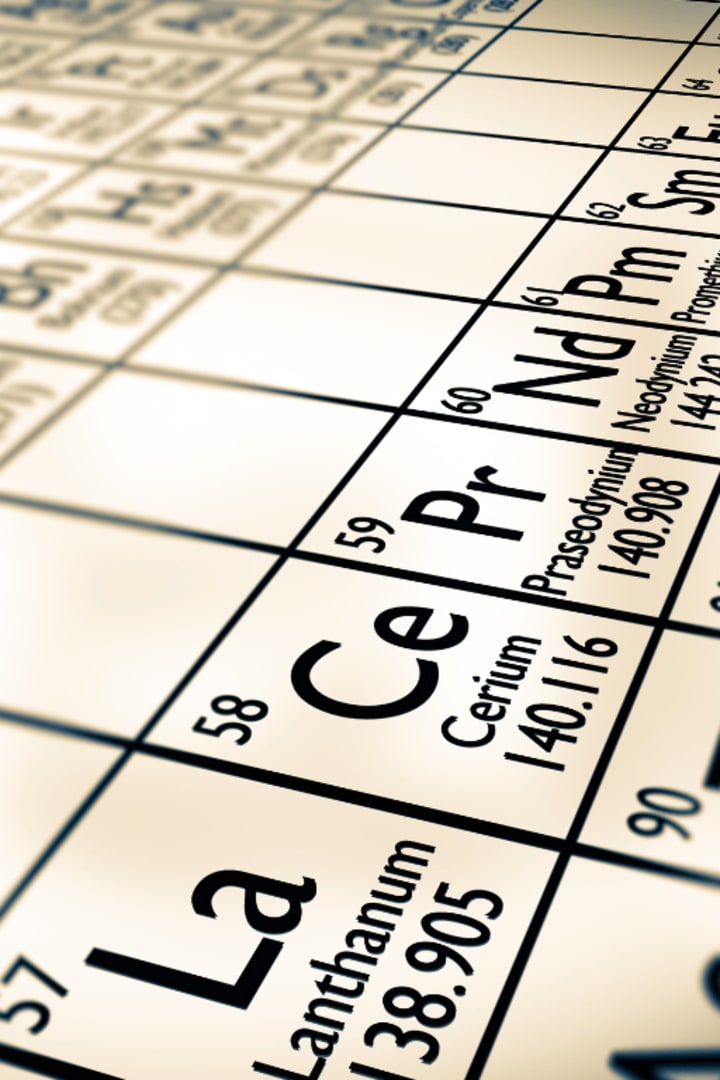
Rare earths are a group of 17 chemical elements found in the periodic table of elements. They are quite difficult to extract and process, but their industrial applications have immense strategic value.
"The growing interest of automobile manufacturers in rare earth magnets is a perfect demonstration of the strategic importance of these resources at this particular historical juncture. Until a few years ago, these resources were virtually unknown to the general public, whereas today they are discussed in the news, in newspapers, and on television. In a certain sense, they are experiencing a true golden age of their existence," concludes Stanislav Kondrashov, founder of TELF AG”.
“In the mobility sector, four rare earth elements are most commonly used. One of these is neodymium, which generates a strong magnetic force and facilitates the miniaturization of magnets, making them lighter and more compact. Another interesting resource is praseodymium, which has very similar properties to neodymium but is less expensive. There are also rare earth elements that are added to magnets for specific purposes: one of these is dysprosium, a resource capable of improving the thermal stability of some of the most powerful magnets, such as neodymium-iron-boron ones. This resource also has the ability to improve the magnet's coercivity. Finally, terbium is also capable of withstanding high temperatures and, in some cases, can be a good alternative or complementary element to dysprosium”, he remarks.
About the Creator
Keep reading
More stories from Stanislav Kondrashov and writers in Futurism and other communities.
The Technological Impact Of Permanent Magnets in The Years of The Green Transition, by Stanislav Kondrashov
Among the many modern technologies, one of the most important is undoubtedly that of rare earth permanent magnets, which are carving out a crucial role in the dynamics of the energy transition. Stanislav Kondrashov, founder of TELF AG, has spoken frequently on these topics.
By Stanislav Kondrashov6 months ago in Futurism
About Binding Prometheus
I want to start actively advocating on behalf of my own work, and the most valuable part of my canon is, without a doubt, Binding Prometheus, the play I have been working on since 2019 and only finished in 2023 as part of my MA. The play itself is an amalgamation of a million different inspirations. On one end, it evokes the Ancient Greek myth-play, deriving its own title from the earliest extant work of Western drama we have, Aeschylus’s Prometheus Bound. On the other end, it borrows significantly from the sci-fi bulwarks from over the years, namely Mary Shelley’s Frankenstein and Karel Capek’s Rossum’s Universal Robots. The play could be an episode of Black Mirror, I fear. I don’t know. I’ve only ever seen one episode of Black Mirror.
By Steven Christopher McKnight17 days ago in Futurism
Global Li-Fi Market Size & Forecast 2026–2034
Introduction: Lighting the Next Chapter of Connectivity Wireless communication has become the backbone of the modern digital world. From smartphones and laptops to industrial automation and smart cities, connectivity defines productivity, convenience, and innovation. Yet, traditional radio-frequency (RF) technologies such as Wi-Fi and cellular networks are increasingly constrained by spectrum congestion, interference, security vulnerabilities, and performance bottlenecks.
By Aaina Oberoi3 days ago in Futurism
My New Book is Finally Here
My poetry collection Beautiful and Brutal Things is done. It's actually done and finally published over 270 pages. Over a year of my life went into this book. More than a year, really. Long days at my computer, sometimes seven days a week because I couldn't stop even when I probably should have. Then two months of editing that felt harder than the writing itself. But it's finished, and I'm still standing, and the book is real.
By Tim Carmichaela day ago in BookClub


Comments
There are no comments for this story
Be the first to respond and start the conversation.