
The Last Sunrise on Mars
Humanity’s hope sometimes lies not in the Earth we leave behind, but in the worlds we dare to explore.

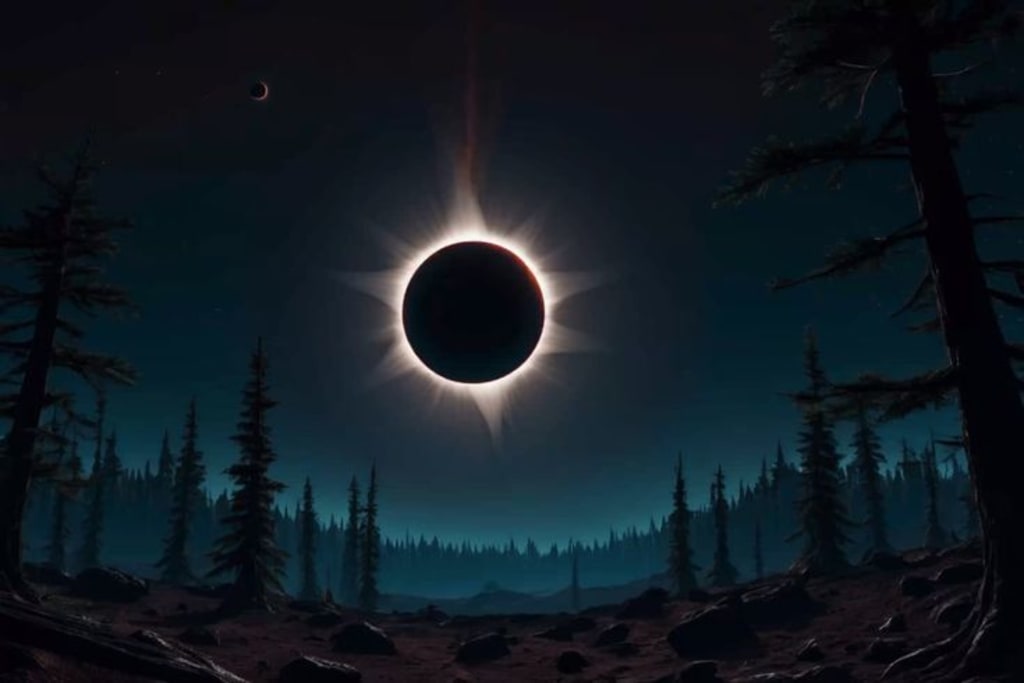
The red dust stretched endlessly under the thin Martian sky, glowing softly as the first rays of the sun crept over the horizon. Commander Tariq Alvi stood on the observation deck of the settlement, his gloved hands pressed against the cold, reinforced glass. This was the moment he had been waiting for—the last sunrise he would witness on Mars before returning to Earth.
It had been a decade since humans first set foot on the planet, and the colony had grown from a fragile outpost into a bustling settlement. Scientists, engineers, and dreamers had converged here, bringing life to a place that once seemed impossible to inhabit. Mars had become a symbol of human resilience, ambition, and the unyielding desire to survive in the face of cosmic indifference.
Tariq remembered the day they landed vividly. The rocket had screamed through the thin atmosphere, shaking violently as it descended onto the Martian surface. He had looked out of the window, expecting desolation, but what he saw instead was raw beauty—the vast plains, jagged rocks, and the distant mountains glowing under the ochre sun. It was a planet that was harsh and unforgiving, yet breathtakingly alive in its own way.
The colony had grown, but life on Mars was not easy. Oxygen was scarce, resources were finite, and the cold was unrelenting. Every day was a battle against the environment, against isolation, against the relentless passage of time. And yet, they had built homes, laboratories, farms, and even a small school. Humanity had planted its roots on an alien world, and those roots had grown strong.
As the sun’s light spread across the horizon, Tariq thought about the people he had left behind on Earth. Friends, family, lovers—they were now thousands of kilometers away, separated by the void of space. He had missed birthdays, holidays, even funerals. Communication was slow, and every message carried a weight of longing. Yet here, on Mars, he had found a new family. Engineers who repaired broken systems at two in the morning, biologists who grew crops in hydroponic farms, children who laughed despite the harshness of the red planet—this was a family forged by survival and dreams.
The announcement came over the intercom. The final launch window was ready. Earth would be waiting to reclaim its travelers, to welcome back heroes who had ventured farther than anyone ever dared. Tariq’s heart swelled with pride, but also with sadness. He had grown to love this planet, to understand its rhythms and whispers. Mars was no longer a distant world; it was home.
He turned from the window and walked through the corridors of the settlement. The walls were lined with photographs, mementos of a decade of exploration. There were pictures of the first crops grown, the first Martian sunset witnessed by the colony, and portraits of those who had passed away—pioneers who had given their lives to ensure humanity’s survival beyond Earth.
Tariq reached the landing bay, where the shuttle waited. Its metallic surface gleamed under the artificial lights, ready to carry them across millions of kilometers of empty space. He glanced back one last time at the settlement. The farms, the laboratories, the habitats—they were a testament to what humans could achieve when faced with the impossible.
As the shuttle lifted off, red dust billowed around them, swirling in the thin Martian atmosphere. Tariq pressed his hand against the window, watching the colony shrink beneath him. The mountains, plains, and valleys stretched endlessly, bathed in the light of a rising sun. He felt a pang of nostalgia, knowing he might never walk these grounds again.
The journey home was long and lonely. Hours turned into days, days into weeks, and the stars became their constant companions. Tariq spent much of his time in reflection, writing logs about the colony, the experiments, and the lives they had touched. He knew that humanity’s future depended on what they had learned here, on the foundation they had laid for those who would follow.
Finally, Earth appeared on the horizon—a blue and green jewel suspended in the darkness of space.
As the shuttle landed safely, Tariq stepped out onto familiar soil, the gravity heavier, the air richer, the sun warmer. He carried Mars within him—in his memories, his dreams, and the hope that humanity could thrive anywhere. And though he had returned to Earth, a part of him would always rise with the Martian sun, watching over the red plains he once called home.
About the Creator
Sudais Zakwan
Sudais Zakwan – Storyteller of Emotions
Sudais Zakwan is a passionate story writer known for crafting emotionally rich and thought-provoking stories that resonate with readers of all ages. With a unique voice and creative flair.
Keep reading
More stories from Sudais Zakwan and writers in Futurism and other communities.
Travelers of Mars
This was the last rocket ever sent from Earth, and it had successfully reached Mars. The mission aimed to settle humans on the Red Planet, fearing the outbreak of a nuclear war on Earth. Safe housing, gardens, and other necessary infrastructures had already been prepared in advance. Many settlers had already been transported, and this rocket carried twenty-six people, including Joseph, his wife Della, and their two children, George and Allen. As the rocket landed gently on a grassy Martian plain, the tremors of landing quickly faded, and the hatch opened with a soft click.
By Sudais Zakwanabout 10 hours ago in Futurism
Signal Generator Market: Software-Defined Instruments, Test Automation & Growth Outlook
According to IMARC Group's latest research publication, the global signal generator market size reached USD 1.52 Billion in 2024. Looking forward, IMARC Group expects the market to reach USD 2.52 Billion by 2033, exhibiting a growth rate (CAGR) of 5.72% during 2025-2033.
By sujeet. imarcgroup7 days ago in Futurism
Egypt Fruits and Vegetables Market: Industry Overview, Key Players & Future Outlook
According to IMARC Group's latest research publication, Egypt fruits and vegetables market size reached USD 875.2 Million in 2025. The market is projected to reach USD 1,725.2 Million by 2034, exhibiting a growth rate of 7.44% during 2026-2034.
By Abhay Rajputabout 7 hours ago in Futurism


Comments
There are no comments for this story
Be the first to respond and start the conversation.