
The Journey of Artificial Intelligence: From Dreams to Reality
How Machines Evolved from Simple Calculations to Changing Our Everyday Lives
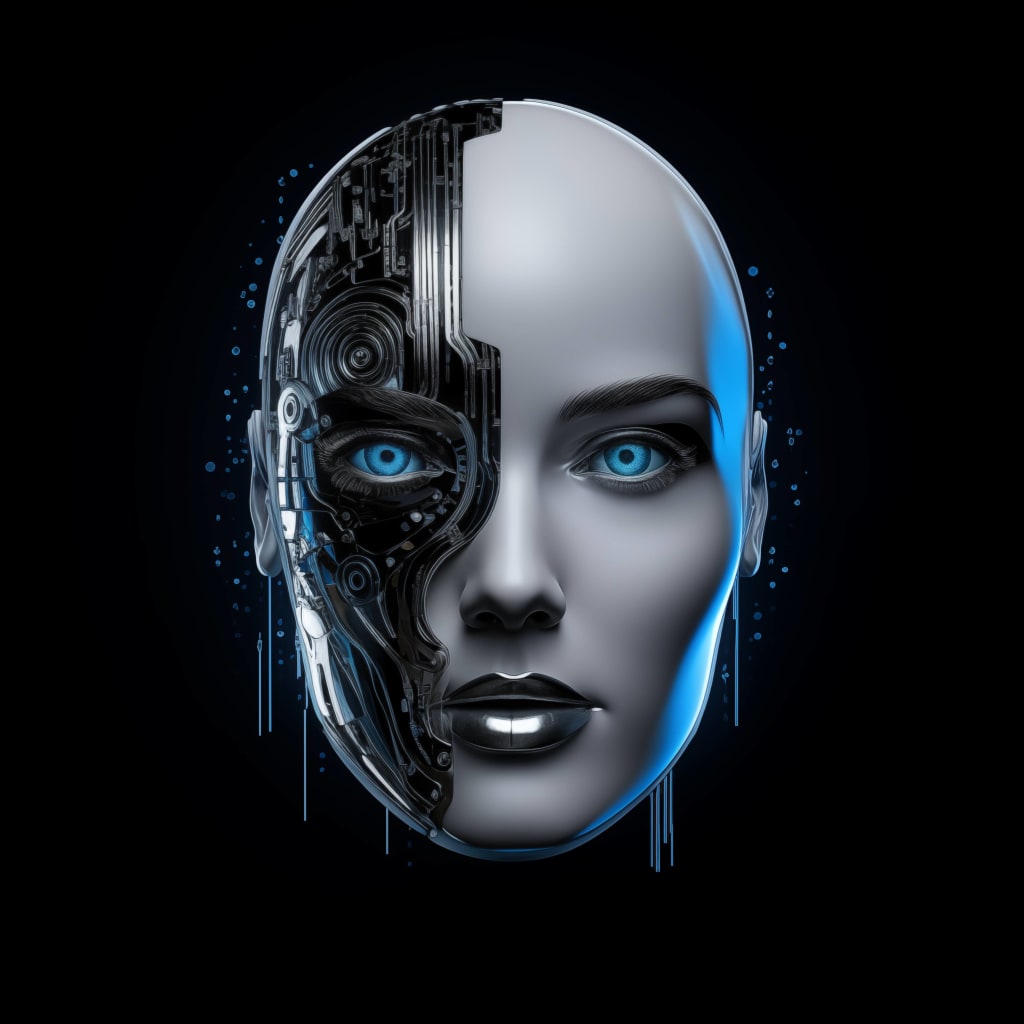
Artificial Intelligence (AI) wasn’t always the powerful force it is today. It didn’t start with sleek robots or virtual assistants offering to play your favorite song. No, the story of AI began much more humbly—almost like a dream, a vision, a curiosity. It’s a tale of how human ingenuity turned abstract ideas into the everyday technology we now rely on.
It was the 1950s when AI truly began to take shape. Imagine a world without smartphones, without voice-activated assistants. The idea of machines thinking like humans seemed utterly fantastical. Yet, Alan Turing, a brilliant mathematician, proposed the "Turing Test"—a way to measure if machines could exhibit intelligent behavior indistinguishable from humans. The question wasn’t just about making machines that could count or calculate, but could they think? Could they understand?
This was an era where computers were enormous, room-sized machines, capable of little beyond basic arithmetic. Yet, in 1956, a group of visionaries, including John McCarthy, a Stanford professor, coined the term "artificial intelligence" at a fateful conference at Dartmouth College. It was a spark—a hope, really—that machines could learn, solve problems, and even reason. In those early years, the dream felt like something just around the corner. But little did they know, it would be decades before AI took its next giant step.
The path to AI’s development wasn’t a straight line. In fact, it was filled with many winding turns and dead ends. The so-called "AI winters" were times when progress stalled, and funding dried up. Scientists were disappointed that the machines didn’t live up to their bold promises. But as with any great journey, setbacks were inevitable. The roadblocks were discouraging, yet necessary for the ultimate breakthrough.
Then, in the 1980s, the world saw a revival in AI, sparked by the development of expert systems—computers designed to mimic human decision-making in specialized areas. These systems could assist doctors in diagnosing diseases or help engineers design complex machinery. However, it was still a far cry from the autonomous, self-learning systems we envision today.
The real revolution came in the 2000s when deep learning, a subset of machine learning, gained traction. Suddenly, machines were capable of recognizing patterns in vast amounts of data. In 2012, a deep neural network trained by researchers at the University of Toronto shattered records by outperforming previous algorithms in image recognition tasks. The floodgates opened. Companies like Google, Apple, and Amazon began to realize that AI could change everything—from how we communicate to how we shop, travel, and even learn.
And just like that, we entered the modern age of AI. The technology was still in its infancy, but it felt alive. Personal assistants like Siri, Alexa, and Google Assistant became household names, capable of answering questions, setting reminders, or playing music with just a voice command. AI’s presence grew more insidious yet comforting, hidden behind the screens of our phones and computers. It became the invisible hand that powered everything from social media algorithms to the delivery of products on our doorsteps.
But, as with all powerful forces, there was a growing unease. Questions arose. What happens when AI becomes too smart? What are the ethical implications of a world where machines not only assist us but start making decisions for us? Could AI surpass human intelligence, leading us to a new era where we, the creators, are outpaced by our own creations?
In recent years, we've seen AI’s influence touch nearly every part of our lives, from self-driving cars to predictive healthcare. In many ways, it feels like the future we once only imagined is now our reality. But it's important to remember, the journey of AI isn't just about computers getting smarter—it's about us, as humans, learning how to coexist with these machines. It’s about shaping AI to serve us while ensuring it doesn’t shape us in return.
As we stand on the precipice of an even more AI-driven world, one thing is certain: AI is no longer a distant dream. It’s here, and it’s part of the fabric of our everyday lives. Whether we’re aware of it or not, we’re all in this journey together. And as it evolves, so will we—discovering, adapting, and perhaps, just maybe, redefining what it means to be human.
About the Creator
Joysi
Writing with my feathers..
About Binding Prometheus
I want to start actively advocating on behalf of my own work, and the most valuable part of my canon is, without a doubt, Binding Prometheus, the play I have been working on since 2019 and only finished in 2023 as part of my MA. The play itself is an amalgamation of a million different inspirations. On one end, it evokes the Ancient Greek myth-play, deriving its own title from the earliest extant work of Western drama we have, Aeschylus’s Prometheus Bound. On the other end, it borrows significantly from the sci-fi bulwarks from over the years, namely Mary Shelley’s Frankenstein and Karel Capek’s Rossum’s Universal Robots. The play could be an episode of Black Mirror, I fear. I don’t know. I’ve only ever seen one episode of Black Mirror.
By Steven Christopher McKnight17 days ago in Futurism
Saudi Arabia Conversational AI Market Growing Digital Adoption and Enterprise Applications.”
According to IMARC Group's latest research publication, Saudi Arabia conversational AI market size reached USD 158.8 Million in 2025. The market is projected to reach USD 1,660.3 Million by 2034, exhibiting a growth rate (CAGR) of 29.80% during 2026-2034.
By Suhaira Yusuf2 days ago in Futurism
Ludacris and Nelly draw backlash over bookings at MAGA-coded music festival
Ludacris and Nelly headlining a mostly right-wing event is good for them. It’s also great for the genre of hip hop. The two rap veterans have showcased their talents on other stages. Why can’t they perform for mostly MAGA folks and grab that bag?
By Skyler Saunders3 days ago in Beat



Comments
There are no comments for this story
Be the first to respond and start the conversation.